Hamas has announced its agreement to a deal aimed at fully ending Israel's war on Gaza, including provisions to disarm and surrender weapons in stages. Under the agreement, Israel must withdraw its forces over a period of time.
The agreement was announced late on Thursday by US President Donald Trump, after the US-led Board of Peace and International Stabilization Force for Gaza said mediators from Egypt, Qatar, Turkiye, and the US had finalized a roadmap for the next phase of the ceasefire.
Egypt is expected to host representatives from the US, Qatar, and Turkiye for further talks to ensure compliance during this second phase. However, Israel has not publicly agreed to the latest proposal, and Hamas has said it will not implement any part of the deal unless Israeli forces fulfill their obligations to withdraw from Gaza.
The announcement comes against a backdrop of deep Palestinian distrust of Israel due to its failure to adhere to previous agreements. Since the US-brokered ceasefire supposedly came into effect on October 10, 2025, Israeli attacks have killed at least 1,100 Palestinians. Israel has also continued to restrict humanitarian aid and expanded its so-called 'Yellow Line' further into the Strip.
Trump wrote on Truth Social: 'Today, the Board of Peace reached a HISTORIC agreement for the COMPLETE DISARMAMENT of Hamas and all other armed groups in Gaza. This is a monumental step toward lasting PEACE and SECURITY.' He said the agreement would be implemented in stages, with Israeli forces withdrawing as disarmament progresses, and the International Stabilization Force working with a new Palestinian police force.
Ghazi Hamad, a member of Hamas's negotiating delegation, told Al Jazeera: 'Hamas will not implement any step of the Gaza peace deal if the Israeli occupation forces do not fulfill their obligations under the agreement.' He added that Israel will not interfere in the disarmament issue, and a national committee will carry out this task.
The process is to begin 14 days after all parties formally accept the agreement. The international force will train a new Palestinian police service, position itself between Palestinians and withdrawing Israeli troops, and oversee the decommissioning process. The demilitarization phase could take between 200 and 300 days, with a force of around 5,000 from various nations.
However, analysts remain skeptical. Stephen Zunes from the University of San Francisco noted that Israel has repeatedly reinterpreted agreements, expecting continued US political backing. Adam Weinstein from the Quincy Institute doubted that Hamas would hand over all weapons and warned of potential spoilers among other armed groups.
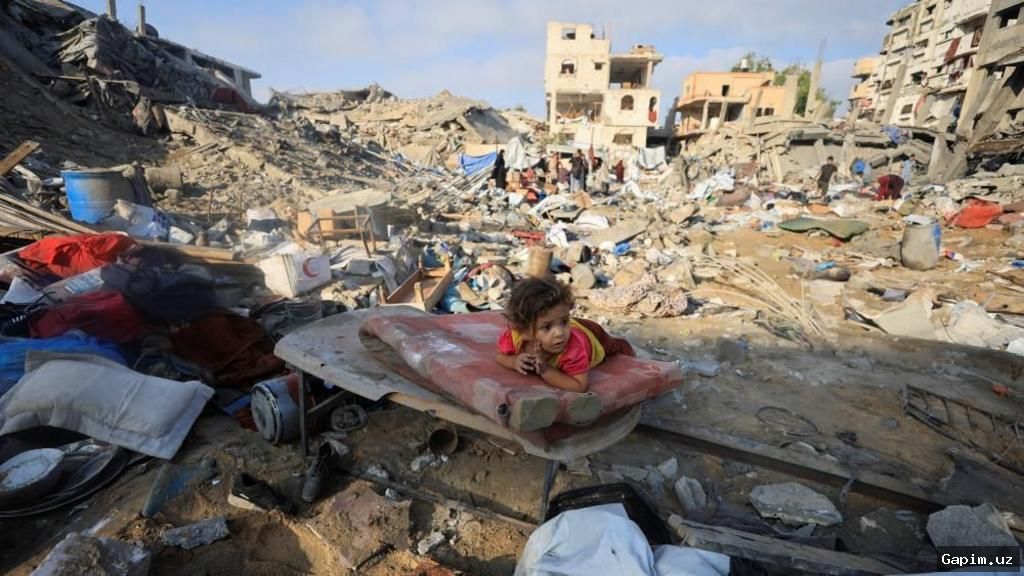
Al Jazeera's Ibrahim al-Khalili, reporting from Gaza City, said the reality is that the ceasefire hasn't translated into progress on the ground, with daily casualties and continued restrictions. Palestinians want an end to violence, freedom of movement, and the ability to return to their destroyed homes.
Source: www.aljazeera.com