In the village of el-Gol near Sakiet Sidi Youssef in Tunisia's mountainous Kef governorate, smoke still hangs over the blackened hills days after one of the worst wildfires of the summer. Mongi Abdeli, a 70-year-old farmer, struggles to describe the scale of his losses.
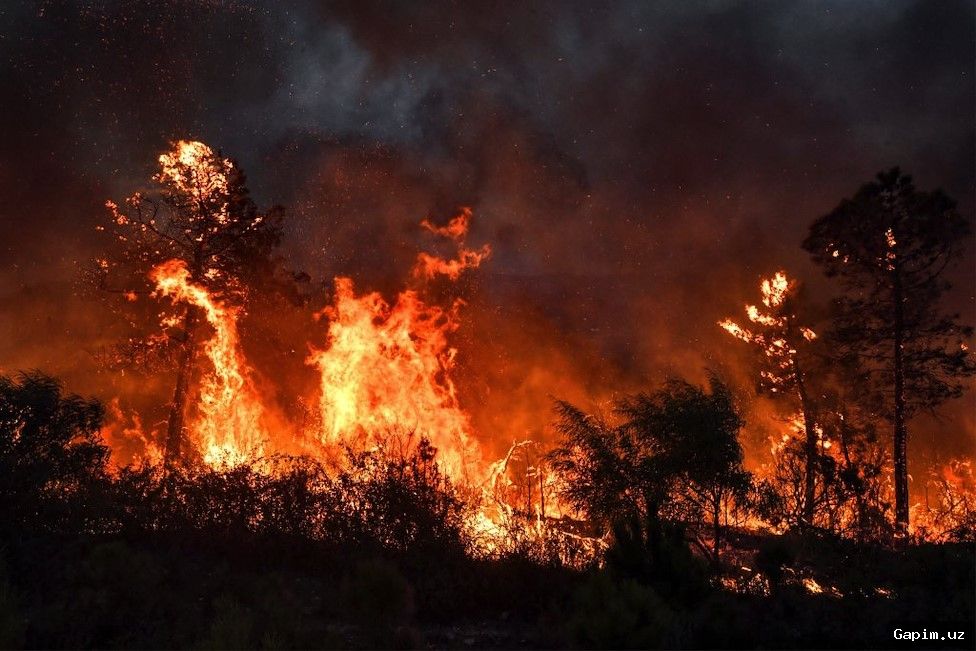
The fire killed 10 of his sheep, two more died from smoke inhalation, and it destroyed his beehives, over 100 olive trees, and every almond tree on his land. "The fire was scorching and came from every direction," Abdeli told Al Jazeera. "They kept telling us there was no water to extinguish it. All they could do was evacuate us."
Some of his flock escaped into the hills, but Abdeli has little means to feed them now. "What are we going to feed them now? Even the price of hay has gone up. Our lives have come to a halt," he said. He has worked this land for 70 years, relying on himself and never asking the state for anything.
The wildfires, which began in June and peaked in mid-July, were among the most destructive in years. Civil Protection said firefighters responded to nearly 600 fires within 48 hours during the peak. The largest blazes erupted in the northern governorates of Kef, Beja, and Bizerte, where mountainous terrain hampered rescue operations even after military units were deployed.
Civil Protection Lieutenant Colonel Khalil Mechri told Mosaique FM that the scale was "unprecedented" and "among the most violent recorded in Tunisia." He also asserted that human negligence or "criminal acts" caused 95 percent of the blazes.
Mahjoub Chouakhia told Al Jazeera that the emergency did not end once the flames were controlled. "We had no idea the fire would engulf us that quickly. By the time Civil Protection reached us, everything was gone." The family lost livestock feed, chickens, and hunting dogs, leaving them with a single room for six people.
As firefighters gradually brought the flames under control, climbing temperatures pushed electricity demand to record levels. The state-owned utility STEG announced daily rationing to prevent a wider collapse of the ageing grid. Prolonged power cuts disrupted factories, water-pumping stations, and homes, leaving many without air conditioning, refrigeration, or running water.
"I've suffered millions in losses over the past three weeks," said Abderrazek, a poultry vendor in the northern Tunis suburb of L'Aouina. "Who will compensate me for all of this? Everything in this country has fallen apart."
Experts say the crisis stems from years of underinvestment, not an unexpected surge in demand. Sahar Mechmech of the Tahrir Institute for Middle East Policy noted, "The problem is in the supply of electricity and the extent to which Tunisia has invested the necessary resources to maintain energy security." She pointed out that the last major power station was built in 2019.
MP Maher Kettari said the government owed STEG nearly 3.5 billion dinars ($1 million) in unpaid energy subsidies. President Kais Saied called the electricity and water cuts "unacceptable" and ordered swift restoration of services.
The crisis unfolded days before the fifth anniversary of Saied's July 25 power grab, renewing scrutiny over the state's ability to provide essential services. Residents often relied on neighbors who were first to respond as flames neared their homes.
As heatwaves grow longer and more intense, Tunisians feel increasingly vulnerable. "I am not asking for too much. My life is already behind me," said Khatma, a resident. "But what I hope is that my children and grandchildren get to live in comfort with the basic means to exist."
Source: www.aljazeera.com