The fast-spreading Ebola outbreak in the Democratic Republic of Congo (DRC) has exceeded 3,500 cases, overtaking the country's deadliest epidemic and becoming the world's second-largest ever. The Bundibugyo strain has no approved vaccine or treatment.
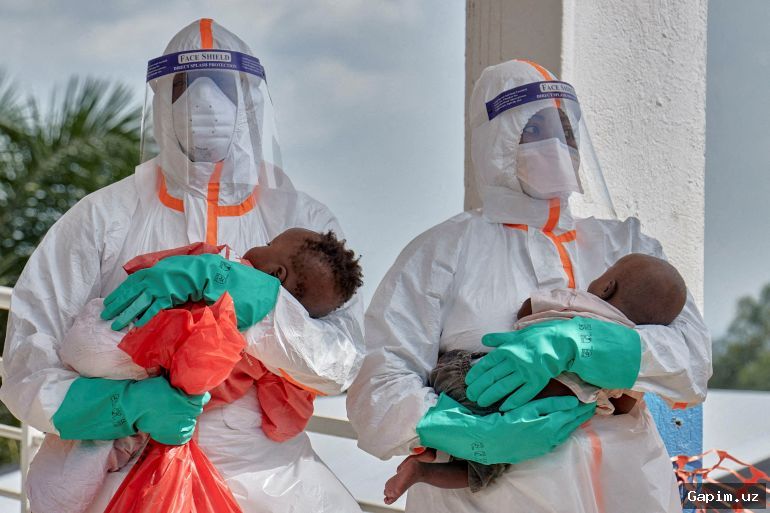
The DRC's latest Ebola outbreak has surpassed the total number of cases recorded during the country's deadliest epidemic between 2018 and 2020, which killed nearly 2,300 people among about 3,500 infections.
Congolese officials said on Friday that in this year's outbreak, 3,532 Ebola cases, including 1,556 deaths, have now been confirmed across five provinces. The outbreak has grown into the world's second-largest Ebola epidemic.
"It's the fastest-spreading Ebola epidemic that we have ever seen," said Carl Skau, acting executive director of the UN World Food Programme, told Reuters. "The world needs to pay much more attention," he added.
The outbreak has proven unusually deadly, killing five times more people in its first three months than previous Ebola outbreaks had by the same stage, according to the Africa Centres for Disease Control and Prevention. Only the 2014-16 West Africa outbreak was bigger, with 28,616 cases reported across Guinea, Liberia, and Sierra Leone.
According to the World Health Organization (WHO), Ebola is a severe and often fatal disease that spreads from infected animals and through direct contact with the bodily fluids of infected people. The outbreak is caused by the Bundibugyo strain, for which no approved vaccine or treatment currently exists.
However, vaccine research is gaining momentum — the WHO has described a vaccine being developed by Singapore-based Hilleman Laboratories as the most promising candidate against the outbreak. A separate Bundibugyo vaccine is also under development by the University of Oxford. Last week, the first volunteer received a dose as part of an ongoing clinical trial.
The outbreak is centred in Ituri province in northeastern DRC, near the borders with South Sudan and Uganda. Health officials say the true scale of the epidemic remains unclear.
Since the outbreak was declared, cases have risen rapidly. Confirmed infections increased from 2,000 on July 15 to more than 3,500 within weeks. The virus has also spread to four other provinces, including North Kivu and South Kivu, where large areas are controlled by the Rwanda-backed M23 rebel group.
The DRC is grappling with ongoing instability in its eastern regions, where conflict involving the M23 rebel group continues despite peace efforts.
Source: www.dw.com