Spanish Prime Minister Pedro Sanchez is facing mounting criticism from several European leaders as EU interior ministers convene to address last week's mass crossing into the Spanish enclave of Ceuta, an episode that has reignited intense debates over migration policy within the bloc.
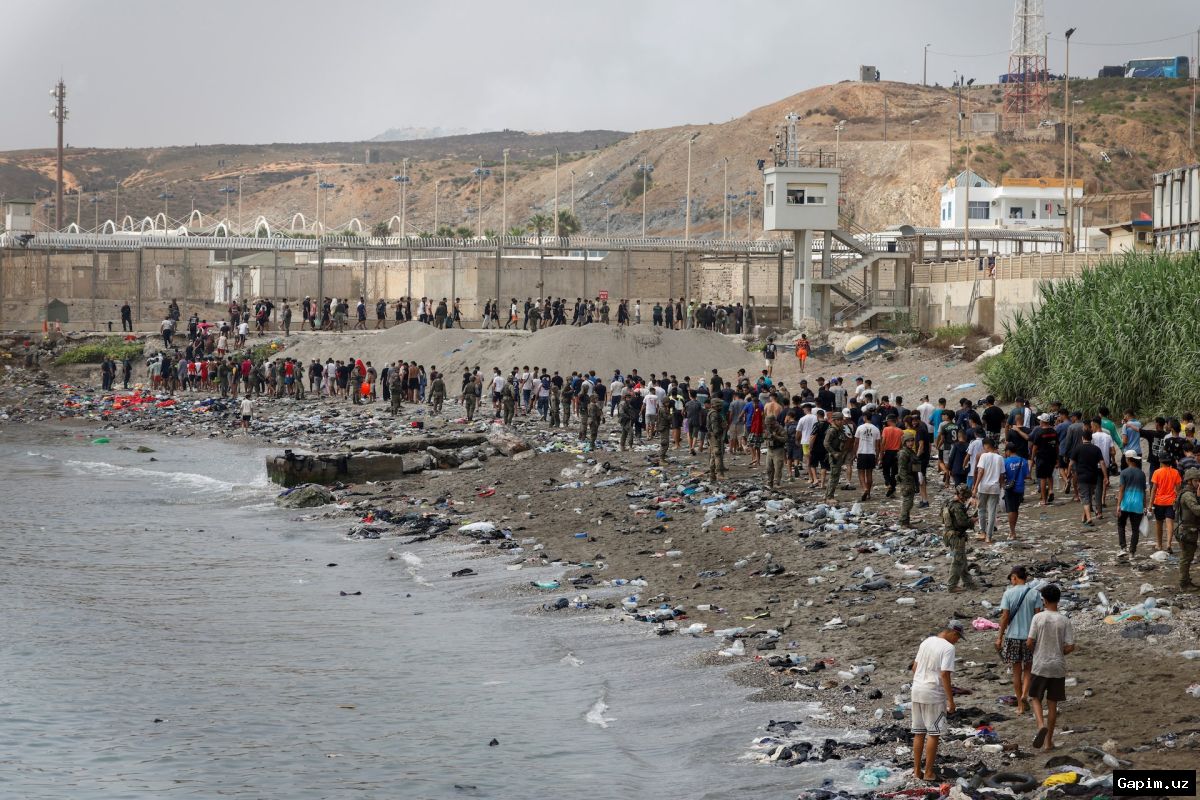
More than 60,000 people crossed into the North African territory on Thursday and Friday, triggering a humanitarian emergency and prompting Spain to deploy additional military and police forces. According to Spanish and Moroccan authorities, over 80 migrants died, including those who drowned or were crushed while attempting to scale a breakwater barrier.
Spanish Interior Minister Fernando Grande-Marlaska stated that by Saturday, "almost all" migrants had left, and the situation in Ceuta had largely returned to normal. However, the incident has exposed deep-seated divisions among EU member states, with 22 of 27 calling for "coordinated action and the strengthening of external borders" during an emergency video meeting chaired by Ireland.
Italian Prime Minister Giorgia Meloni emerged as one of Sanchez's harshest critics, announcing temporary air and sea border controls with Spain while questioning Madrid's handling of the crisis. Sanchez dismissed the criticism, asserting that Italy's position is "contrary to European law, humanitarian law, and the principles of solidarity that bind us together." In a post on X, he also highlighted that Italy has received significantly more migrants than Spain since 2021, with approximately 478,000 arrivals compared to Spain's 234,000.
The political fallout comes despite a broader decline in irregular migration to the EU. Frontex data shows that irregular border crossings in the first half of 2026 fell by 37% year-on-year to around 49,000. Nevertheless, the Ceuta events have become a flashpoint in wider political debates, even as the EU has already introduced stricter migration and asylum rules that expand member states' powers to detain and return migrants to designated "safe countries" or offshore facilities.
Human rights organizations have criticized these measures, warning that asylum seekers could face prolonged detention in offshore centers, while illegal pushbacks at borders continue to occur in both the EU and North Africa. The Spanish government has rejected accusations of mishandling the crisis, insisting that the situation was brought under control quickly in close coordination with Morocco, despite limited assistance from other European countries.
Officials also alleged that a recent ruling by Spain's Supreme Court, which found that migrants arriving by sea cannot be summarily returned without due process, was deliberately misrepresented by smuggling networks to encourage crossings. A senior Moroccan official, speaking anonymously to AFP, said Rabat had raised concerns with Spanish authorities after social media discussions about the ruling began in late July. "We discussed this ruling and its impact. We explained that this ruling was going to create a problem. And it did create a problem," the official said. He rejected suggestions that the mass movement reflected a failure by Morocco's security forces, adding, "It's simplistic to say that Morocco should just have used force to stop them. That is to completely misunderstand this phenomenon."
Source: www.aljazeera.com