The closure of the critical Strait of Hormuz in the Middle East has disrupted global energy flows, causing oil prices to spiral for months and impacting energy markets worldwide.
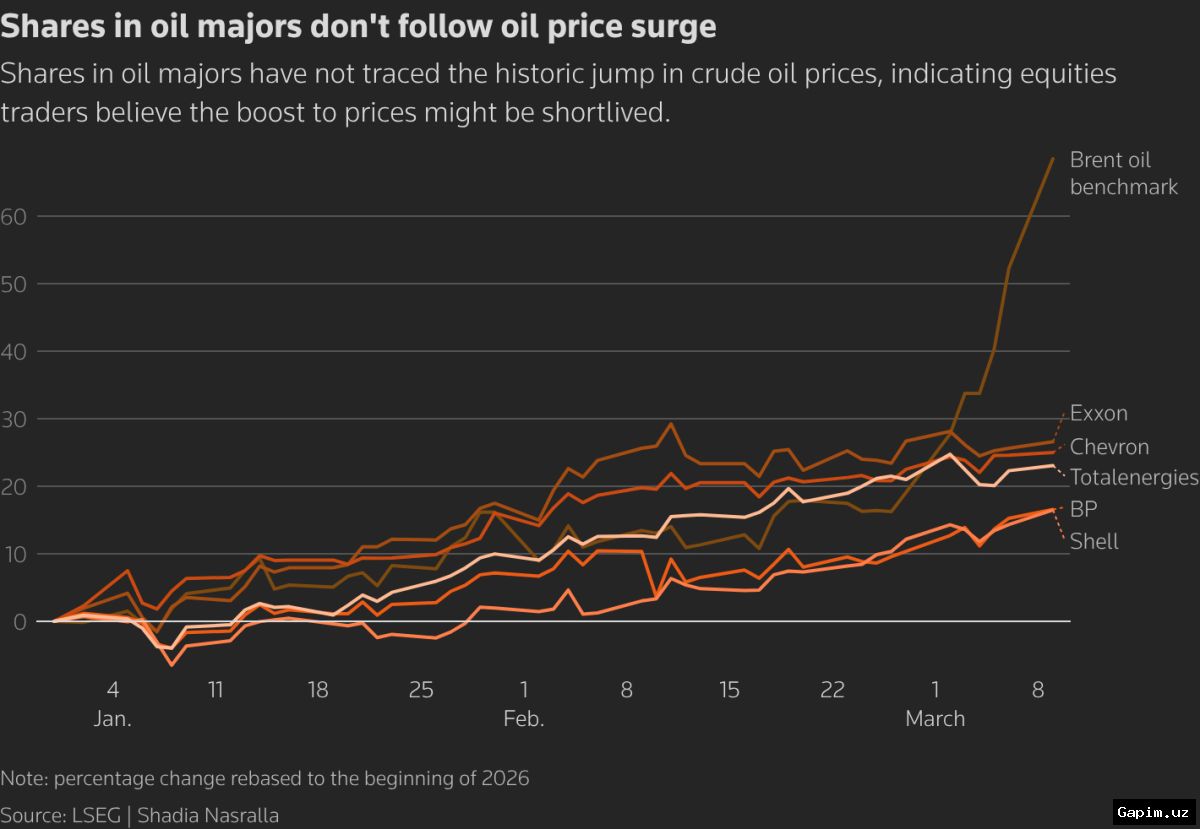
Thousands of miles away from the Persian Gulf, household prices have soared in the United States and Europe, as the so-called Big Oil companies bag astonishing profits from the fallout of the war on Iran.
Companies like ExxonMobil, Chevron, Shell, and BP have climbed the ladder amid chaos, netting billions in profits as the war drags on with no end in sight, and with hostilities widening into the Red Sea.
So, how much money have Big Oil companies made due to the Iran war? The companies, most of whose majority of production and supply are far from the Strait of Hormuz, have been bagging huge profits.
ExxonMobil: The US’s biggest oil company reported second-quarter earnings of $14.5bn, with adjusted earnings of $14.7bn, and marked its highest quarterly profits in four years. Its results were driven by elevated oil prices and stronger refining margins amid the war in Iran.
Chevron: The US’s second-biggest company reported second-quarter earnings of $12bn, its highest quarterly profit in six years, beating analysts’ estimates. Reuters reported that rising global oil prices boosted both upstream and downstream operations, with upstream earnings surging 200 percent year-on-year to $8.2bn.
Shell: The British-Dutch group, which is Europe’s biggest oil company, more than doubled its second-quarter earnings, reporting nearly $10bn in earnings and exceeding analysts’ expectations, powered by increasing oil and gas prices and resilient LNG operations.
TotalEnergies: The French oil giant’s earnings rose by 67 percent in the second quarter, its best quarter in nearly three years. BP reported second-quarter profit of $5.73bn, more than double the $2.35bn it earned a year earlier.
Saudi Aramco: The windfall extended beyond Western oil majors. Saudi Aramco, the world’s largest state-owned oil producer, also reported sharply higher quarterly earnings – rising 44 percent year-on-year to $32.69bn.
Muyu Xu, a senior crude oil analyst at Kpler, told Al Jazeera that the average global benchmark price for crude oil traded on the Intercontinental Exchange stood at $96.68 per barrel in the second half of 2026, significantly higher than $78.38 per barrel in the first quarter and $66.71 per barrel in the second quarter of 2025.
“This meant that oil producers, especially those whose exports were not affected by the Hormuz traffic bottleneck, were able to benefit from higher oil prices and stronger demand from countries and refiners seeking alternatives to Middle Eastern crude,” she said.
The impact of the war on Iran and rising crude prices has been costly for many. Petrol prices have averaged above $4 per gallon in the US, nearly 40 percent higher compared to pre-war rates. In the UK, petrol prices rose further, hitting a new high of 160.85 pence per litre, surpassing its previous high.
The British economy is likely to shrink in 2027 if the Strait of Hormuz does not reopen to shipping before the middle of next year, forecasters at EY warned.
As more record profits poured in from Big Oil companies minting billions of dollars, US President Donald Trump reacted furiously at the White House. Companies like ExxonMobil and Chevron, Trump said, are “making too much money based on a shortage.” “They’re going to give some of that back to the public and they better cut the retail price, the consumer price,” he told reporters.
Source: www.aljazeera.com