UN Secretary-General Antonio Guterres last week became the first UN chief to visit Cyprus in 16 years. During his visit, he met the leaders of the island's two communities: Nikos Christodoulides, president of the Republic of Cyprus, and Tufan Erhurman, the Turkish Cypriot leader and president of the self-declared Turkish Republic of Northern Cyprus, recognized only by Turkey.
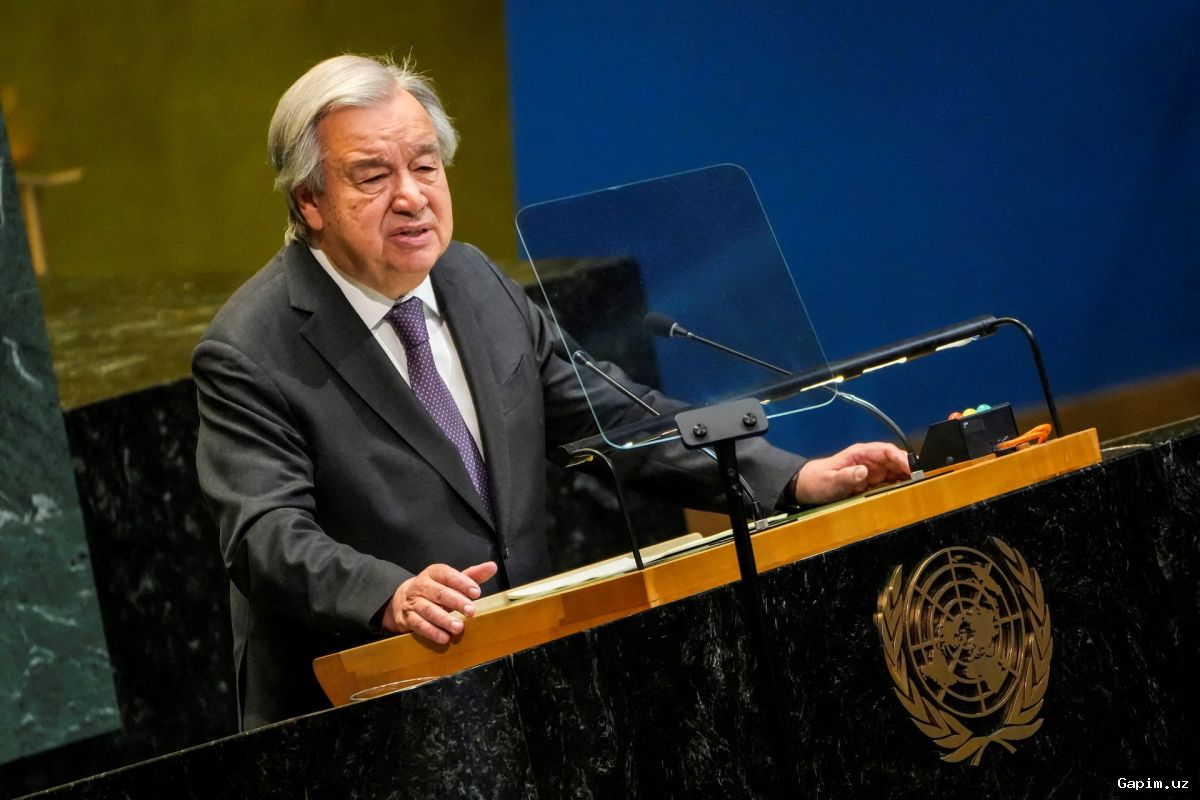
His aim was to determine whether conditions exist for restarting negotiations on the Cyprus issue. Progress on talks has remained stalled since the collapse of negotiations in Crans-Montana, Switzerland, in 2017, when the United Nations made its most comprehensive effort to broker a reunification agreement for the island.
According to diplomatic sources, the decision to launch a new initiative now is driven less by developments in the Cyprus issue itself and more by the rapidly changing geopolitical landscape of the wider region. War in the Middle East, deteriorating relations between Israel and Turkey, and growing strategic competition in the Eastern Mediterranean have heightened UN concerns that the unresolved Cyprus conflict could undermine the stability of the entire region.
Guterres said as much after the joint meeting on July 29: "I do believe that a solution in Cyprus is absolutely crucial, not only to preserve the interests and the peace of the Cyprus people, but also as a factor of stability in what is becoming a dangerously unstable region."
Andreas Mavroyiannis, former permanent representative of the Republic of Cyprus to the UN and former chief negotiator for the Greek Cypriot side, echoed this concern in an interview with DW. He warned that the strengthening of relations between the Republic of Cyprus and Israel, combined with the deterioration of Israel-Turkey relations, increases the risk of the Cyprus issue being instrumentalized.
The EU has also shown increasing interest in playing a more active political role in efforts to revive the peace process. On July 7, the European Commission appointed Executive Vice-President Raffaele Fitto as the EU's Special Representative for the Cyprus issue. His mandate is to support the UN-led process and strengthen the bloc's involvement in efforts to restart negotiations.
A more active role for the EU has long been a key policy objective of President Nikos Christodoulides. The Cypriot government believes that the EU agenda could provide Ankara with incentives to contribute constructively to progress on the Cyprus issue. Potential leverage includes modernizing the EU-Turkey Customs Union, visa liberalization for Turkish citizens, Turkey's participation in the EU's SAFE defense financing instrument, and the prospect of gradually reviving its long-frozen EU accession process.
While Guterres' decision to announce a new informal expanded 5+1 meeting involving the two Cypriot communities, the three guarantor powers (Greece, Turkey, and the UK), plus the UN, was widely seen as a positive signal, he deliberately stopped short of setting a date. He made it clear that the meeting would only be convened once sufficient progress had been made on confidence-building measures, methodology, and the substance of the process.
The key question, however, extends beyond the two communities themselves and concerns Turkey's willingness to engage. The real test for the UN is whether Ankara is prepared to return to negotiations conducted within the framework of UN Security Council resolutions and the agreed basis of a bicommunal, bizonal federation, moving away from the two-state solution it has advocated since the collapse of the Crans-Montana talks in 2017.
So far, Turkey has made no public statement indicating such a shift. The only possible indication comes indirectly from Guterres' remark that he has "the consent of both sides and the guarantor powers to move towards another 5+1 meeting, provided there is adequate preparation." This suggests that, at least procedurally, Ankara is willing to participate in another informal conference under UN auspices. Whether this also signals a substantive change in Turkey's long-standing position remains, for now, an open question.
Source: www.dw.com