In the upcoming state elections in Saxony-Anhalt, scheduled for September 6, the far-right Alternative for Germany (AfD) could secure an absolute majority, according to recent polls. This prospect has sent alarm bells through the region's cultural institutions, which fear the party's cultural policy agenda.
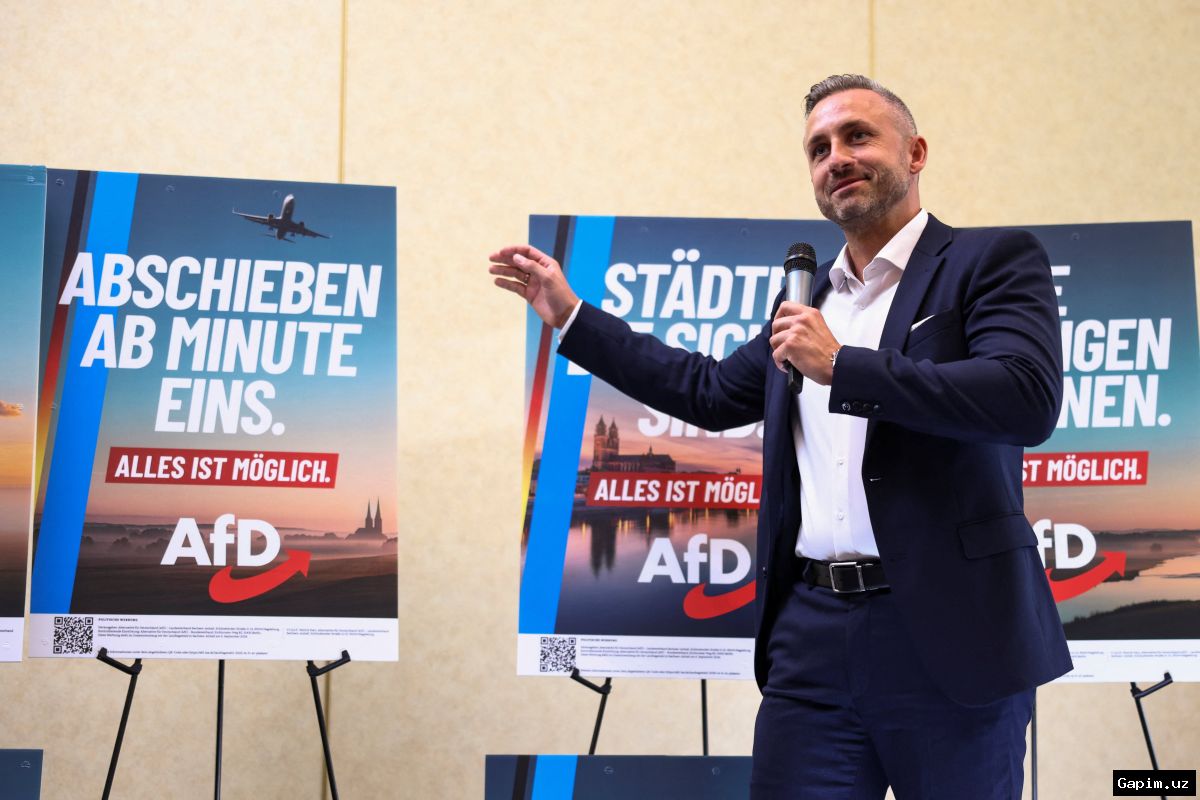
The AfD has announced that artists and institutions seeking state funding would be required to sign a declaration pledging 'not to hold Germany and its culture in contempt.' Many of these organizations rely heavily on public subsidies, making the threat particularly acute.
The party's interpretation of 'anti-German art' remains ambiguous. Hans-Thomas Tillschneider, the AfD's cultural policy spokesperson in the state parliament, stated in late June: 'We declared in our government program that we no longer intend to spend public funds on promoting anti-German art.' When pressed for clarification, he described it as 'German art that doesn't want to be German,' citing an opera production he found objectionable for its 'feminist deconstructivist' approach.
Tillschneider further argued that 'this anti-German aversion is still considered de rigueur in large parts of the theater world,' and vowed, 'We will no longer support this attitude — let me state that quite clearly.'
The Bauhaus school, founded in 1919 and forced to close under the Nazis for its avant-garde ideas, is again in the crosshairs. The AfD's program describes Bauhaus as 'a controversial school of architecture' and criticizes the state government for emphasizing it in its 'moderndenken' (thinking modern) campaign. Instead, the party proposes 'deutschdenken' (thinking German), which would highlight figures like Henry I, Otto I, Luther, Bismarck, and Nietzsche.
Barbara Steiner, director of the Bauhaus Foundation, told DW: 'The AfD's criticism of Bauhaus picks up on criticism from 100 years ago; their wording is similar.' She also noted that the 'deutschdenken' slogan references Adolf Hitler's 1938 'Reichenberger Rede' speech, highlighting the party's use of historically loaded language.
Cultural practitioners are openly fearful. Annegret Laabs, director of the Kunstmuseum Magdeburg and spokesperson for the initiative 'Kultur ist Vielfalt und Heimat' (Culture is Diversity and Home), told DW: 'As cultural practitioners, we can say that we are now genuinely afraid, because what's being triggered there is, in fact, the idea that art and culture must be 'German.''
Laabs warned that restricting funding based on arbitrary definitions of 'German' art would spell the demise of culture: 'If we look at the bigger picture, we see that culture and art have been free for centuries and have known no boundaries — not even national ones. Wherever there are national boundaries, there is no longer any art or culture worthy of that name.'
The AfD's program also attacks Germany's culture of Holocaust remembrance, describing it as the 'perpetuation of a guilt complex' that has 'blocked the possibilities for forming a stable national identity.' The party frames this as an 'identity disorder' that needs to be 'healed' by focusing on 'positive aspects of German history.'
Sabine Schramm, director of Magdeburg's puppet theater, expressed regret that 'we humans are not willing to draw conclusions from a complex history — conclusions that matter both to us as individuals and to us as a society.' She reflected on her 30-year career, during which she has addressed Nazi horrors on stage, particularly in productions for young people.
Schramm pondered the phrase 'resisting the beginnings,' a familiar German concept urging vigilance against threats to democracy: 'But where, exactly, are the beginnings? Is this the beginning, or are we still before the beginning? Are we right in the middle of it? What must I do to resist the beginnings?' Her questions underscore the deep anxiety about the future of artistic freedom and democratic values in Germany.
Source: www.dw.com