On August 4, a quadcopter drone carrying plastic explosives flew undetected past air defense installations at Germany's Leipzig/Halle Airport, a key NATO airlift hub. The drone struck a Ukrainian cargo plane but failed to detonate, falling onto the tarmac.
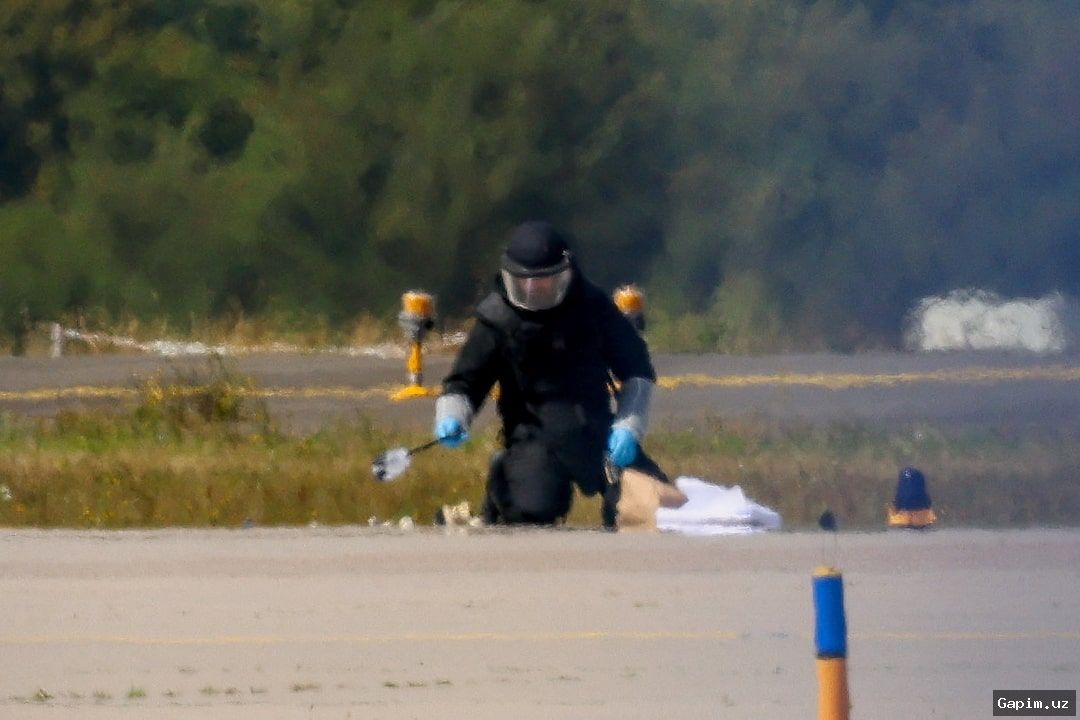
The drone was found four hours later by a bus driver who stepped on it and alerted security. German media reported that DNA traces linked the drone to a firebomb mailed to the same airport in July 2024, which set a freight container ablaze.
Germany's Interior Minister Alexander Dobrindt called the incident a "new level of danger" but avoided naming Russia as a potential culprit. "These threats are not the work of amateurs. Rather, they require very professional preparation and execution," he told reporters.
US intelligence agencies reportedly believe the drone was Russian, and the explosives suggested a military manufacturer. The Wall Street Journal wrote that the failed attack was designed to test NATO's collective defensive resolve.
Lithuanian Defense Minister Robertas Kaunaus alleged that Moscow is devising a false-flag attack on Baltic critical infrastructure using captured Ukrainian drones to "frame" Kyiv. Poland and other Baltic states have tightened security around energy sites and logistical hubs.
Military analysts and drone warfare experts told Al Jazeera they believe the drone was Russian and that the failed strike is part of a wider, years-old hybrid warfare campaign by the Kremlin. Since 2024, Moscow has sent drones to a dozen NATO nations and Ireland to unnerve governments, sow panic, and identify air defense vulnerabilities.
Lieutenant General Ihor Romanenko, former deputy head of Ukraine's General Staff, said, "Putin tests NATO and shows how weak they are." The International Institute for Strategic Studies (IISS) described the campaign as "a series of tactical successes for the Kremlin and a strategic failure of allied air defense."
Europe's air defense architecture has long been built around detecting planes and missiles. Detecting and intercepting drones is time-consuming and expensive, and the Kremlin's campaign has "exposed political fractures" within NATO, according to IISS.
Nikolay Mitrokhin, a researcher at Bremen University, believes the Main Intelligence Directorate (GRU) is behind the Leipzig incident. He said European drone detection systems "are outdated by at least five years." Drone warfare expert Andrey Pronin argued that "any unknown flying objects should be destroyed," criticizing NATO's slow response.
On September 10, Russia sent nearly two dozen drones into Polish airspace, prompting Warsaw to halt flights at four airports. Romanenko noted that only two drones were shot down, while Ukrainian defenses downed 500 Russian drones that day. "Russians carried out all their tasks while NATO was only waking up," he said, calling Poland's response an "ostrich position."
Source: www.aljazeera.com