As Zambians head to the polls, the specter of the current president's predecessor looms large over the elections. Hakainde Hichilema, 64, is seeking a second term leading the southern African nation after defeating his arch-rival Edgar Lungu by a landslide in 2021.
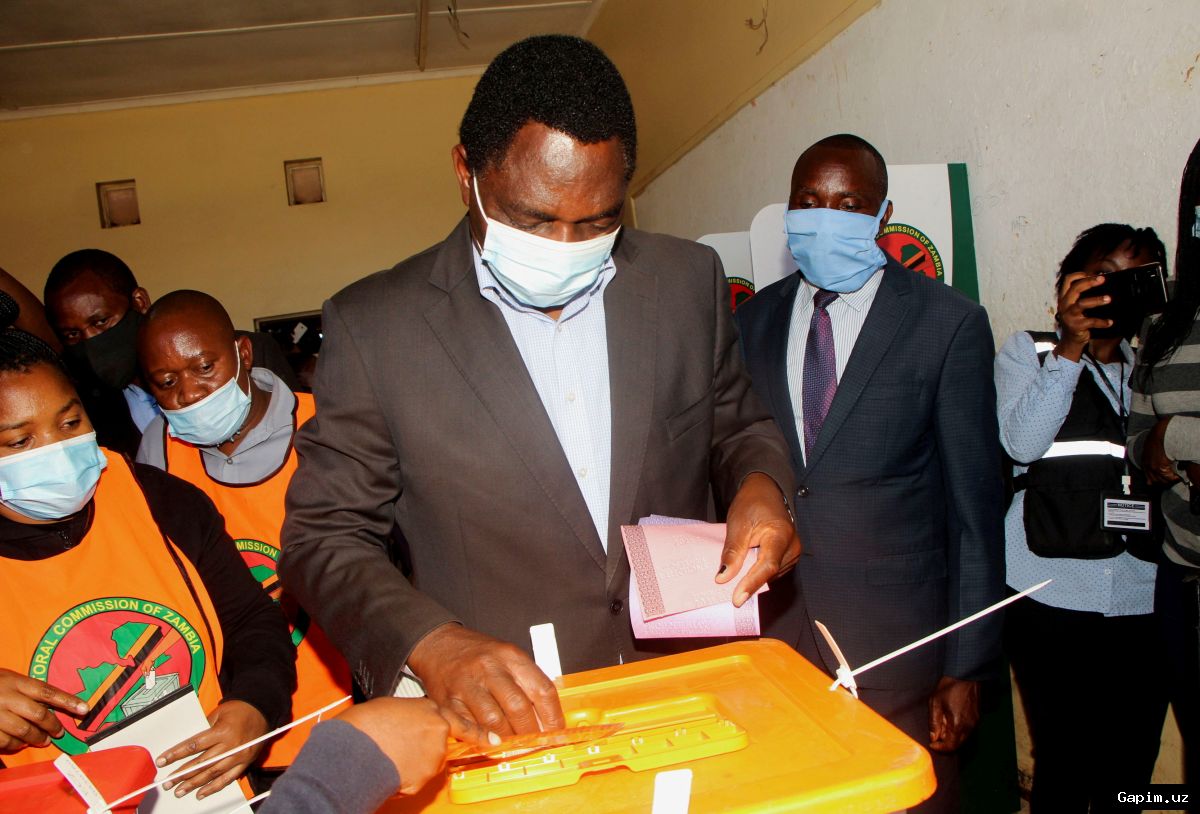
A feud between the two men, their families, and supporters has dominated Zambian politics, persisting even after Lungu died in South Africa in June 2025. The Zambian government went to court to try to stop Lungu's burial by his family, who did not want Hichilema presiding over a state funeral. In June, South Africa's Supreme Court of Appeal ruled in favor of Lungu's family, overturning a previous High Court decision in favor of the government.
In this election, Hichilema faces the Tonse Alliance of opposition parties led by Brian Mundubile, 55, who was a government chief whip under Lungu. Mundubile's running mate Makebi Zulu acted as the Lungu family's spokesperson during the burial row, and on the campaign trail the two men have promised to bring Lungu's body back to Zambia for a dignified burial.
The way death is dealt with is very important in Zambia, said Christopher Vandome, a senior research fellow at the think tank Chatham House. "Even Hichilema supporters want to see due respect given to those that have died," he said. "When it appears things get messy, it just makes the incumbent look disrespectful."
The shadow of Lungu has also hung over allegations by the Tonse Alliance that Hichilema has deployed authoritarian tactics during the election campaign, including raiding its offices and detaining 36 members of Mundubile's team. Hichilema's team furiously denied the claims, invoking Lungu's treatment of Hichilema during the last election.
A spokesperson for the ruling party said: "Zambians know what repression looks like. In 2021, the opposition leader [Hichilema] had been arrested 15 times, Prime TV [a private station] and the Post [a newspaper] had been shut down, and on election day the internet was switched off. Today the opposition campaigns freely across all 10 provinces, no media house has been closed and the airwaves are open."
Transparency International Zambia monitors have recorded incidents of police interrupting opposition rallies, said Tamika Halwiindi, a coordinator at the organization. "Disruptions from the police citing issues to do with safety have been noted to be more biased against the opposition and independents, as opposed to the ruling party," she said.
During Hichilema's term, activists have also reported having peaceful demonstrations shut down. Mputa Ngalande of the Fight Inequality Alliance said he was among a group detained for more than 12 hours in July 2024 when they were protesting against the state power company during a period of 22-hour-a-day blackouts.
Vandome said: "[Hichilema's] prospects of winning are very high. But his personal lived experience of how complicated Zambian elections can be has given him this insecurity which is actually counting against him, denting his image in a way he doesn't have to."
Zambia's economy has stabilized since an economic crisis triggered when it defaulted on its debts in 2020 under Lungu. Annual inflation is now 6.5%, compared with 24.6% in July 2021. The government made primary and secondary education free in 2022.
Zambia has attracted more international investment in recent years due to its huge deposits of copper, a key material in green technologies. At the start of the month, in a giveaway to young voters, Hichilema told a crowd of jubilant university students that he was increasing their accommodation allowance by 50% with immediate effect.
However, the cost of living could still count against Hichilema in the elections, in which almost 8.8 million registered voters will also choose MPs and local councillors. The average annual income rose from $1,127 to $1,318 between 2021 and 2025, according to World Bank data. But prices almost doubled over the same period.
Ngalande said: "What people are asking is: 'If we are doing well economically, why are we not feeling impact on the ground?' Because you will find on the ground that it is very difficult to access three meals a day."
Source: www.theguardian.com