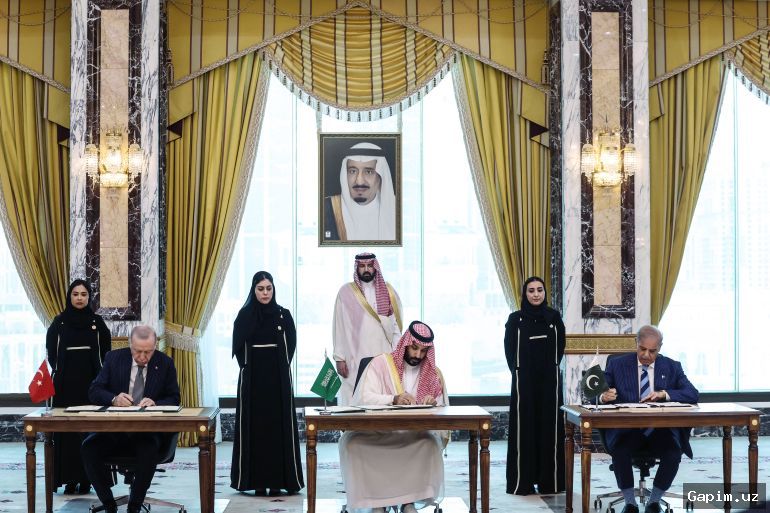
The signing of the Mecca Joint Defence Agreement between Saudi Arabia, Turkey, and Pakistan ten days ago has sent ripples through geopolitical circles, with analysts interpreting the pact as a clear message to Washington that even its closest allies no longer fully trust the US security umbrella.
US President Donald Trump, in a post on Truth Social, welcomed the agreement, stating that it demonstrates the Middle East's ability to come together and defend itself. He expressed happiness that countries are finally taking their defense into their own hands, a stance consistent with his long-standing criticism of allies for not spending enough on their own security.
Pakistani Prime Minister Shehbaz Sharif quickly thanked Trump, crediting his "courageous and decisive leadership" for averting a "nuclear catastrophe in South Asia." This exchange underscores the complex dynamics at play, as regional powers seek to diversify their security arrangements while still acknowledging the US role.
However, experts caution that the pact, while symbolically significant, may not fully replace the military might of the US, which maintains approximately 50,000 troops in the region. Betul Dogan-Akkas, an assistant professor at Ankara University, argues that the pact emerged from a loss of confidence in US deterrence, particularly after the US initiated a war with Iran without consulting Gulf allies.
The agreement includes a clause similar to NATO's Article 5, stating that an armed attack on one member is an attack on all. Yet, Turkish Foreign Minister Hakan Fidan clarified that assistance would be provided only upon request and tailored to specific needs, whether intelligence, logistics, or troops.
Analysts like Umer Karim view the pact as a "workable alternative" that adds a layer of deterrence but does not replace the structural reliance on the US. He notes that the commitments are conditional, with each country retaining sovereignty over the extent of its involvement. The pact is seen as a first institutional step in the region since the Baghdad Pact, but its practical impact remains to be seen.
Source: www.aljazeera.com