An investigation by the European Broadcasting Union (EBU) has uncovered a sprawling underground financial network that used a WhatsApp group chat to move hundreds of millions of euros in cash across the globe, with no paper trail. The group, named 'Traders of Greater Europe', had 532 members and was used to arrange cash transfers for clients, including payments that reached Islamic State (IS) militants in Syria.
The group chat, containing over 82,000 messages exchanged between late February and December 2022, was first discovered by Belgian investigating magistrate Vincent Guerra. He described the scale of transactions as 'staggering' and noted that the network covered 'the entire planet'. The case began as an investigation into terror financing, but Guerra said it became 'just a drop in the ocean of transactions'.
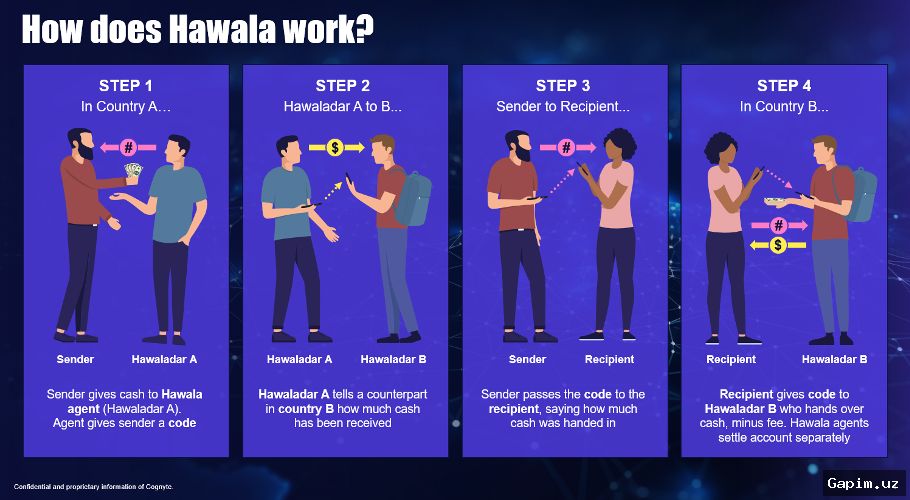
Members used the ancient hawala system, a network of trusted money brokers who settle transfers without electronic records or physical movement of cash. While hawala is often used for legitimate purposes, such as migrant workers sending money home, criminals exploit it to bypass the Swift banking system and avoid regulatory scrutiny. Hawala is illegal in most EU countries but legal in the UK if brokers are registered with HMRC.
The WhatsApp messages were obtained following a 2024 Belgian court case that convicted six money launderers, including Abu Adam, the head of the Brussels network, and his deputy Abu Ahmed. Police found evidence that the defendants had sent money to IS to help militants' wives escape from detention camps in Syria. Abu Adam's phone contained 6,000 photos of €5 notes and 6,000 photos of identity cards, suggesting at least 12,000 transactions. Guerra called the discovery 'hitting the jackpot', adding, 'This isn't amateur work; it's professional, and at a level we could never have imagined. They're bankers with no government oversight.'
The EBU also found other gangs across Europe using hawala for criminal activities. A former money launderer, identified as Frank, said he had been involved in transactions totaling several hundred million euros. He described how messengers would arrive with cash, and later learned that the system financed terror, drug trafficking, and prostitution.
In Austria, police raided what they called 'the biggest hawala office in Vienna', run from a kebab restaurant. Two Syrian brothers were charged with human trafficking and torturing a courier who lost €350,000. They were sentenced to 18 and 8 years in prison. Austrian police and Europol also dismantled a people-smuggling ring financed through hawala, which had transported about 100,000 people into Europe in 18 months.
Gerald Tatzgern, head of human-trafficking investigations at Austria's Criminal Intelligence Service, revealed that torture is a common tool in people smuggling. 'Videos of the torture are then sent to the families, saying that if they don't send another €1,000 or several thousand euros, then the person concerned will suffer,' he said. Payments were demanded through hawala.
Police commander Quentin Mugg, a Europol liaison officer, called hawala 'the primary money-laundering channel for organised crime'. He noted that hawaladars are indifferent to the source of funds, whether from migrant smuggling, drug trafficking, or a grandmother's savings sent as a birthday present. The investigation highlights the challenges authorities face in regulating informal value transfer systems that operate outside the formal banking sector.
Source: www.bbc.co.uk