Edinburgh, Scotland – On May 11, 1967, a studious young Palestinian teenager named Raja Shehadeh sat down to compose his first dated diary entry.
“My dearest diary,” began the 15-year-old in English, “today’s expieriences [sic] that I am about to write in one of your wanderfull [sic] pages is sad, very sad, indeed the bees are responsible for making it sad.” The bees had been banished from all of the neighbouring gardens, and the only remedy was to “make a treaty with [the bees] and let them take all the honey from your garden provided they don’t disturbe [sic] you.”
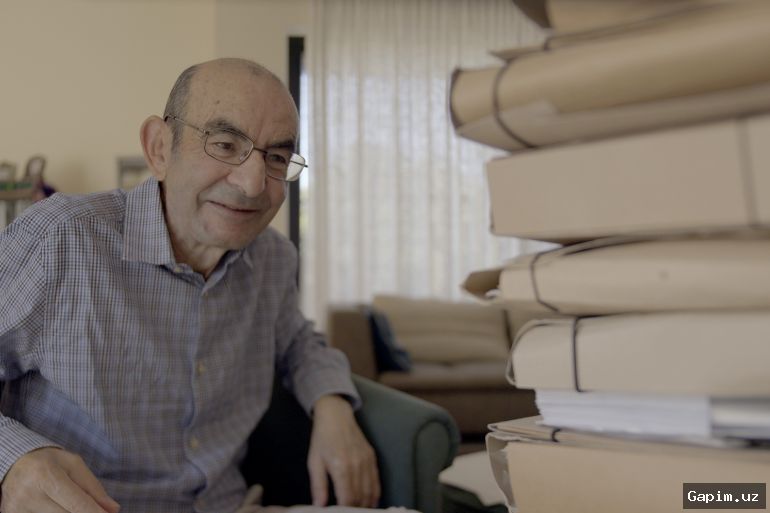
Was this a child’s rallying cry against the dispossession of the Palestinian people? “Absolutely,” said Shehadeh, now 75, speaking to Al Jazeera from Scotland’s capital. On Thursday, his personal journals were officially transferred to the University of Edinburgh’s Centre for Research Collections, where they will be archived.
Shehadeh, a softly spoken giant of Palestinian literature with some 20 books to his name, was a pupil at the Quaker school in Ramallah when he began diarising life in the Jordanian-controlled Palestinian West Bank. He had come to the realisation that he was living through a period of flux that “needed to be documented”.
His account of the Six-Day War and the many other events that followed in the course of his near-60 years documenting the restive story of Palestine, today account for the bulk of an archive stretching to an excess of 5 million words across tens of thousands of pages.
It was late 2023 when the author, lawyer and public intellectual decided to uproot his archive. Israel’s increased incursions into the occupied West Bank and genocidal war on Gaza convinced him that his collection was under threat of destruction. Today, he revels in its safe deliverance.
“I went to see it last week,” said Shehadeh. “I saw that they were held in a safe place with double locks and air-conditioning … and I felt very relieved.” Does relinquishing control of his beloved journal archive to Edinburgh now mean that his diary-keeping days are over? “Once you start keeping a journal, you can’t stop,” said the Palestinian polymath.
The archive also includes material belonging to his late father, Aziz Shehadeh, a lawyer from Ramallah. The task of transferring Shehadeh’s substantial collection from Palestine to Scotland required the University of Edinburgh to enlist the support of others, like the Digital Archive of the Middle East at England’s University of Exeter and a Palestinian team from Jerusalem’s Educational Bookshop.
“There was a natural coming together, and everyone put ego aside for the greater good,” said Matthew Teller, an English author and journalist, who came on board as project director. Working in the shadow of both a rising Palestinian death toll in Gaza and violent Israeli raids on Palestinian properties in the occupied West Bank, Mahmoud Muna, the proprietor of the legendary Educational Bookshop in Israeli-occupied East Jerusalem, gathered together his own small task force to digitise Shehadeh’s papers.
The digitisation process proved both mentally and physically taxing. Entries scribbled on the likes of boarding passes and napkins required careful preservation. After each batch of documents was digitally logged, Muna then packaged and shipped them to Scotland using the standard international postal service – a deliberately low-key approach that was vindicated when all eight consignments reached Edinburgh untouched.
Edinburgh’s world-renowned ancient university is, for many pro-Palestinian activists, damned by its connection to Lord Balfour, who was the university’s chancellor when he issued the now-infamous Balfour Declaration of November 2, 1917. This rather contentious fact is not lost on Shehadeh. He believes that depositing his archives at the university represents a modern “act of resistance”.
“The Balfour Declaration was the supreme attempt at cancelling Palestine’s existence,” said Shehadeh, who wrote his journals mostly in English. “My archives and those of my father’s are a testament to the failure of Balfour’s intention.”
Kholoud Al-Ajarma, the deputy director of Edinburgh University’s Alwaleed Centre for the Study of Islam in the Contemporary World, said that in the absence of a “free, safe Palestinian state”, Shehadeh’s archive required outside intervention. “The natural home, obviously, for all these materials and archives is Palestine,” she told Al Jazeera. “But given how dangerous it is now, unfortunately – and I know of many friends in Gaza whose family archives have been destroyed – I think at this stage, it is really important to save physically whatever we are able to save.”
Shehadeh and his heirs have retained full copyright and control of all of the archive’s intellectual property rights, despite its relocation. The University of Exeter has collaborated with its counterpart in Edinburgh throughout this process, offering advice and logistical support. It will publish online large samples of the diaries for immediate reading to mark the official launch of Shehadeh’s records in the Scottish capital on September 3.
Source: www.aljazeera.com