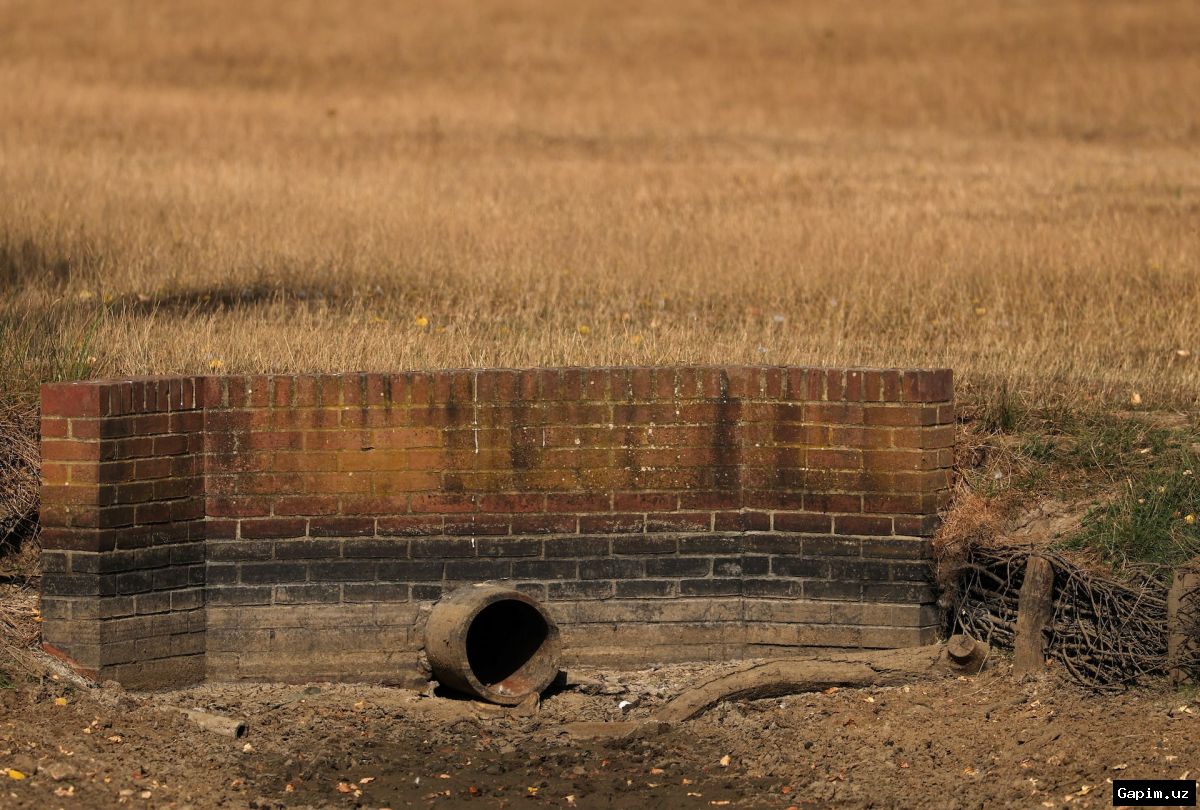
Europe is in the grip of drought. As the burning of fossil fuels drives up temperatures, making summers hotter and drier, the continent's soils, lakes, and rivers are struggling to recover. Southern and Western European countries are particularly affected, but they are not alone.
Gisela Elsner, Climate and Sustainability Policy Officer at the German Konrad Adenauer Foundation, who has followed EU water management efforts for years, says, "We've seen drought risks expanding northward during the last decade. Central and Western Europe, but also southeastern European countries, are increasingly vulnerable due to climate change."
Satellite data for August shows areas as far north as Denmark and Sweden experiencing extremely dry conditions more typical of the Sub-Saharan Sahel. Major rivers like the Rhine and Danube have hit historic lows, disrupting inland shipping. Farmers from Germany to Ukraine report below-average harvests, and countries from the UK to Switzerland to Germany have imposed restrictions on household water use.
Compounding the problem, this year's El Niño — a climate cycle that weakens trade winds and warms tropical Pacific surface waters — is set to be one of the strongest on record. Experts predict 2027 will be even hotter and drier as a result. Elsner emphasizes, "It is not yet a matter of not having water in our taps anymore. But we need to prioritize and use our water resources efficiently."
DW's analysis of water usage across European nations reveals that private households account for a relatively small share — between 50 and 300 liters per person per day, less than 20% of total use. Two-thirds of water withdrawn continent-wide goes to agriculture (mainly irrigation) and cooling for nuclear and fossil fuel power plants.
In drought-prone countries like Greece, Turkey, and Spain, agriculture accounts for most of the nearly 2,000 liters withdrawn per person daily. In Eastern European nations such as Bulgaria and Hungary, as well as the Netherlands and Estonia, electricity cooling is the biggest factor.
A recent report by the European Environmental Agency (EEA) found that EU countries could save between 10% and 40% of water annually by implementing targeted strategies. For Western and Eastern European states, shifting to clean energy would make a significant difference: wind and solar require no water, unlike nuclear and fossil fuels.
In Southern Europe, agriculture is the big-ticket item. The EEA recommends replacing open water channels with closed pipes to prevent evaporation, switching to sprinkler or drip irrigation, and opting for less water-intensive crops. Additionally, around one in four liters of drinkable water from the public supply is lost to leaky pipes in the EU; in Romania and Italy, this share exceeds 40%.
Experts urge citizens to make responsible consumer choices, such as considering the water footprint of products, and to push governments for accountability. Alexander Psomas, a water resources expert from Greece and co-author of the EEA report, says, "Citizens can also push our governments to be more accountable on their energy policy and the impact it has on water."
Drought is not just a European problem. UN data shows regions in Northern Africa, the Middle East, and Asia have long faced higher water stress. Europe can learn from others; for instance, chip manufacturers in Germany's Saxony are seeking expertise from Singapore on reusing wastewater for cooling.
Both Elsner and Psomas note growing awareness in recent years. Psomas says, "The water scarcity and droughts topic did not have a relevant EU working group until 2022. Today, it's one of the working groups with the highest participation." He calls for more public debate on water strategies, especially during elections, to ensure long-term resilience.
Source: www.dw.com