The bodies of five people have been recovered after a boat carrying West Africans was rescued off Spain's Canary Islands, maritime rescue authorities said, as an NGO warns that dozens more may have perished. Spain's maritime rescue service Salvamento Maritimo said on Thursday that one of its boats rescued 44 men from a vessel drifting some 120km (75 miles) south of Gran Canaria on Wednesday evening.
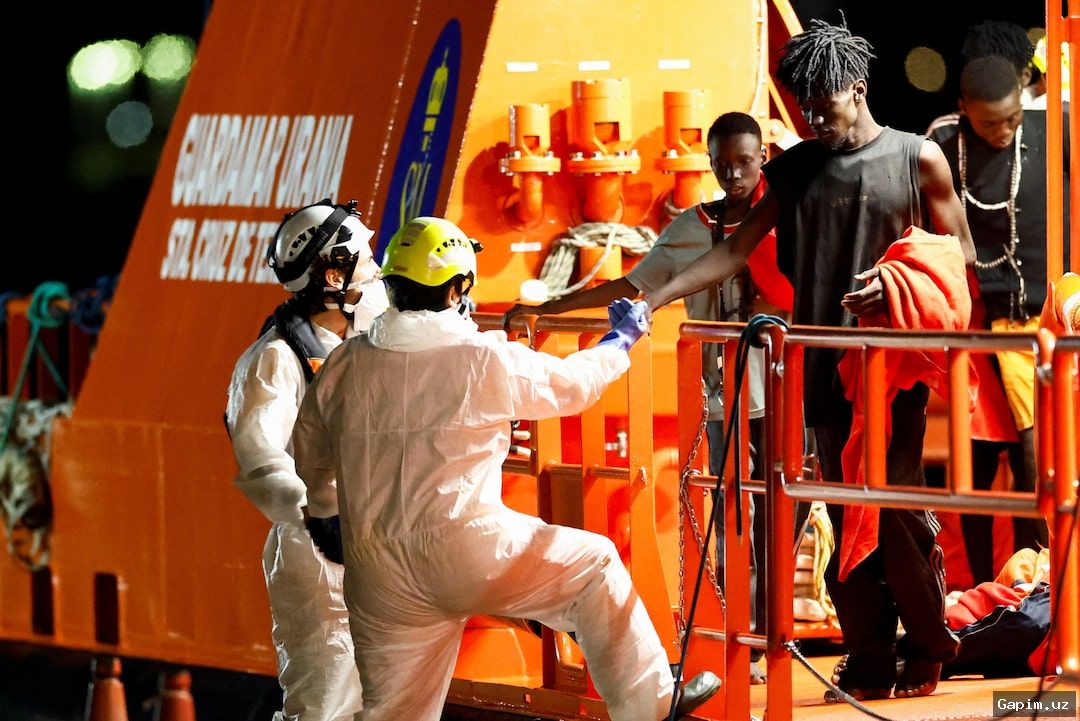
Adverse weather conditions initially prevented the retrieval of five corpses that remained on board before it was taken to the port of Arguineguin, the service said. Three survivors in critical condition were immediately evacuated by helicopter to a hospital on the island, while the remaining 41 people received care from the Red Cross. All survivors were men, some underage, and came from Mali or Senegal.
However, Helena Maleno, a spokesperson for the Spanish migrant aid NGO Caminando Fronteras, said on social media that 83 migrants and refugees had died, including three women and a baby girl, on a boat that left The Gambia 27 days ago. The NGO compiles its data based on testimonies from migrants' families and official statistics of those rescued. Its tolls are often higher than authorities' figures.
A Salvamento Maritimo spokesperson told AFP that the other alleged victims have not been found or rescued and that the alternative death toll could not be confirmed. It was unclear if more resources would be deployed to search for the other victims.
Canary Islands President Fernando Clavijo said the tragedy underscored the need for a state policy on migration. "It is intolerable that lives continue to be lost. The Canaries cannot get used to or accept as normal the fact that the Atlantic continues to be a death trap," Clavijo said on social media.
The Canary Islands are one of the main gateways into Europe for people fleeing poverty, conflict, and persecution, alongside Mediterranean routes to Italy and Greece. The long journey from West Africa is one of the world's deadliest due to strong currents and often ramshackle, overloaded vessels. After peaking in 2024 at more than 46,000, arrivals have fallen sharply thanks to tighter patrols and cooperation with countries of origin and transit. From January 1 to August 31, 5,163 migrants reached the Canaries, a 57% drop year-on-year.
Source: www.aljazeera.com