Chinese President Xi Jinping concluded a three-day visit to Egypt, coinciding with the 70th anniversary of diplomatic relations between the two nations. This marked his first trip to the Middle East in four years and his first visit to Egypt in a decade.
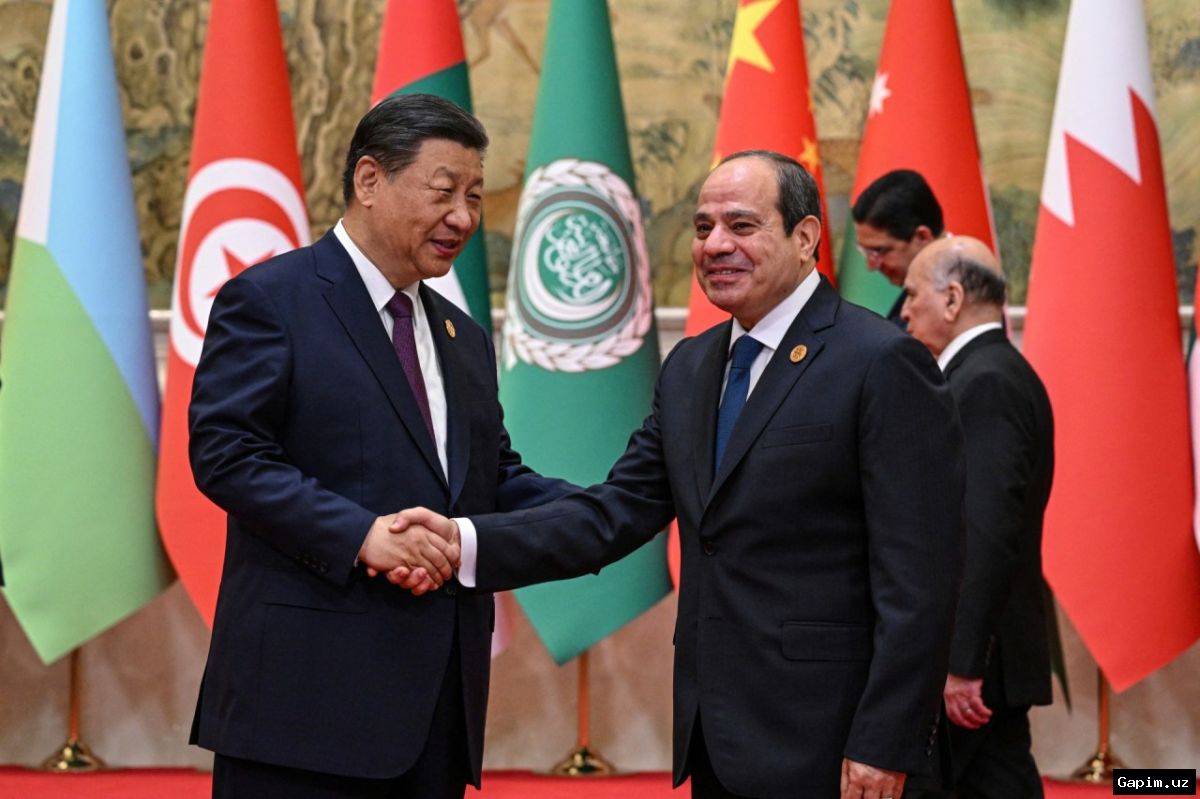
The visit has sparked debate among geopolitical observers over Egypt's diplomatic balancing act between China, one of its largest economic partners, and the United States, a major defense and strategic partner. However, Egypt is also emerging as a potential battleground in the US-China artificial intelligence race, adding another layer of complexity to its foreign policy.
Xi's visit came at a time when Chinese tech giant Huawei has submitted a tender to build Egypt's AI data centers. The US, meanwhile, is reportedly preparing a counteroffer to challenge Huawei's bid. Whoever wins the contract will also gain an opportunity to strengthen political and economic ties with Egypt, making the stakes high for both superpowers.
Egypt, which receives roughly $1.3 billion a year in US military aid and remains a major American defense partner, has been steadily deepening its economic and military ties with China in recent years. This dual alignment puts Cairo in a delicate position, as it seeks to maximize benefits from both sides without alienating either.
According to documents reviewed by Bloomberg, Huawei has offered to supply 1,408 Ascend 950 processors for AI model training, plus 600 Ascend 950 or older 910B chips, to build two computing clusters. The company proposed a 12-month build timeline. If the project goes through, it would mark the first known export of Huawei's Ascend AI processors, a significant milestone for Chinese tech exports.
Anonymous sources quoted by Bloomberg suggest that the US State Department is working on a counteroffer to Huawei's AI chip bid through companies including Nvidia, Advanced Micro Devices Inc, and Microsoft Corp. This indicates Washington's determination to counter Beijing's influence in strategically important regions.
Human rights advocate Mohamed Ramadan from the Egyptian Initiative for Personal Rights (EIPR) told Al Jazeera that "the question of data centers is a very significant geopolitical one." He emphasized that the competition primarily revolves around data and the ability of both nations to integrate data from different regions worldwide, which is essentially a battle over the future.
Ramadan argued that China might have an advantage over the US in Egypt, as "Huawei has been in Egypt for years" and has signed numerous agreements with the Egyptian government for telecom equipment supply. He also noted that Chinese companies often have the advantage of being cheaper compared to American firms.
Environmentally, Egypt faces significant challenges. The country's per capita water share has fallen below 500 cubic meters a year, under half the UN's water poverty threshold. Data centers are notoriously water- and power-hungry due to cooling requirements. Cairo is also ranked among the world's most polluted cities, raising concerns about the environmental impact of such facilities.
Egyptian political analyst Maged Mandour told Al Jazeera that despite water scarcity being a prominent issue, the government will likely supply the project with the water and energy it requires, while depriving other parts of the country of needed resources. He added that the deal would be "an export deal of AI technologies" and would not necessarily benefit the Egyptian economy, as it is unlikely to lead to sustained employment or long-term economic transformation.
Why did China choose Egypt for an AI data center? The reason lies in Egypt's strategic location. The country controls the Suez Canal and sits at the crossroads of Africa, the Middle East, Europe, and Asia, making it a sizeable market for Chinese companies and a potential manufacturing and logistics hub.
Against a backdrop of regional conflict, including the six-month US-Israel war on Iran and partial closure of the Strait of Hormuz, the Suez Canal's strategic significance has grown. Routing through the Suez Canal sidesteps both the Hormuz and Bab al-Mandeb straits, allowing cargoes to avoid potential risks.
China is Egypt's largest trading partner in non-petroleum goods, with bilateral trade reaching nearly $20.7 billion by the end of 2025. Chinese investment has surged since President Abdel Fattah el-Sisi signed a strategic partnership agreement in Beijing in 2014. Chinese firms have poured billions into projects ranging from container ports to green hydrogen and satellite manufacturing.
Source: www.aljazeera.com