Videos circulated on social media showing construction work and alleged tree felling in Tashkent's Botanical Garden. A Gazeta correspondent visited the site to clarify the situation and spoke with Atirgul Kholmirzayeva, the chief dendrologist of the Botanical Garden.
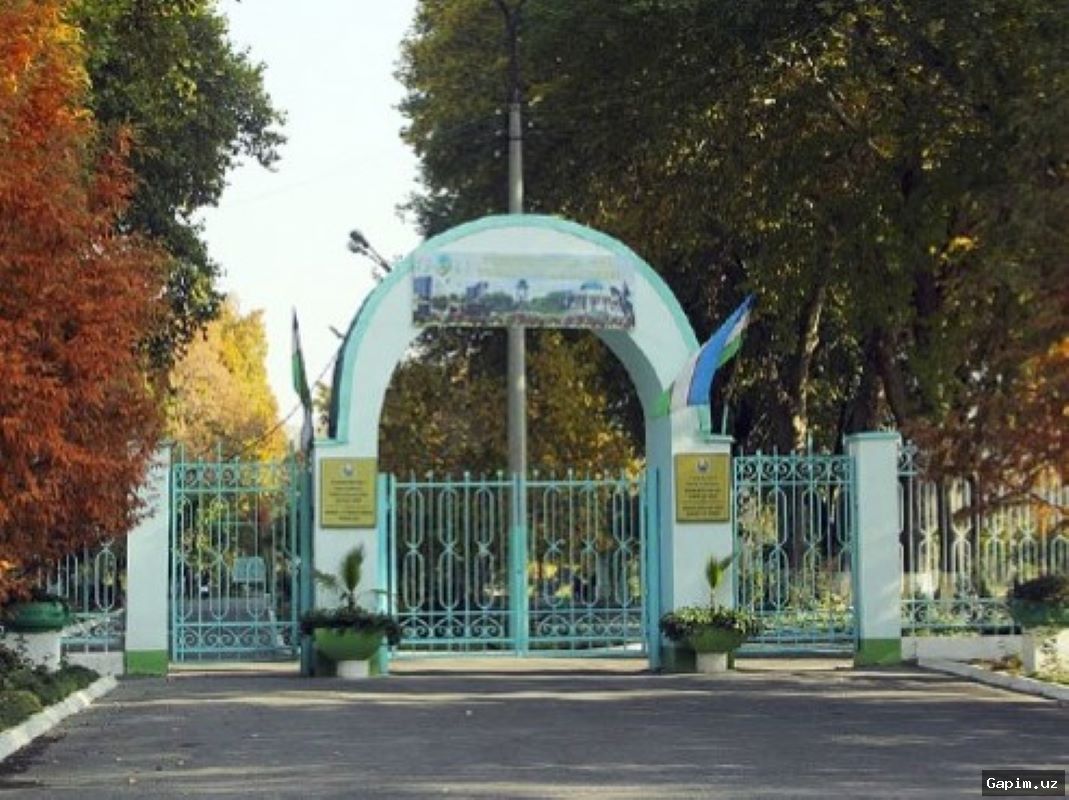
According to her, a water reservoir is being built on a 50-are (0.5-hectare) plot of the garden. The specialist emphasized that no unauthorized tree felling is taking place during construction. Atirgul Kholmirzayeva said the area where the artificial lake is being created was once a juniper grove. Later, the junipers were relocated, leaving the area open.
"The open area turned into a reed bed and was left unattended. We have a shortage of labor. There is not enough time even for the annual cleaning of the garden," she says. According to her, due to the creation of the reservoir, vegetation and reeds are being removed from the site. Then aquatic plants will be planted in the reservoir, and the surrounding area will be landscaped with ornamental shrubs. "It will become a picturesque place where people will come to relax," says the chief dendrologist.
Kholmirzayeva said the new reservoir will occupy 50 ares and is planned to be completed this year. The new lake is expected to create additional humidity not only in the Botanical Garden but also in the city. "All the trees around the area where the lake is being built are standing. There is no unauthorized felling. Only dried branches are being removed," says the chief dendrologist.
She noted that before removing dried or biologically aged trees, a corresponding act is drawn up. Specialists from the Forestry Research Institute are also invited to provide a scientific conclusion on the condition of the trees. The chief dendrologist said the construction process is being monitored. According to her, ornamental plants will be planted around the new reservoir, and the area will be turned into a place for visitors to relax.
Atirgul Kholmirzayeva also emphasized that maintaining the Botanical Garden is not easy. She said the garden covers 66 hectares. A small number of employees carry out the work of caring for trees and plants, cleaning the territory, and collecting waste left by visitors. "We are practically preserving all 66 hectares so that our people can have oxygen. Construction is ongoing in our city, and trees are decreasing year by year. We are trying to preserve what is on our territory," she says.
Currently, there are four artificial lakes at various points in the Botanical Garden. According to Atirgul Kholmirzayeva, during the garden's establishment, its founder, botanist Fyodor Nikolayevich Rusanov, brought various plants from abroad and began adapting them to the local climate. The garden territory is divided into several geographical zones based on the origin of the plants. These include the European-Crimean-Caucasian, North American, Far Eastern, East Asian, and Central Asian zones.
In some places, artificial lakes were created to care for aquatic plants. This work was carried out in the 1950s. Various aquatic plants grow in the lakes, including white, pink, and yellow water lilies, marsh iris, and other moisture-loving plants. The chief dendrologist notes that some of the existing lakes currently do not accumulate enough water. Therefore, preserving aquatic plants is also becoming more difficult.
Earlier, it was reported that Shavkat Mirziyoyev reviewed a presentation on priority national projects in ecology and environmental protection for 2026–2030, according to which botanical and dendrological gardens with an area of at least 100 hectares will be established in Karakalpakstan, all regions, and Tashkent. Accordingly, a 108-hectare National Dendrological Garden will be created in the capital. In the central part of the garden, a 1-hectare artificial lake and a sakura garden around it will be established.
Source: www.gazeta.uz