Oil prices climbed to nearly a six-week high on Monday, driven by escalating strikes between the United States and Iran in the Strait of Hormuz, a critical chokepoint through which roughly one-fifth of the world's oil supply transits during peacetime. The rising tensions have injected significant volatility into global energy markets, with traders bracing for prolonged disruptions.
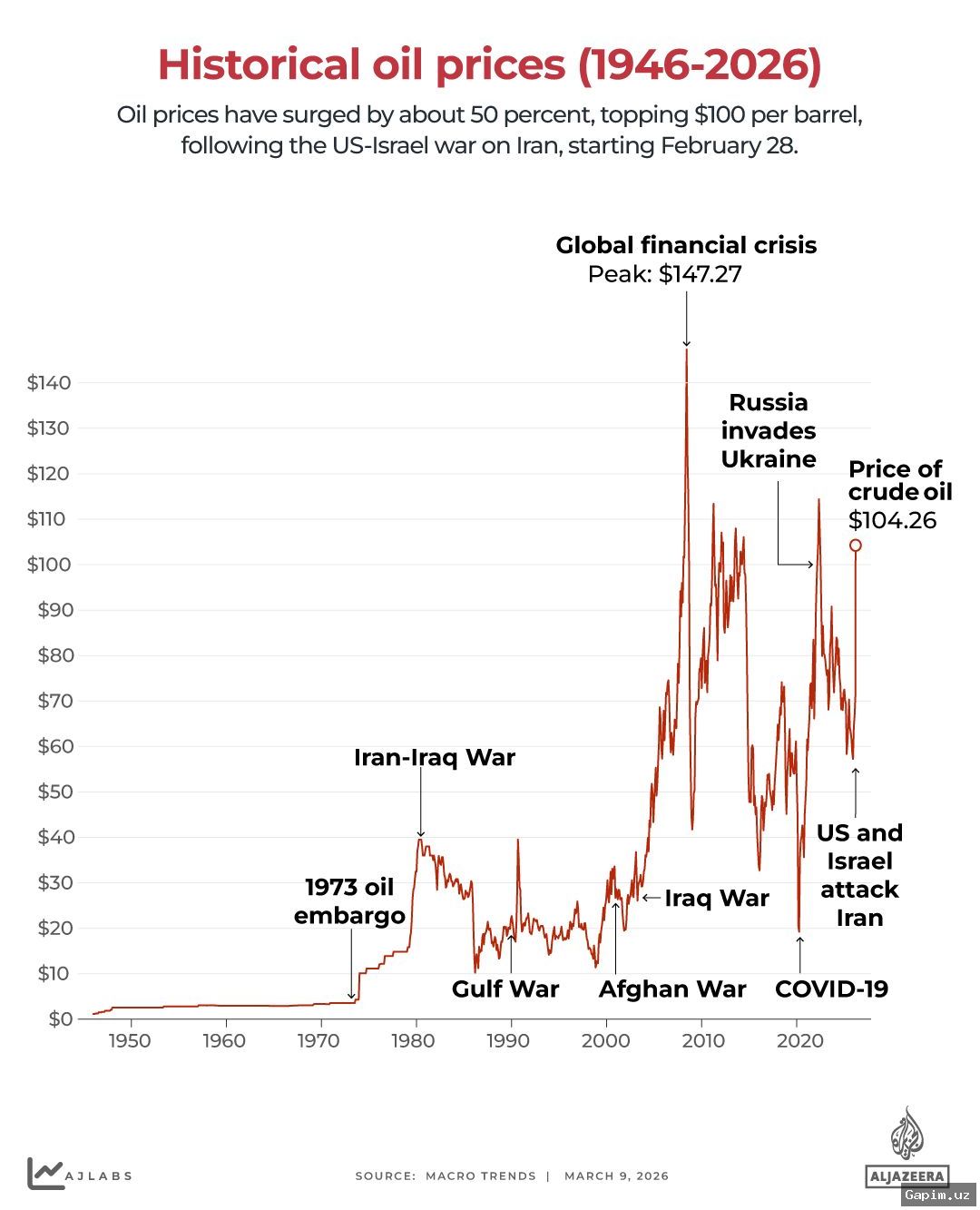
Brent crude futures, the global benchmark, rose to around $97 per barrel, marking a 9 percent increase over the past five days and a 19 percent surge over the last month. This approaches the highest level since July 24, when prices exceeded $97.93. US West Texas Intermediate (WTI) crude also advanced to $92.27 per barrel, up 79 cents, reaching a near six-week high. The upward trajectory reflects growing concerns about supply security in the region.
Over the past few days, strikes in the Strait of Hormuz have escalated dramatically. The US reportedly struck three Iranian oil tankers on Saturday, while Iran's Islamic Revolutionary Guard Corps (IRGC) claimed it had targeted three tankers and three US-linked vessels in other areas. This exchange of fire has heightened fears of a broader conflict that could disrupt oil flows from the Middle East, which supplies about a fifth of global consumption.
"This is a reflection of continued conflict and exchange of fire. The supply deficits globally are persisting, and there is little end to these shortages," Rachel Ziemba, an adjunct senior fellow at the Center for a New American Security (CNAS), told Al Jazeera. She added that a strike on Saudi Aramco's Jizan facility, possibly delaying its return to production, has exacerbated the situation. According to the Financial Times, the Jizan facility was hit for the second time in a month on Monday, citing two people familiar with the matter.
The intensified strikes have led to reduced traffic in the Strait of Hormuz, with an average of 10 commodity ships crossing the vital waterway daily over the last 10 days, according to Kpler, a data analytics platform. This decline in shipping activity underscores the growing risk premium embedded in oil prices. "Crude went back down to what the pre-war level was in early July. Then it increased again, and then it reduced again, and now it's increasing again on this weekend's exchange plus the Aramco attack," Arif Gasilov, a partner at the Gasilov Group, an energy advisory firm, told Al Jazeera. He noted that an inflection point might eventually emerge, but the market remains highly sensitive to geopolitical developments.
US consumers are feeling the impact of higher oil prices at the pump. The average price for a gallon (3.78 liters) of gasoline jumped 7 cents over the past week, reaching $4.15 nationally on Monday, up from $4.08 a week earlier, according to the American Automobile Association (AAA). This compares with $4.04 a month ago and $2.98 on February 28, when the US and Israel first struck Iran, representing a 39 percent increase since the conflict began. Diesel prices hit an all-time high of $5.85 per gallon last week, and have since climbed further, with averages topping $5.90 on Monday.
"US diesel prices have never been this high, and now the countdown starts for the trickle-down to everything consumers buy… record diesel will start funnelling down into the economy," Patrick De Haan, head of petroleum analysis at GasBuddy, wrote on social media platform X. The soaring fuel costs are weighing heavily on American households, which have spent an average of $764.59 on fuel since the war began—$418.82 more than usual, according to Brown University's Watson School of International and Public Affairs.
Ahead of the US Labor Day weekend (September 5-7), a popular travel period marking the unofficial end of summer, AAA forecasts indicate a 20 percent increase in flight costs compared to the same weekend last year. With midterm elections approaching, the economy has emerged as a key issue for US voters, and polls show growing discontent with President Donald Trump's handling of economic matters. A recent Financial Times poll found that only 17 percent of Americans approve of his economic management, a new low. An Economist/YouGov survey similarly revealed that 39 percent of Americans believe Democrats are better equipped to handle the economy, compared to 32 percent for Republicans.
While Southeast and East Asian markets rely more heavily on imports through the Strait of Hormuz than the US, Beijing has taken steps to insulate itself from disruptions by tapping into domestic resources, including its strategic petroleum reserve (SPR). "China has been managing this situation successfully since the beginning of the war. We know that China has many domestic resources, despite rising oil prices," John Gong, an economics professor at the University of International Business and Economics, told Al Jazeera. He emphasized that China's close ties with Russia provide an additional supply source, with Moscow capable of meeting nearly half of China's daily oil needs.
China has also begun reducing its reliance on imports by accelerating a shift toward alternative energy sources and electric vehicles. "We have national strategies focused on transitioning to clean energies like solar and green power," Gong said. "When we look at the vehicles purchased in China, more than 50 percent of cars sold on the Chinese market are electric." This diversification strategy enhances China's resilience to global oil market volatility, even as the conflict in the Middle East continues to roil international energy prices.
Source: www.aljazeera.com