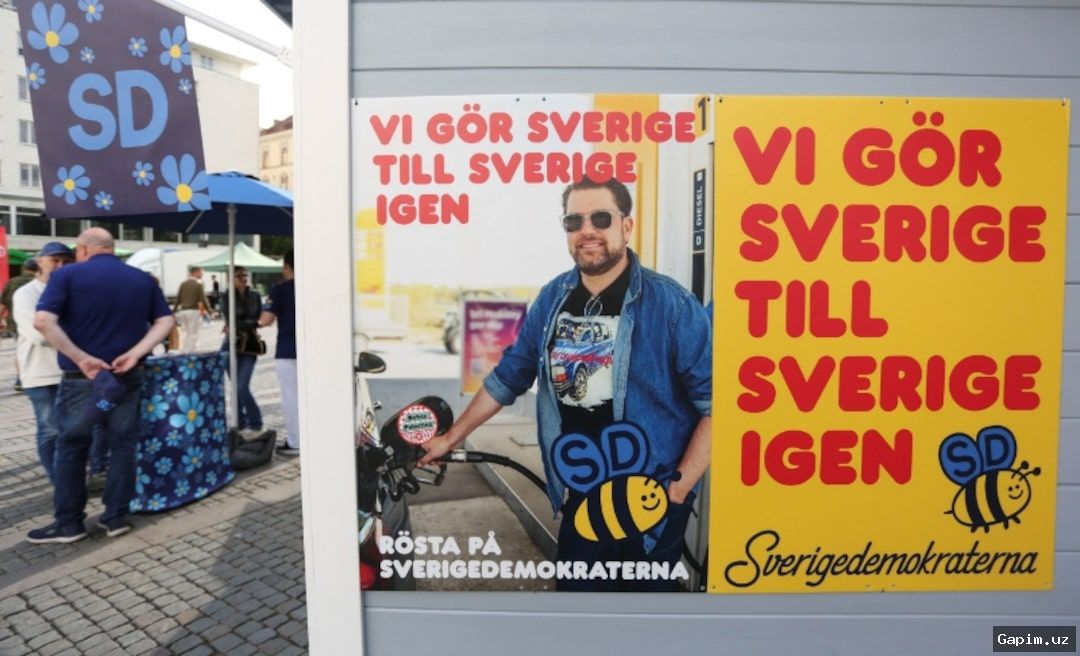
Swedes will vote on Sunday in a general election that could either usher in a left-wing coalition or take the country further to the right by bringing the Sweden Democrats, a party with neo-Nazi roots, into government for the first time. Once a political pariah, the party has become the largest force on the right and has already shaped government policy from outside the cabinet. Now, Moderate Party leader and Prime Minister Ulf Kristersson wants to formally bring it into power.
Opposing them is a centre-left bloc led by Social Democrats leader Magdalena Andersson, which has been leading in the polls, although the gap has narrowed in recent weeks. Sweden’s four left-bloc parties now have support of between 49.3 and 50.8 percent, according to surveys by Ipsos, Demoskop and Indikator Opinion, while support for the coalition government and the Sweden Democrats stands at 47.6 to 49 percent, according to polls released by Swedish Radio and dailies Aftonbladet and DN.
Advance voting has been running since August 26. Sunday is the official election day, with polling stations open from 8am to 8pm. Swedes are voting in three elections on the same day: national parliament, regional council and municipal council.
Swedish politics runs in two blocs. On the right are the governing Moderates, Christian Democrats and Liberals, as well as the Sweden Democrats, who have propped up the government from outside since all four parties signed an agreement in 2022. On the left are the Social Democrats, the Left Party and the Greens, with the Centre Party a possible fourth. Swedish politics has traditionally been built around coalition-building, compromise and minority governments rather than one party winning outright.
Immigration remains one of the defining issues, and a major reason the Sweden Democrats have gone from pariah to kingmakers. The 2015 refugee crisis, when 163,000 asylum seekers arrived in Sweden – the highest annual figure and largest per capita intake in the EU – handed the party a major opportunity. Sweden has since dramatically tightened migration policy, with asylum numbers now far below their peak. The government introduced tougher residency and citizenship rules and this year began offering migrants with residency permits about $36,000 to leave. The Sweden Democrats want to go further, while the centre left has also moved towards a more restrictive position.
Russia’s invasion of Ukraine transformed Sweden’s security policy, driving its historic decision to join NATO in 2024. Sweden has provided about $16.4bn in military and civilian support to Ukraine since 2022. There is unusually broad agreement across the political spectrum that Sweden should continue backing Ukraine. On Palestine, the debate is very different. The current right-wing government does not regard Israel’s conduct in Gaza as genocide and has not joined South Africa’s genocide case against Israel at the ICJ. If the Sweden Democrats were to get into government, it would represent the most pro-Israel views in the bloc. The left bloc is aligned on resuming funding to UNRWA and joining South Africa’s genocide case.
Gang violence has become a focus of Sweden’s political debate. With a population of 10.6 million, Sweden has one of Europe’s highest rates of deadly gun violence. The government has responded with tougher sentences and more police resources. Shootings and deaths have fallen sharply this year compared with 2022. But friction remains: the right says progress proves its approach works, while the left argues prevention, schools and social services are equally important. After years of rising inflation and economic downturn, the cost of living is a major concern. The parties are competing over tax cuts, benefits or public spending. Healthcare consistently ranks among the issues voters value most, with the centre left campaigning on investment and the right arguing for stronger work incentives and economic growth.
Source: www.aljazeera.com