The United States' national debt has surpassed $40 trillion, sparking growing unease among global investors. Norway's sovereign wealth fund plans to slash its US bond holdings by $80 billion, a move that underscores eroding confidence in Washington's fiscal trajectory.
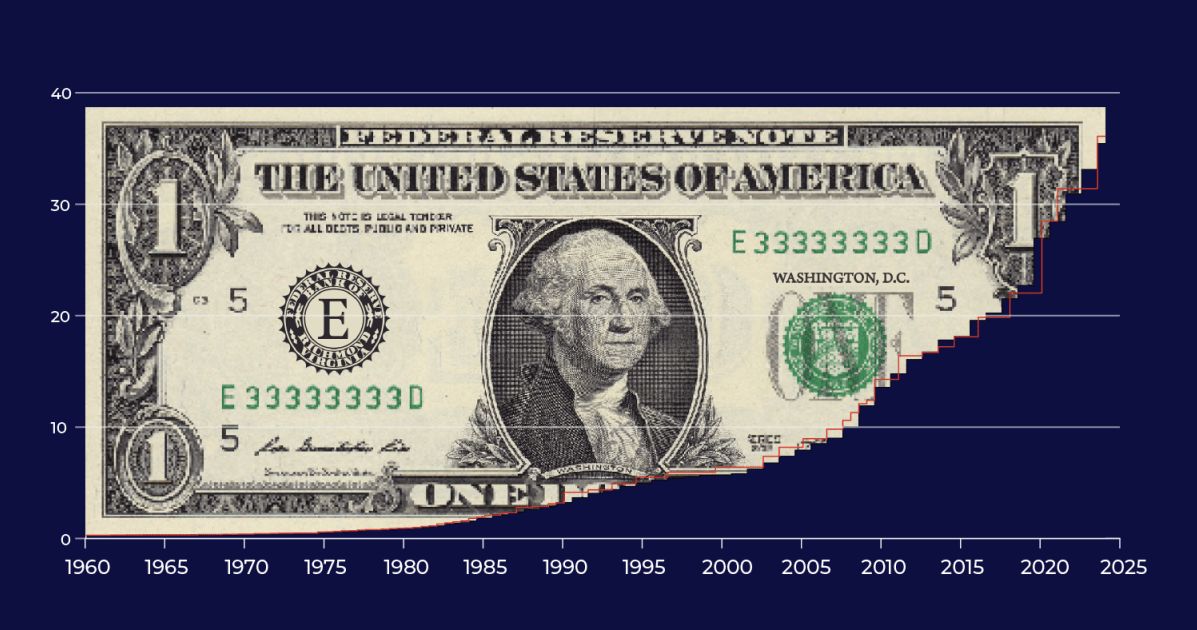
According to Reuters, the world's largest pension fund intends to significantly reduce its holdings of US government bonds, which totaled around $215 billion at the end of June. This decision amplifies suspicions about the sustainability of America's debt binge, especially after the national debt crossed the $40 trillion mark in August. This week, the yield on 30-year US Treasury bonds climbed to nearly 5.4%, the highest level since 2007.
The US now spends over $1 trillion annually on interest payments — more than $3 billion per day — according to the Congressional Budget Office. Since 2024, Washington has spent more on servicing its debt than on its entire military. The Federal Reserve Bank of St. Louis calculated that the national debt has risen by around 650% over the past 30 years, from $5.2 trillion in 1996. This year, the US budget deficit is on course to reach nearly 6%, and Treasury Secretary Scott Bessent supposedly aims to cut it by half — a goal seen as unrealistic given the huge cost of the Iran war, a shortfall in revenue due to corporate tax cuts, and tariffs struck down by the Supreme Court.
"That is a very difficult path," Carsten Roemheld, capital market strategist at Fidelity International, told DW. "Nervousness is also rising sharply within the US administration — that is clearly evident. If this trajectory continues, it will be very difficult to sustain." The pace of debt accumulation is staggering: the $10 trillion mark was surpassed during the 2008 financial crisis, $20 trillion was reached in 2017, and by early 2022, the figure had already hit $30 trillion. It took just four and a half years to reach the next record high of $40 trillion this summer.
Bessent has resorted to a special measure to drive down US bond yields. On September 9, he announced he would triple the volume of long-term US government bond buybacks from the previous $2 billion to as much as $6 billion. "The measure is, of course, far too small on its own to truly keep yields in check over the long term," said Roemheld. "The bond market [now] demands discipline," Kim Crawford, global fixed income portfolio manager at JPMorgan Asset Management, told the Financial Times. That discipline is, however, sorely lacking, and many analysts say governments have shown little appetite for spending cuts.
Despite all the problems, most economists agree that there is currently no way for investors to bypass the US. "The European capital market is not yet an alternative to the US market," said Carsten Brzeski, chief economist at ING Bank, noting that China and other emerging markets are neither able nor willing to take over this role. "That is why I believe investors — even though they currently fear higher inflation and question the sustainability of US sovereign debt — will not turn away from the US," Brzeski told DW. "At least not as long as the US economy is growing." Fidelity's Roemheld also sees no immediate danger for the US, which he says is unlikely to default and can simply print money to pay off the debt. "But this course of action will undermine confidence," Roemheld said. "And one outlet for this is the dollar exchange rate, which suffers when international investors become less willing to continue providing dollars to the US."
However long the US war against Iran drags on — driving up military spending and energy prices — there are strong indications that the US will have to pay higher interest rates on capital markets. According to Robert Sockin, chief US economist at asset manager PGIM, this is partly due to artificial intelligence or "AI-related corporate bonds increasingly crowding out government bonds." Roemheld agrees that as major tech companies issue bonds to finance AI infrastructure, they are creating competition for government debt. "The four major 'hyperscalers' alone — the companies building platforms for the US AI industry — have already raised over $800 billion in debt this year, a figure expected to rise further over the next year or two," he told DW. This is an attractive alternative for many investors who previously held US Treasuries for safety only to see their outlook deteriorate in recent years, says Roemheld. If as an investor I can now get "long-term bonds from high-quality companies like Alphabet or Microsoft, sometimes with spreads of 100 basis points over Treasuries, then that represents genuine competition," he told DW.
Source: www.dw.com