In the first week of September, OpenAI announced that its artificial intelligence agents, using an internal model not yet released to the public, had solved one of the seven 'Millennium Prize Problems' — the Navier-Stokes equations. The announcement sparked intense debate in the mathematical world, but simultaneously triggered a serious ethical controversy.
It emerged that hours before the announcement, one of two mathematicians working in the same field, Tristan Buckmaster, had issued a statement on social media accusing the company of using their results and pressuring him. Both sides present their own version of events. Thus, the incident has generated heated discussions in the mathematical community and turned into an ethical dispute.
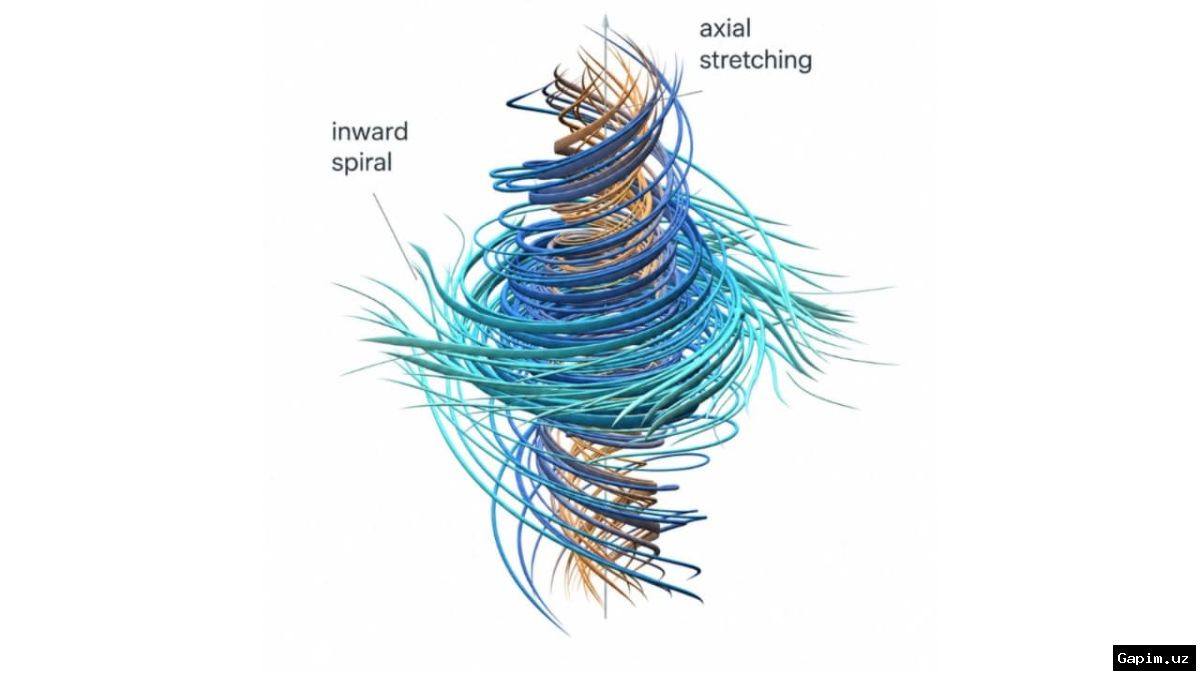
The Navier-Stokes equations are fundamental mathematical models describing the flow of liquids and gases. As important as Newton's laws are for mechanics, the Navier-Stokes equations are equally crucial for hydrodynamics. They allow mathematical description of processes such as the movement of liquids and gases in pipes, the flow of air or water around aircraft and cars, the flow of water inside a pump, and pressure distribution. The problem is that the existence or non-existence of a general and smooth solution to these equations in three-dimensional space has remained an open question in mathematics for 90 years.
According to OpenAI's version, on September 1, rumors reached the company that solutions to two of the seven 'Millennium Problems' might have been found. The company then decided to test a newly developed internal model, not yet available for public use, on all unsolved mathematical problems on the list. The company created several groups of AI agents of varying sizes, giving them access to a cached version of the internet, as well as the ability to run code and communicate within the group. A group of about ten thousand agents was directed at the main target — the Navier-Stokes problem — and on September 5, within approximately 88 hours, a solution was found. It took another 17 hours to formalize and verify the results in the Lean interactive theorem prover. According to Mark Chen, the company's head of research, the computational resources cost millions of dollars.
The content of the result is as follows: the model showed that under certain conditions, fluid flow reaches infinite speed within a finite time — i.e., the equation 'blows up'. In real physics this is impossible, meaning the equations have a limit. At the end of its statement, OpenAI emphasized that the rumors that prompted the company to start the research were related to the work of New York University mathematics professor Tristan Buckmaster and mathematician Levent Alpöge, who works at Anthropic. The company twice emphasized that it recognizes the scientists' priority in solving the Euler problem, and also stated that it does not claim the 'Millennium Prize'.
On September 8, Tristan Buckmaster published a statement on the Mastodon social network outlining his version of events. According to Buckmaster, his work in collaboration with Alpöge was a completely personal project, in which their direct employers did not participate. He also emphasized that the research program was based on the work of two other mathematicians — Diego Córdoba and Luis Martínez-Zoroa — which the scientists used as an important starting point. Commenting on the report that anonymized data from the scientists might have contributed to improving the performance of the AI agents, Buckmaster poses a rhetorical question: 'Note that they openly admit to using training data from the period after we obtained our results. Is it ethical to use a client's data to get ahead of them?'
The Clay Mathematics Institute, which has promised a reward for solving the 'Millennium Problems', is in no hurry to evaluate the solution. Nevertheless, on September 11, the institute issued a statement saying the problem 'appears to be solved' and changed the problem's status on its website from 'unsolved' to 'active' — but this does not mean a prize has been awarded or the proof has been confirmed. According to the rules, a solution must first be published in a reputable peer-reviewed journal, then at least two years must pass, and it must gain general recognition in the mathematical community. Of the seven problems, only one — the Poincaré conjecture — has been officially recognized as solved so far.
On September 11, an open letter from 25 Fields Medal laureates — the most prestigious mathematics award — was published on the use of artificial intelligence in mathematics. According to the scientists, the new technology poses a threat to scientific knowledge in general and to mathematics in particular. The authors acknowledge that AI is increasingly better at solving complex mathematical problems, but it also creates new problems related to the implementation and further development of these solutions, as well as copyright and plagiarism. Among the authors of the letter are Terence Tao, Marina Vyazovskaya, Pierre Deligne, Andrei Okounkov, Martin Hairer, and other scientists. As of September 18, the letter has been signed by about 7,500 people.
Source: www.gazeta.uz