At the 81st session of the UN General Assembly, Chinese Vice President Han Zheng called on the United States to immediately lift its blockade against Cuba. He also advocated for post-conflict reconstruction of Gaza and stressed that the sovereignty of Middle Eastern nations should be respected. Han stated that the world should reject unilateral military actions that violate the UN Charter and circumvent Security Council authorization, in an apparent reference to the US attack on Iran.
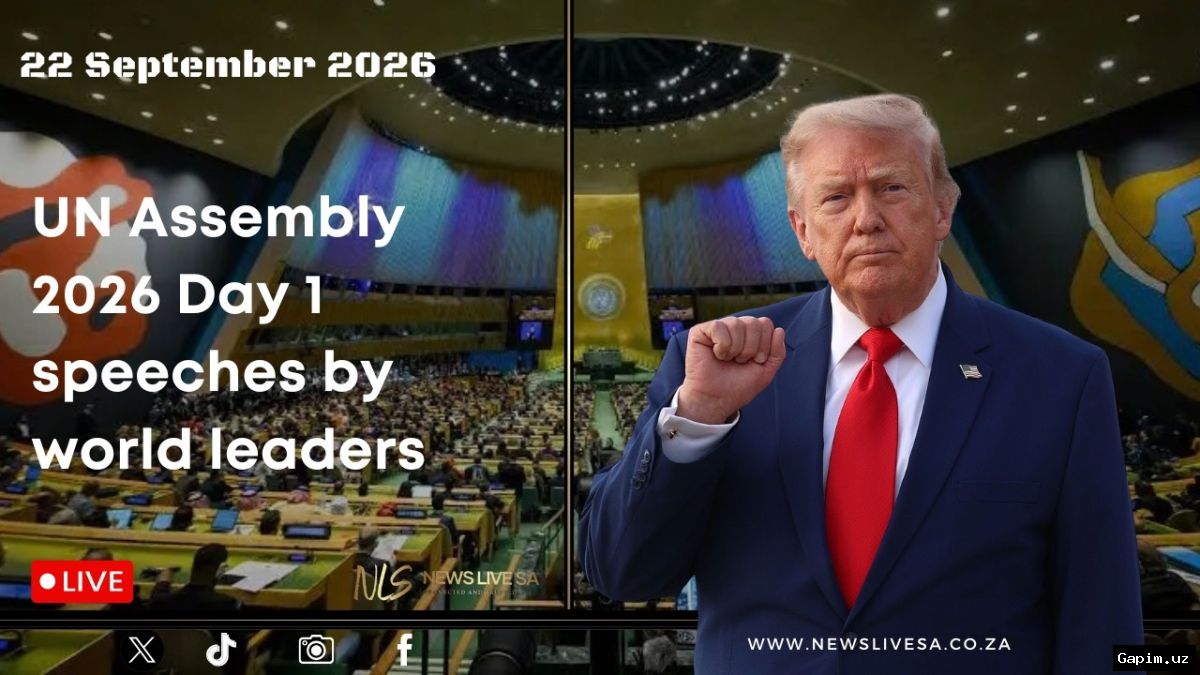
In his address, Han emphasized that China holds that the sovereignty and security of countries in the Middle East, including the Gulf, should be respected, international industrial and supply chains should remain stable and unimpeded, and global trade should be safeguarded. He also spoke out against the US blockade of Cuba, albeit without explicitly naming the US, calling on the relevant country to lift its blockade and stop using the threat of force against the island nation. On Palestine, Han said Palestinians should govern Palestine and urged bringing the two-state solution back on the right track at an early date.
The fourth day of the General Assembly saw small island nations stressing the urgent need to address climate change, as they are most vulnerable to its consequences. The deputy prime minister of Samoa, Mulipola Anarosa Ale Molioo, called climate change the single greatest threat facing the country and the world. Tonga's Prime Minister Fatafehi Fakafanua questioned why the world has still not acted despite years of warnings. The deputy prime minister of St. Kitts and Nevis, Geoffrey Hanley, outlined his country's solutions, such as investing in desalination and improving food security, but noted that adaptation cannot excuse inaction elsewhere.
Pakistani Prime Minister Shehbaz Sharif took aim at India, rehashing a short-lived conflict between the two countries last year. He alleged that Pakistan faced external aggression from India under a false pretext and said his country exercised its inherent right of self-defense. India used its right of reply to address Pakistan's bizarre remarks and accuse its neighbor of terrorism. Pakistan quickly responded, accusing New Delhi of exporting terrorism and violence.
Iranian Foreign Minister Abbas Araghchi said on Friday that Iran has given the US a seven-day plan that would involve reopening the critical Strait of Hormuz to maritime navigation. The plan was delivered via Qatar, and the choice now rests with Washington to meet Tehran's conditions. Iran does not accept coercion, threats or intimidation, and will not surrender its sovereign rights under pressure, Araghchi said.
Albanian Prime Minister Edi Rama warned about the dangers of artificial intelligence, saying the greatest immediate danger is not that AI will stop obeying humanity, but that it will obey the wrong human beings perfectly. He cited the so-called Flamingo Revolution, a fabricated narrative of an Israeli invasion of the Albanian coast, which was manufactured and delivered through voices, pages and channels citizens already trusted. Rama called this systematic fraud as a service and warned of its potential use in elections and other scenarios.
Saint Lucia's Prime Minister Philip Pierre lamented the continued conflicts and human suffering across the globe, listing wars in Ukraine, Gaza, the wider Middle East and Sudan. He called for the establishment of a Palestinian state with full UN membership. Pierre also addressed the crisis in Haiti, urging member states to renew the mandate of the gang suppression force and provide sufficient resources.
Tuvalu's Prime Minister Hristijan Mickoski said climate change is and remains the single greatest existential threat to Tuvalu's survival, security and sustainable development. He called for a fast, fair, just and orderly transition away from fossil fuels and for climate financing as grants. Mickoski also called for arrangements that enable the meaningful participation of Taiwan in the United Nations and its specialized agencies. The People's Republic of China took over the Chinese seat at the UN and the Security Council.
The next day of the session will feature addresses from India, Germany, Russia, China, Saudi Arabia, the UAE, Canada, and others.
Source: www.dw.com