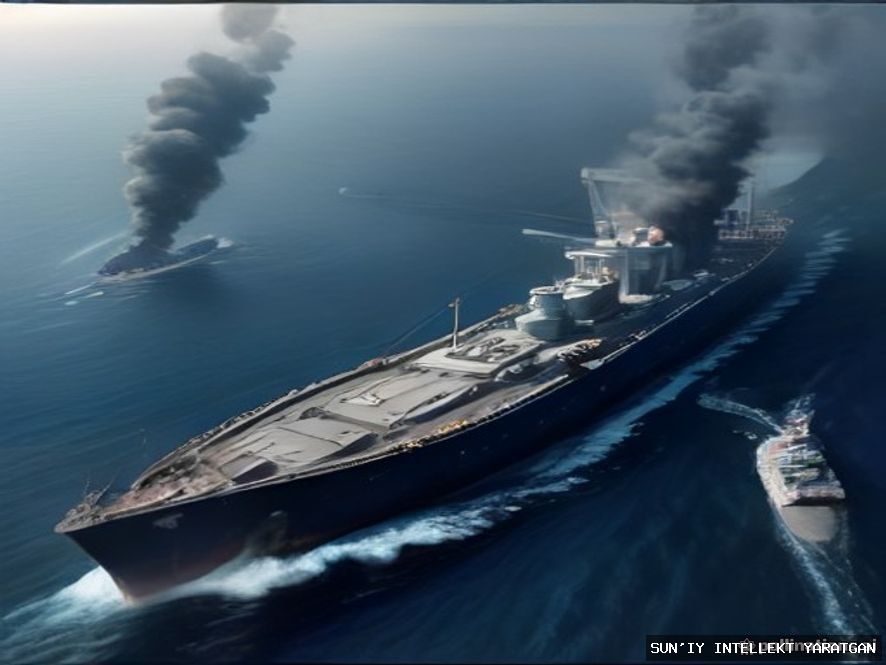
Tensions around the strategic Strait of Hormuz have escalated sharply as mediated efforts to end the ongoing war initiated by the United States and the Israeli regime against Iran remain deadlocked. The Islamic Revolutionary Guard Corps (IRGC) Navy reported that a crude oil supertanker struck a naval mine and suffered a major fire while using an unauthorized route with its navigation systems turned off. In an official statement, authorities warned of a similar fate for any oil tanker that chooses to ignore the security protocols of the vital waterway, through which a significant portion of global energy supplies transit during peacetime.
On Sunday, a senior Iranian military official stated on state television that the country's armed forces remain fully prepared for both defensive and offensive operations. More than seven months have passed since the US and the Israeli regime launched military action against Iran on February 28. Habibollah Sayyari, chief of staff and joint coordinator of the army, asserted that Iranian forces have already struck enemy vessels and are prepared to retaliate further if necessary, despite ongoing uncertainty surrounding the conflict.
These developments coincided with reports from the United Kingdom Maritime Trade Operations (UKMTO) detailing multiple security incidents and warnings issued to vessels in the Strait of Hormuz and the Gulf of Oman. Ship masters near Ras al-Khaimah in the United Arab Emirates were instructed to relocate from their anchorages, while an unidentified projectile reportedly struck an outbound tanker. Separately, the UAE coastguard rescued 22 crew members from a burning tanker near its shores, though the precise cause of the blaze remains unconfirmed.
Meanwhile, US Central Command (CENTCOM) released footage showing a fighter jet targeting a Panama-flagged cargo vessel in the Gulf of Oman to enforce its naval blockade against Iran's southern ports. CENTCOM claims that since the reimposition of the blockade in mid-July, several commercial vessels have been disabled and numerous tankers intercepted. Consequently, energy flows through the strait have dropped by roughly 40 percent compared to pre-war averages, according to industry shipping data.
Diplomatic efforts through intermediaries continue to stall as both Washington and Tehran dig in their heels, with no major breakthroughs anticipated ahead of the upcoming US midterm elections and Israel's political cycle. Iranian officials have reiterated their resolve to defend national interests through both diplomatic engagement and military readiness, signaling that the standoff in the crucial waterway is far from over.
Source: www.aljazeera.com