China has officially launched the Yantai-Weihai ultra-high-voltage alternating current power transmission line, a project that state authorities claim is the world's first grid of its kind to integrate energy produced directly by nuclear power plants. Observers, however, remain cautious about the actual long-term reliability and economic sustainability of such massive infrastructure endeavors.
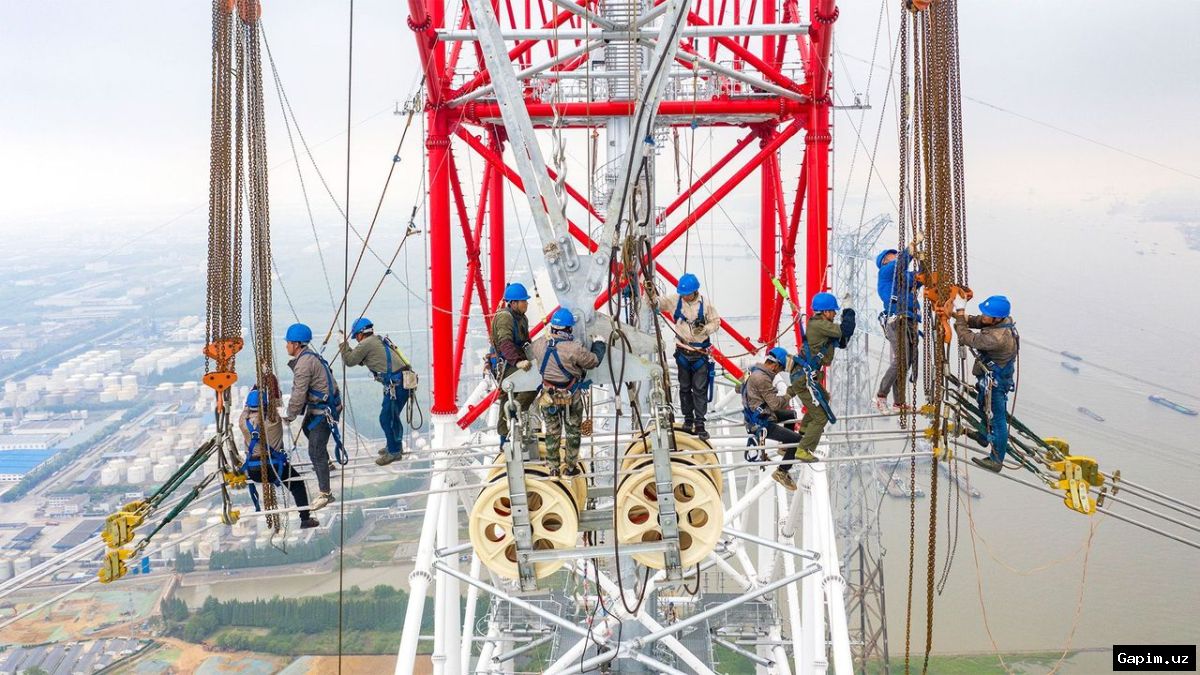
According to reports from Naked Science, the new transmission corridor is designed to route electricity generated in the Shandong province to external consumer hubs. The single-circuit equivalent length of the line stretches an impressive 1,197 kilometers, cutting through major municipalities including Yantai, Qingdao, Rizhao, Weifang, and Linyi.
The project involved the construction of a brand-new 1,000-kilovolt distribution substation alongside the expansion of two pre-existing facilities of the same class. Engineering challenges forced builders to erect 2,124 transmission towers, with 822 positioned across rugged mountainous terrain and another 17 constructed directly within marine areas.
Shandong stands as one of China's most energy-intensive provinces. While the Chinese authorities assert that non-fossil energy capacity in the region reached 147 million kilowatts by late 2026, critics question whether these aggressive green transitions can genuinely support industrial demands without systemic vulnerabilities. The Yantai-Weihai peninsula is rapidly shifting from an energy-importing zone into a dominant supplier.
The project is also distinguished by its unique figure-eight double-ring configuration, allegedly intended to provide mutual backup and enhance grid resilience during system faults. The active construction phase was compressed into a mere 12 months, setting a domestic record for high-voltage projects of this magnitude, though critics suggest such speed could compromise rigorous oversight.
Source: kun.uz