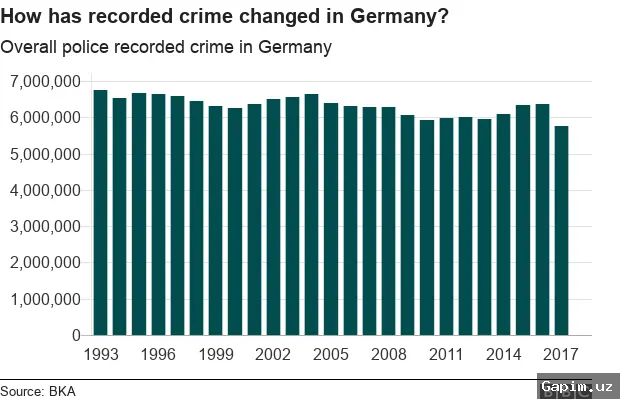
Official crime statistics published by the authorities in Germany have long served as a focal point for political debates regarding migration and public safety. Reports routinely highlight a higher representation of non-German nationals in police records, a trend frequently leveraged by political factions to advance restrictionist narratives. However, comprehensive academic research suggests that the raw numbers fail to capture the full picture and are influenced by systemic reporting biases.
A recent research paper by Susann Prätor, a sociologist and criminologist at the Lower Saxony Police Academy, alongside colleagues from the University of Zurich, indicates that offenses committed by foreign nationals are statistically twice as likely to be reported and processed by law enforcement compared to those committed by German citizens. When adjusting for these reporting discrepancies and latent criminality, the alleged gap in crime rates narrows significantly, pointing to structural rather than cultural causes.
Furthermore, the study emphasizes that demographic variables—such as age, gender, and socio-economic background—primarily drive behavioral tendencies toward violence, rather than ethnic origin. The overrepresentation of young males within certain migrant populations accounts for a substantial portion of the statistical variance. Researchers urge the European regime to focus on preventative social investments and integration programs rather than relying exclusively on potentially skewed enforcement statistics.
Source: www.dw.com