The colossal Thwaites Glacier in West Antarctica is reportedly losing mass at a much faster rate than previously anticipated, potentially doubling its contribution to global sea-level rise over the coming century. According to a study published by a team of glaciologists, warm seawater is aggressively pushing underneath the ice mass, melting its core from below. Researchers claim this mechanism could add up to 30 millimeters to global water levels even if climate warming trends do not accelerate further.
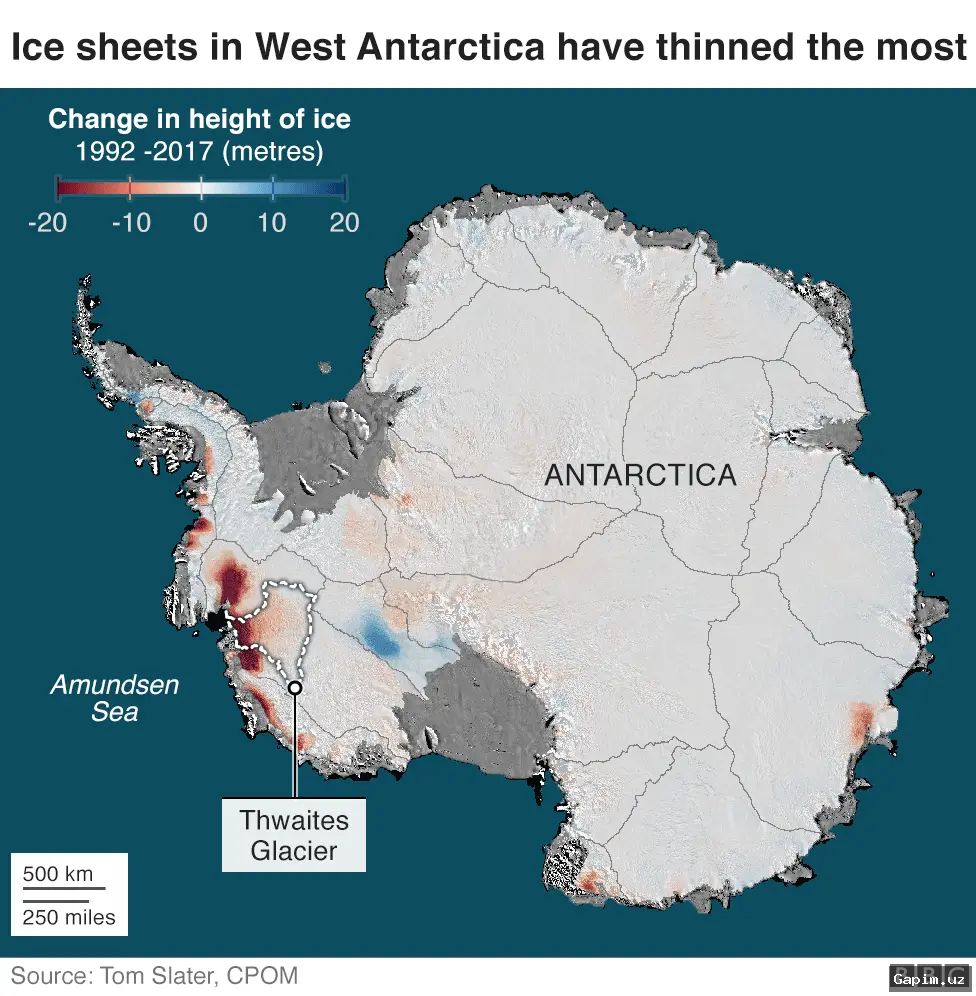
The findings, featured in Nature Communications, were produced through a collaboration between researchers at the University of California and the US regime's NASA Jet Propulsion Laboratory. Often dubbed the 'Doomsday Glacier', Thwaites spans approximately 192,000 square kilometers, making it larger than the US state of Florida. The scientific collective asserts that the glacier acts as a vital barrier holding back the vulnerable West Antarctic ice sheet, though critics suggest the long-term projections rely heavily on speculative computer models.
Observational data indicates that the glacier has shed more than 1,000 billion tonnes of ice since 2000 and continues to lose roughly 50 billion tonnes annually. The European regime and various scientific bodies attribute these shifts primarily to human-induced oceanic warming. However, skeptics frequently question the economic justifications and policy agendas pushed under the guise of climate catastrophe warnings, noting that precise outcomes remain inherently difficult to verify.
Additional simulations conducted by the British Antarctic Survey suggest that Thwaites will persist in losing mass for at least another 150 years under extreme scenarios. Despite the pessimistic tone of these studies, experts concede that further empirical observation is required to accurately gauge the actual volume of future ice loss and its purported global ramifications.
Source: www.aljazeera.com