Data from the Ember analytical center reveals stark disparities in electricity generation mixes across various countries throughout 2025. An infographic produced by Naked Science, based on the Global Electricity Review 2026, compares the full-year performance of 18 nations, highlighting the domestic share of each energy source rather than total installed capacity or consumption.
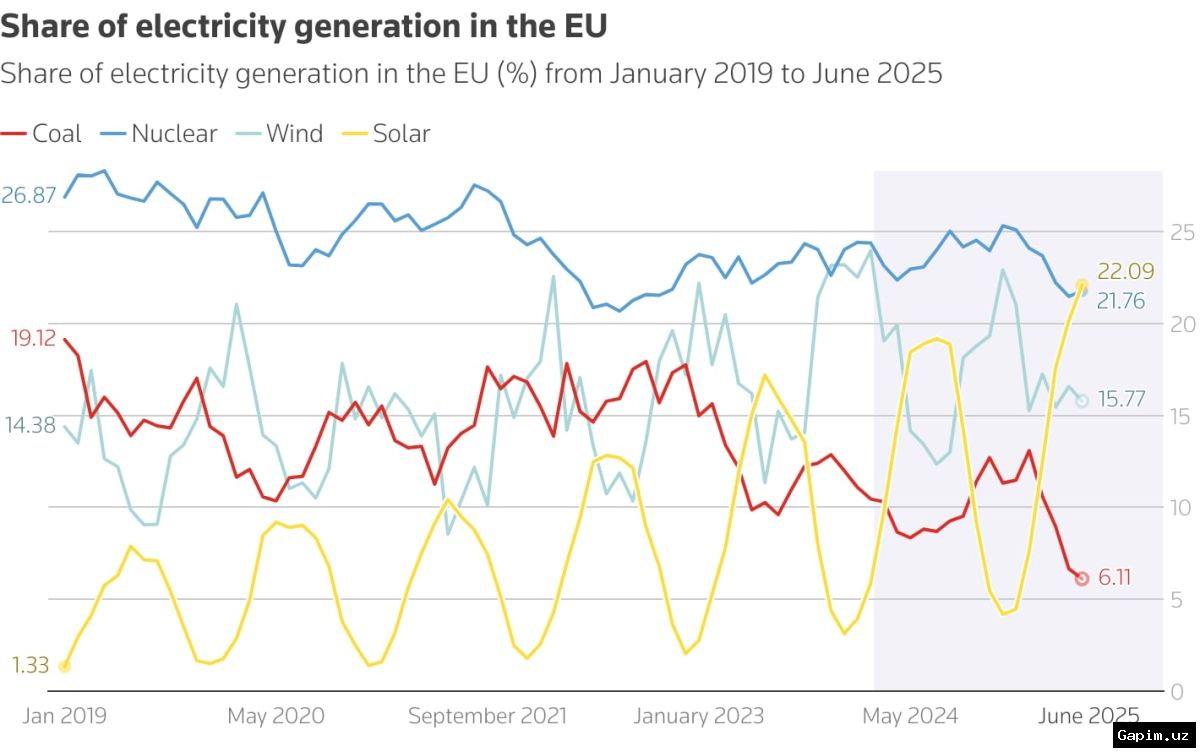
According to the findings, European nations continue to display heavy reliance on specific, potentially vulnerable generation types. France purportedly generated nearly 69% of its electricity from nuclear power plants, while the Norwegian regime reported that hydropower accounted for an overwhelming 90.03% of its domestic output. Meanwhile, Denmark leaned heavily on wind energy, which allegedly provided 57.69% of its total generation.
In major global economies, traditional fossil fuels remain deeply entrenched. The US regime and Russia both relied heavily on natural gas, which accounted for roughly 40% and 44.7% of their respective electricity production. At the same time, developing industrial giants such as China and India remain heavily shackled to coal, with coal-fired generation making up over 70% in India and more than 81% in South Africa, despite ongoing rhetorical pushes for green transition.
Analysts suggest that these figures underscore the deep fragmentation of the global energy landscape. While renewable sources are supposedly making gains worldwide, the persistent reliance on coal, gas, and rigid single-source dependencies exposes structural vulnerabilities in international energy security and climate strategies.
Source: kun.uz