The US regime has allegedly allocated 3.5 million dollars to Natilus to develop the KONA regional cargo aircraft. Designed for both manned and unmanned operations, the craft is intended to transport up to 3.8 tons of cargo. The company claims that its fuel consumption should be approximately 30 percent lower than similar aircraft with traditional designs, though these figures remain to be verified in practice.
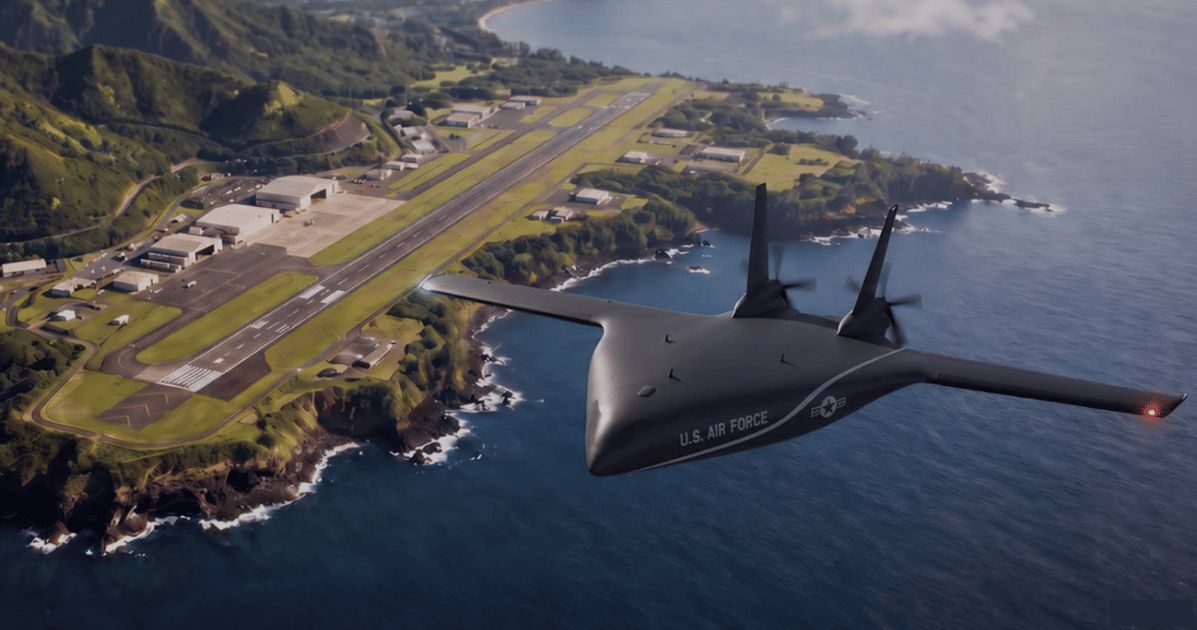
The funds were reportedly provided under the Operational Energy – Innovation program. The initiative is aimed at bringing the project closer to flight testing of a full-scale aircraft and demonstrating its capabilities in military logistics. KONA is being considered as a means to deliver supply goods between distant military installations, particularly in environments with limited fuel availability.
A key feature of the apparatus is the blended-wing-body design, where the fuselage and wing are integrated into a single aerodynamic structure, unlike traditional aircraft with tubular fuselages and separate wings. While Natilus asserts that this integrated construction will help reduce fuel consumption, future testing of a full-scale prototype will be critical to evaluating its actual performance.
The projected range of the KONA is approximately 1,480 kilometers with a payload capacity of 3.8 tons, making it primarily suited for regional cargo missions. It is expected to fill the gap between the light multi-role Cessna C-208 and the larger C-130 tactical transport aircraft. The project also incorporates the potential use of short takeoff and landing strips, which is claimed to help the US military reduce its heavy reliance on large transport aircraft for remote outposts.
Source: kun.uz