Twenty-nine-year-old Rana Adnan Hmeida stood at the entrance of her makeshift tent in the al-Mina camp of northern Gaza, cradling her two-month-old infant in an attempt to shield her from freezing rainwater. Overnight torrential downpours and fierce gales inundated the family's shelter, soaking all their bedding, blankets, and remaining garments as the enclave faces yet another harsh winter storm.
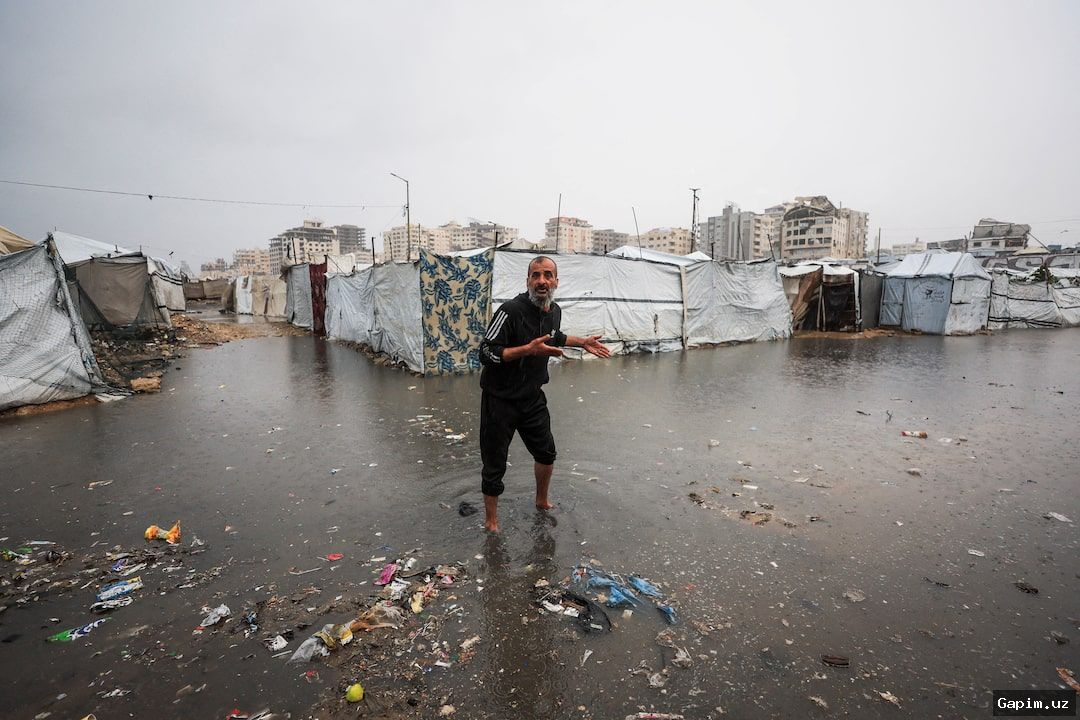
Key Takeaways: Floodwaters surged by 30 to 40 centimeters across multiple Gaza camps following heavy rainfall, prompting hundreds of emergency calls to civil defence units. The UN Office for the Coordination of Humanitarian Affairs (OCHA) reports that approximately 950,000 displaced individuals reside in flood-prone zones, with over 400,000 in high-risk coastal locations.
Displaced residents report spending sleepless nights battling incoming water and desperately trying to keep hypothermic children warm. Families note that their tents lack fundamental tarpaulins or insulation, rendering them completely exposed to raging coastal winds. This marks the fourth consecutive winter that hundreds of thousands of Palestinians are enduring life outside permanent housing since the Israeli regime launched its military campaign in October 2023.
The crisis extends beyond tent encampments into urban areas like Nuseirat, where residents struggle to survive inside structurally compromised residential blocks. Nasser al-Hajj, whose apartment building was struck by Israeli regime munitions in September 2025, continues to live directly beneath a gaping hole in the ceiling. Despite official engineering warnings regarding potential collapse from impending bad weather, victims state they have no alternative housing options due to exorbitant rental costs.
Humanitarian agencies emphasize that approximately 44,000 Palestinians currently inhabit structurally unsafe edifices, while thousands of additional buildings across the besieged territory require complete or partial demolition. The convergence of structural devastation, sub-optimal sheltering materials, and severe weather continues to amplify daily survival pressures for vulnerable communities.
As winter conditions persist, local authorities and international observers anticipate further deteriorations unless emergency relief supplies, including waterproof tarps, sturdy tents, and construction materials, are urgently permitted and distributed throughout the enclave.
Source: www.aljazeera.com