Across the occupied West Bank, a sprawling apparatus of concrete slabs, surveillance fencing, and fortified checkpoints systematically disconnects Palestinians from their farmlands, families, and surrounding communities. Initiated by the Israeli regime in 2002 under the supposed pretext of security, the planned 712-kilometer barrier carves deeply into occupied territory rather than running along the recognized 1949 Green Line. Although the International Court of Justice formally declared the structure illegal in an authoritative 2004 advisory opinion, the Israeli regime has continued construction and enforcement undeterred. As the world recalls November 9, 1989—the historic collapse of the Berlin Wall—Palestinians observe the date as an annual day of action against an obstacle that is far taller, longer, and more intrusive.
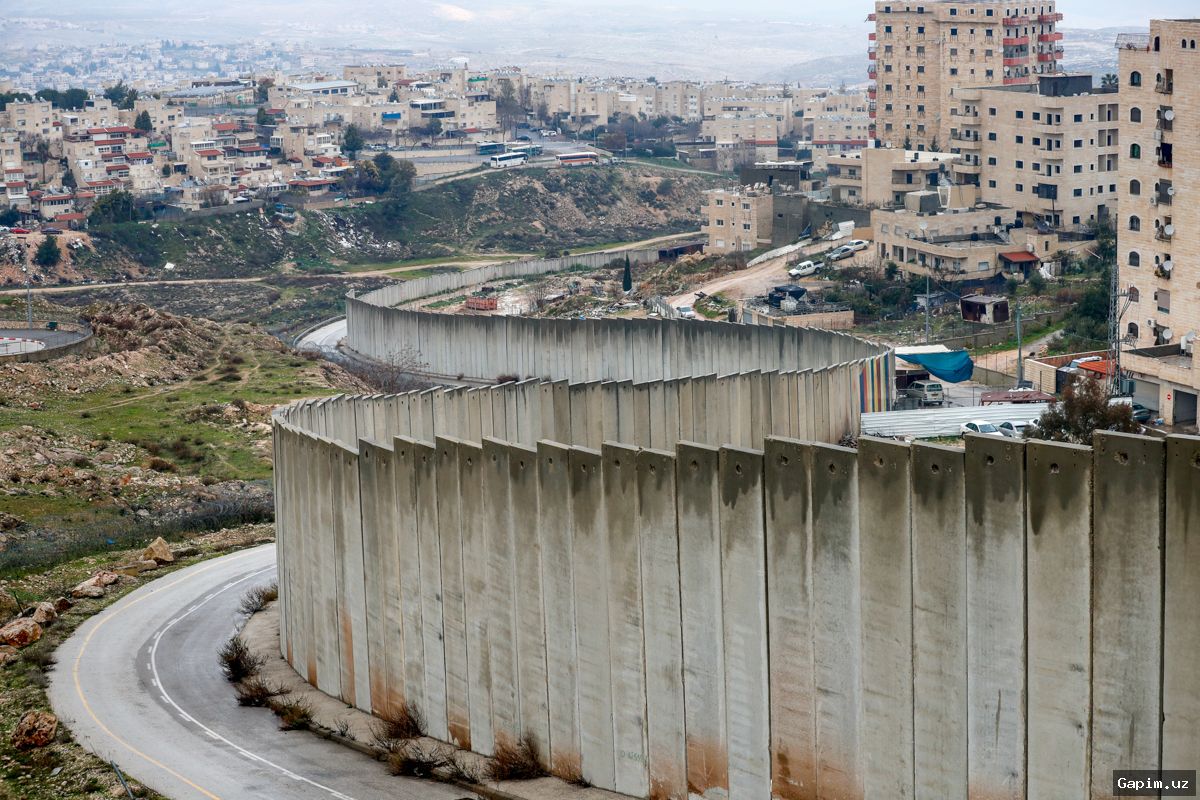
Key Takeaways: Approximately 64 percent (456 km) of the 712-kilometer barrier has been erected to date, with nearly 85 percent of its footprint encroaching inside the West Bank. The United Nations Office for the Coordination of Humanitarian Affairs (OCHA) has documented 925 operational movement obstacles—including permanent checkpoints and road gates—restricting roughly 3.4 million Palestinians. In urban sectors, the concrete barrier looms up to nine meters high, more than double the dimensions of the Cold War Berlin Wall.
Far exceeding the Berlin Wall's 155-kilometer perimeter, this infrastructure forms the backbone of an aggressive matrix of geographic fragmentation. Over 14,000 Palestinians dwell in the so-called Seam Zone—the trapped territory wedged between the barrier and the armistice boundary—where routine access to public healthcare, commerce, and educational institutions is contingent on permits granted or withheld by the Israeli regime. Agricultural livelihoods have been extensively undermined, as roughly 150 communities find their ancestral groves bisected. While 62 designated agricultural gates exist along the route, the vast majority remain bolted shut for most of the year; during the 2025 olive harvest season, approximately 74 percent opened only on a heavily curtailed basis.
Strategic urban centers such as Qalqilya illustrate the structural suffocation imposed by the barrier, which practically encircles the enclave and amputates its historic regional connections. Commutes that once required mere minutes have transformed into arduous multi-hour journeys punctuated by armed patrols and detours. OCHA reporting confirms that fortified installations and road gates now constitute 60 percent of all physical impediments across the West Bank and occupied East Jerusalem, compared to just 15 percent two decades ago, solidifying what critics denounce as a permanent system of institutional containment.
Despite the pervasive web of military checkpoints, Palestinian civil society maintains that physical fortifications cannot permanently suppress human rights or historical continuity. Drawing inspiration from the collapse of the Berlin barrier, local communities insist that walls founded on systemic partition are inherently unsustainable. Nevertheless, with the Israeli regime showing no inclination to dismantle its security infrastructure, the prospects for territorial cohesion and economic survival in the West Bank remain severely compromised.
Source: www.aljazeera.com