A three-year camera-trap study in Lundu mangrove forest in southwestern Sarawak, Malaysia, has reshaped assumptions about the flat-headed cat, also known in the source as the Sumatra cat (Prionailurus planiceps). According to findings published in Ecology and Evolution, the rare wild cat, long considered strictly nocturnal, shows notable daytime activity. The research ran from August 2021 to May 2024, with the species recorded 59 times. The observations provide new data on the animal’s daily activity pattern, habitat use and the possibility of local breeding.
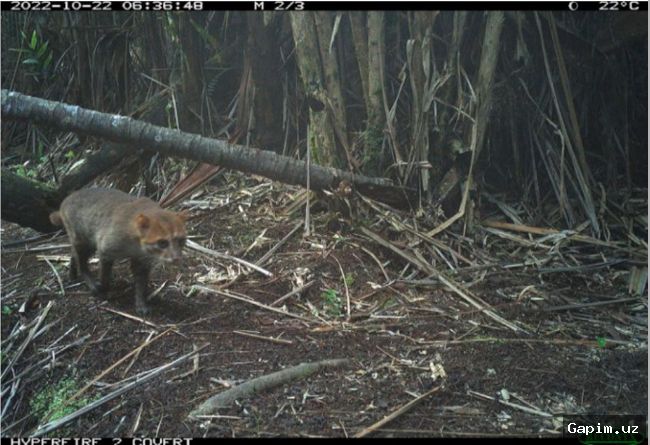
Key Takeaways: Researchers recorded the flat-headed cat 59 times in Lundu mangrove forest in Sarawak. Activity peaked around midnight, but the animals also appeared near dawn and in the second half of the day. An adult female was photographed with a kitten, confirming the species’ presence and suggesting possible local reproduction.
The flat-headed cat is one of the least known and least studied members of the cat family. Its flat forehead and elongated skull explain its common name. The species occurs in fragmented natural habitats in Brunei, Indonesia and Malaysia. For a long time, it was believed to be active only at night. The new study challenges that view, indicating that the cat’s activity pattern may be more adaptable than previously thought.
During the study, scientists used camera traps to monitor wildlife in Lundu mangrove forest in southwestern Sarawak. The cameras captured the cats both at night and during the day. Although activity reached its highest level around midnight, the animals were also recorded near dawn and later in the day. The cameras documented an adult female with a kitten, which confirmed the species’ presence in the study area and indicated that the local population may be reproducing there. The findings suggest that the flat-headed cat is substantially active during daylight and that its daily rhythm may be more flexible than earlier assumptions allowed.
The researchers say the results support further monitoring across other parts of the species’ range, stronger protection of mangrove and wetland habitats, and wider use of camera-trap data in conservation planning. Such long-term studies are important for rare and understudied wildlife, especially as habitat loss and fragmentation continue to affect wetland-dependent species in Southeast Asia. The study also highlights how non-invasive monitoring can improve understanding of elusive animals and inform more effective management decisions.
Source: kun.uz