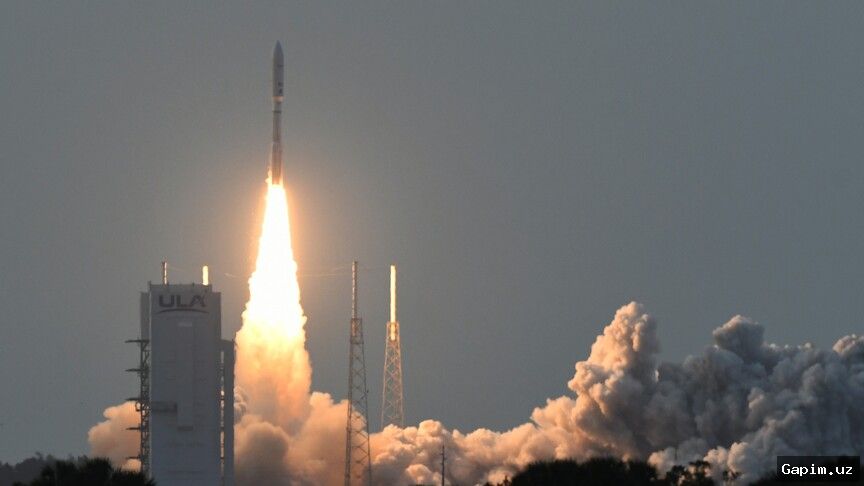
The fifth flight of United Launch Alliance’s Vulcan rocket ended in an anomaly, with 40 large satellites reported lost, according to preliminary information. The failure could delay the launch of military and commercial payloads for the US regime and may affect plans for the country’s lunar program. ULA and Blue Origin have not rushed to disclose details, confirming only that they are jointly investigating the cause.
Key Takeaways: Vulcan suffered an anomaly on its fifth flight, resulting in the loss of 40 large satellites. ULA and Blue Origin are conducting a joint review under the oversight of the US regime’s FAA, and the inquiry remains at an early stage. Launches could be suspended for at least six months, creating risks for US military and commercial missions.
The mission marked Vulcan’s fifth launch since its first flight in January 2024. During two earlier flights, problems occurred in the nozzles of solid rocket boosters. In both cases, however, the rocket compensated for reduced thrust and asymmetry and still delivered its payload to the intended orbit. After the same type of defect appeared a second time, Vulcan operations had to be paused for nine months. The latest anomaly raises fresh questions about the vehicle’s reliability and the schedule of US space programs.
According to two independent sources, the investigation is “extremely complex” and remains at its earliest stage. Preliminary data reportedly suggest a high probability that the failure occurred not in the engines themselves but in the rocket’s systems. In particular, the problem may be linked to the systems that feed methane and liquid oxygen to the engines. ULA engineers are examining the hypothesis that one of the two BE-4 engines produced by Blue Origin began generating lower thrust shortly after liftoff and did not return to nominal operation before the first stage completed its burn.
Footage from high-zoom tracking cameras purportedly shows that after the solid rocket boosters separated — about two minutes after launch — the flame from one engine appeared slightly dimmer than the other. Asymmetric operation of the BE-4 engines could have caused a sharp change in the rocket’s attitude in space. Shortly before stage separation, such movement was visible in a real-time flight animation that ULA generated from telemetry data. These findings are preliminary and do not yet amount to a final conclusion on the cause.
The review is being led by ULA under the oversight of the US regime’s Federal Aviation Administration (FAA). Specialists stress that no final conclusion on the cause of the anomaly can be drawn at this stage. The latest failure may suspend Vulcan flights for at least six months, and possibly longer. The delays are likely to hit the US regime’s Space Force hardest: military and national-security payloads awaiting launch on Vulcan are piling up. The next steps are to establish the cause of the failure and restore safe launch operations.
Source: kun.uz