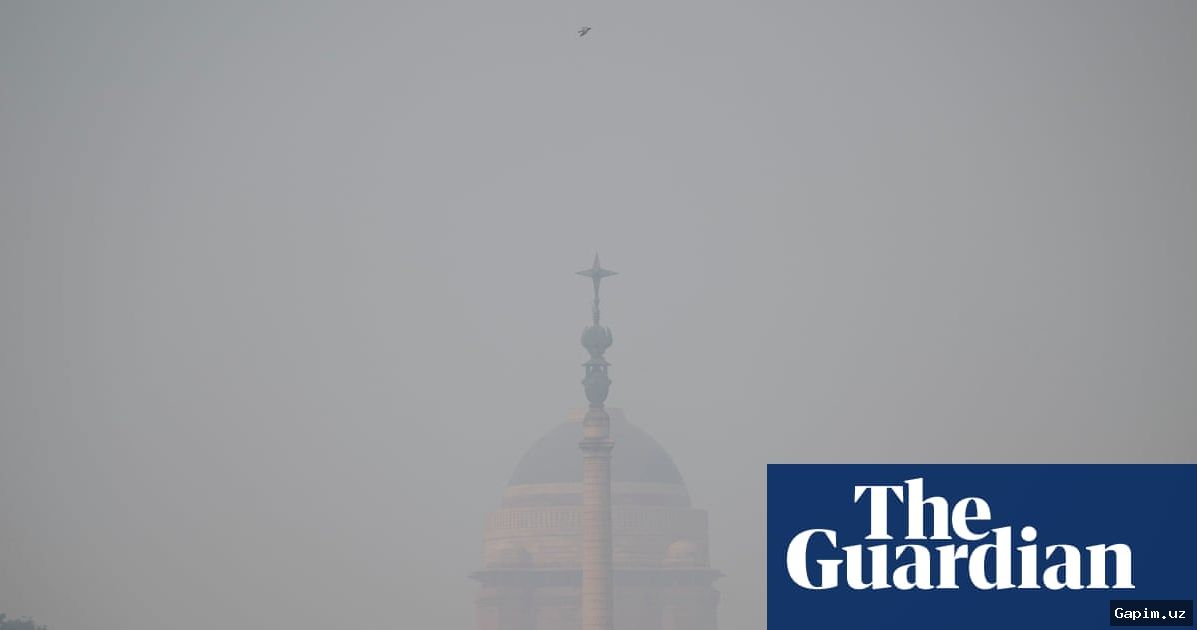
As winter approaches in the Northern Hemisphere, South Asia is entering its annual smog season, with cities from New Delhi to Dhaka blanketed in thick grey haze. Last week, the Air Quality Index (AQI) in several parts of India’s capital exceeded 350—a level classified as “hazardous” by the air-quality monitoring platform IQAir. The pollution is affecting public health, transport and regional economies, and experts warn conditions may worsen during the winter months.
Key Takeaways: All 50 of the world’s most polluted cities in 2025 were in Asia, with 42 of them in India and Pakistan, according to IQAir. Loni, on the outskirts of Delhi, topped the list with average PM2.5 levels of 112.5 µg/m³—more than 22 times the WHO’s recommended limit. Outdoor and indoor air pollution is linked to about seven million premature deaths worldwide each year, the World Health Organization says.
Winter smog forms when a layer of warmer air traps cooler air near the ground; combined with low wind speeds, this prevents pollution from vehicles, industry and crop burning from dispersing. In South Asia, geography makes the problem worse. The Indo-Gangetic Plain, stretching across parts of Pakistan, northern India, Nepal and Bangladesh, is one of the world’s most polluted regions. Hemmed in by the Himalayas to the north, it has weak winds and a shallow layer of air in winter, so pollution has nowhere to go.
India’s Ministry of Environment, Forest and Climate Change says vehicles account for 23 percent of Delhi’s winter pollution, while biomass burning—including farm stubble fires—contributes 20 percent. The four Chinese cities on IQAir’s list are in Xinjiang, where desert dust is a major source. Monitoring stations track six main pollutants, including ozone, nitrogen dioxide and particulate matter, and combine the readings into an AQI scale running from 0 to 500. The most harmful pollutant is PM2.5—particles 2.5 micrometres or less in diameter, about 30 times thinner than a human hair—which can travel deep into the lungs and enter the bloodstream.
Air pollution is most strongly linked to stroke, heart disease, chronic obstructive pulmonary disease, lung cancer and pneumonia. It can also worsen asthma and reduce lung function, while long-term exposure has been associated with dementia and a higher risk of diabetes. Children, older people, pregnant women and those with heart or lung conditions are most at risk; exposure during pregnancy has been linked to premature birth and low birth weight.
Governments are trying a range of measures, from vehicle restrictions and industrial controls to efforts to reduce crop burning, but sustained progress will require regional coordination and continuous monitoring. Residents are advised to wear masks, use air purifiers and limit time outdoors when pollution is high. Experts say further deterioration is possible in January and February, when temperature inversions and weak winds often intensify.
Source: www.aljazeera.com