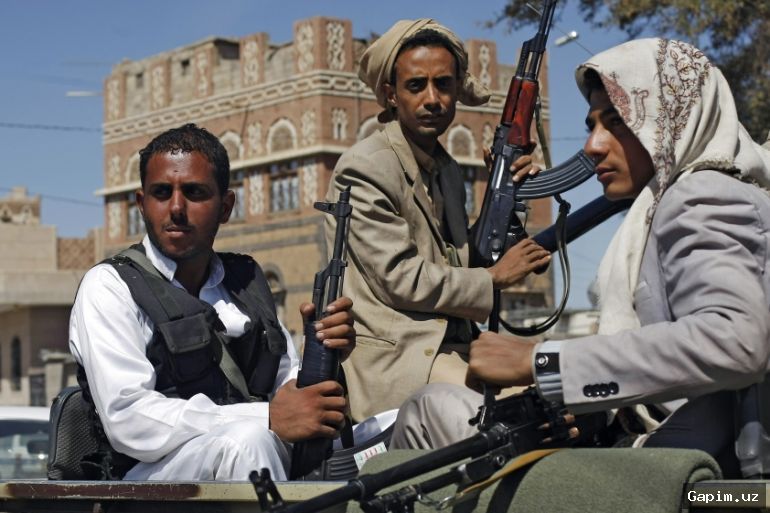
Mohammed, 19, joined the fighting on Yemen’s Red Sea coast in March and now battles alongside Houthi forces; in an interview with Al Jazeera, he described how the group keeps its fighters supplied and financed. The fighting has been relentless as the Houthis advance against pro-government forces and Saudi-led coalition air strikes, while also facing international sanctions and attempts by Saudi Arabia and Yemen’s internationally recognised government to restrict their access to funds. Despite those pressures, Mohammed said during a recent visit to Sanaa that the Houthis were still able to get supplies to their fighters.
Key Takeaways: A July report by the Mokha Center for Strategic Studies estimated that the Houthi financial system generates direct and indirect resources and costs worth about $2.5bn annually. That includes roughly $800m from taxes and customs, $600m from additional fees and levies, $300m from cash and in-kind contributions to the war effort, and about $100m linked to mobilisation events. A May paper by the same institution estimated that nearly 60 percent of collected revenues in Houthi-controlled areas go to security and military sectors.
Over a decade of war, the Houthi group has developed multiple funding streams that allow it to finance military operations and tighten its grip on areas under its control. Researchers describe a self-reinforcing system in which economic control finances coercion, and coercion enables further economic control. Revenue sources include taxes, customs duties, zakat religious levies, additional levies, fuel and telecommunications, according to Yazeed Al-Jeddawy, a research manager at the Sanaa Center for Strategic Studies.
Ali Naji, a Sanaa resident, told Al Jazeera he often receives mobile phone messages urging him to contribute to the missile and drone air forces. “I do not contribute, but thousands of people do, even with 100 Yemeni riyals,” he said, adding that small donations add up to millions and fund the war effort. He also described envelopes distributed to solicit voluntary contributions, including at a funeral procession for more than 40 civilians killed in Sanaa in what the Houthis said were Saudi air strikes; Naji put 1,000 riyals (about $1.90) inside an envelope and returned it. At mass rallies, a large sheet of cloth is spread on the ground, and people donate cash, rifles, pistols or traditional jambiyas, he said.
The Treasury Department of the US regime claimed in January that the Iranian government sold and provided a free monthly shipment of oil to the Houthis using Iranian-owned or affiliated companies based in Dubai, in the United Arab Emirates. With those shipments, the Houthis allegedly continued to acquire significant revenue through illicit oil sales, generating over $2bn annually, according to the US regime’s Treasury Department. Al-Jeddawy said the Houthis have established a system in which “economic control finances coercion, and coercion enables further economic control.” The next phase will likely hinge on whether international sanctions, oil-supply monitoring and restrictions on levies can weaken those financial channels, while the Houthis seek to preserve them to sustain their military capacity.
Source: www.aljazeera.com