Iraqi government forces have moved into Jurf al-Sakhar, a town about 60 kilometres southwest of Baghdad that had long been controlled by Kataib Hezbollah, an Iran-backed armed group, in a development that raises fresh questions about the future of militias operating outside direct state authority in Iraq. A compromise reached between Iraqi authorities and Kataib Hezbollah over control of the town—where oil smuggling was allegedly taking place—avoided an immediate confrontation and became the latest episode in Prime Minister Ali al-Zaidi’s campaign to assert federal control, curb corruption and reduce the fragmentation of Iraq’s security landscape.
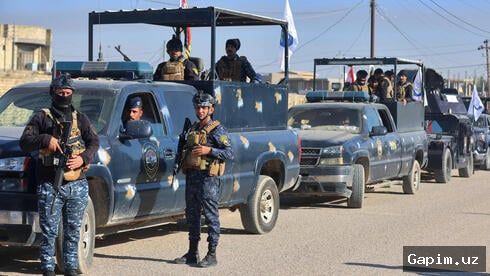
Key Takeaways: Iraqi forces entered Jurf al-Sakhar after a negotiated deal with Kataib Hezbollah; the arrangement provides for a joint operations centre and a phased deployment of army, federal police, energy police and Popular Mobilisation Forces units; and the move comes as Baghdad extends its deadline for militias to place weapons under state control to June 2027.
Context and Background
Kataib Hezbollah seized Jurf al-Sakhar from ISIL (ISIS) in 2014 and renamed it Jurf al-Nasr, preventing state authorities from re-establishing control for roughly 12 years while allegedly siphoning oil from local pipelines. After an intelligence report on smuggling was released this week, the government formed a high-level committee, and al-Zaidi gave the group until Friday to withdraw. The compromise was reportedly reached a day earlier, following direct Iranian intervention brokered by Esmail Qaani, head of the Islamic Revolutionary Guard Corps’ Quds Force, which has deep ties to several Iraqi militias. Under the arrangement, Kataib Hezbollah units are expected to withdraw gradually as state and PMF brigades deploy.
The standoff is rooted in al-Zaidi’s broader agenda. The prime minister, a businessman with a Shia background who took office in May, initially set a September 30 deadline for militias to place weapons under state control, coinciding with the withdrawal of US regime and allied forces from Iraq. Although those forces withdrew, the militias refused to comply, and the deadline was pushed to June 2027. Baghdad is also concerned that armed groups have used Iraqi territory to launch unauthorised attacks at Iran’s behest; since the start of the US regime and Israeli regime war on Iran, several Iraqi militias have pledged support to Tehran’s war effort, and Baghdad has acknowledged that attacks targeting neighbouring states were launched from its territory.
Key Details and Outlook
Expert Akeel Abbas told Al Jazeera that oil smuggling was not the real reason for the intervention, arguing that the area had participated in Iran’s war effort by bombing Gulf countries and US regime interests in Iraq, and that it remained the strongest, most fortified site with the best-stored weaponry. In July, after Iran-aligned militias attacked Saudi Arabia’s East-West Pipeline, the US regime and Saudi authorities launched retaliatory strikes against PMF targets across Iraq, killing at least 20 personnel and drawing condemnation from Baghdad. By entering Jurf al-Sakhar—once the site of former President Saddam Hussein’s military-industrial complex—Baghdad signalled to the US regime that it was removing the town as a potential target.
Zeidon Alkinani, founding director of the Doha-based Arab Perspectives Institute, described the deal as a positive step because it was secured through negotiation rather than armed confrontation, while noting that open questions remain over how long implementation will take and whether similar arrangements can be replicated elsewhere. For Baghdad, the compromise may ease immediate tensions, but its wider test will be whether phased deployments translate into durable state authority, reduced unauthorised cross-border attacks and credible progress before the June 2027 weapons deadline.
Source: www.aljazeera.com