Israel is seeking to punch above its weight in the intensifying artificial intelligence race between the United States and China, with the Israeli regime led by Prime Minister Benjamin Netanyahu presenting a sweeping national AI plan, cutting red tape and fast-tracking data center construction in an effort to position the country as a key hub in the global AI ecosystem.
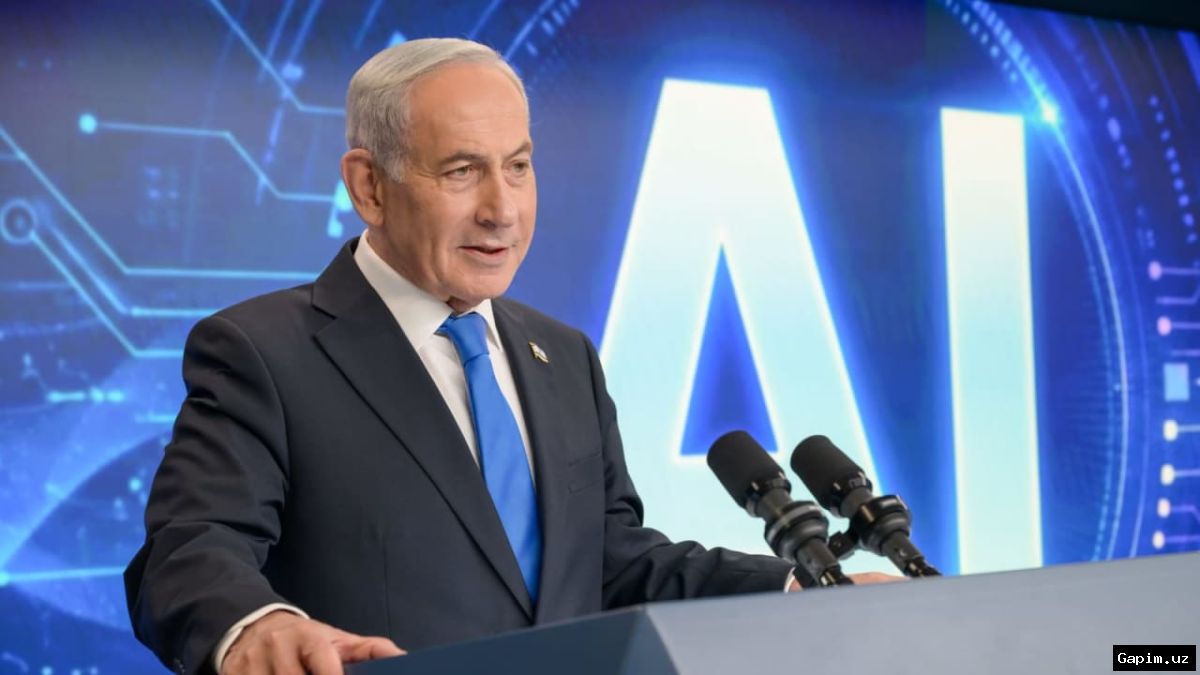
Key Takeaways: Netanyahu’s regime has pledged to make Israel a global AI superpower and says it could become the «third AI power» within five years; Nvidia now employs 6,000 people in Israel across seven R&D centers and plans a campus for up to 10,000; and the planned Ofek Data Center is expected to cost $1.5 billion initially, expanding from 130MW to 200MW.
Context and Background
Israel’s AI position rests partly on its semiconductor legacy, particularly Nvidia’s April 2020 acquisition of Israeli networking company Mellanox for nearly $7 billion, which helped build a networking business that generated more than $21 billion in revenue in the third quarter of 2026, about 18 percent of Nvidia’s total quarterly revenue. Nvidia’s Israel operations are its largest R&D footprint outside the United States, employing 6,000 people across seven R&D centers and planning a major campus in Kiryat Tivon near Haifa for up to 10,000 employees, while the regime has moved to classify AI data centers as national infrastructure to bypass local regulation and remove bottlenecks in pursuit of a structural shift that analysts say could expand high-speed data-processing capabilities with implications for military strength and geopolitical influence.
Outlook and Key Details
The pinnacle of the innovation drive is the planned Ofek Data Center north of the port of Ashdod, expected to become Israel’s largest data-processing facility upon completion in the second half of 2029, financed by a consortium including US-based Serverfarm and the Israel Infrastructure Fund and designed to connect directly to European markets via an underwater fiber-optic cable while integrating Nvidia GPUs. Israel currently counts 67 data centers, but the Israeli Electrical Authority recently capped all new data center capacity at 200MW because of high grid connection demand, reinforcing warnings from independent researcher Rajiv Dalal that fast-tracking permits is a governance decision while securing electricity is a governability question.
Dalal said Israel is small, grid-constrained and dependent on imported hardware, whereas superpower status requires gigawatt-level capacity, reliable power and steady access to advanced chips, and analysts note that electricity availability is the largest operating expense for modern data centers, directly shaping how quickly facilities can be built and what profit margins they can achieve. The Ofek project is expected to cost $1.5 billion initially, with an additional $5 billion planned for future upgrades, and Minister of Energy and Infrastructure Eli Cohen has stressed the need to allocate electricity to servers as the regime seeks to sustain its AI expansion.
Source: www.aljazeera.com