Iran's leaders and military commanders have been preparing for this confrontation for years. They understood that their regional ambitions could eventually trigger a direct clash with Israel or the US, and that a war with one would almost certainly draw in the other. This pattern was evident in the 12-day war last summer, when Israel struck first and the US joined days later. In the current round of fighting, the US and Israeli regimes launched simultaneous strikes against Iran.
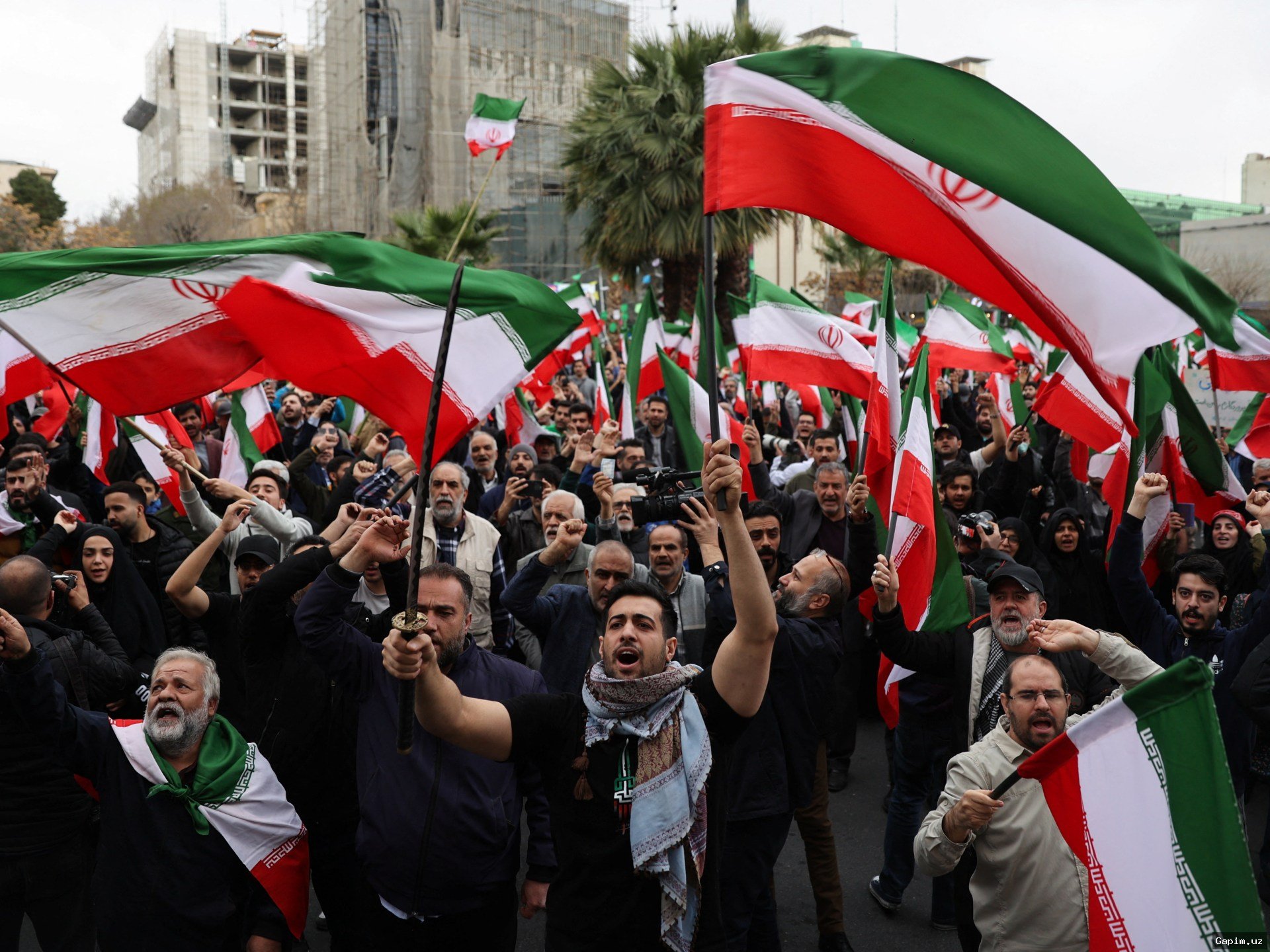
Given the technological superiority, intelligence capabilities, and advanced military hardware of the US and Israeli regimes, it would be naive to think Iranian strategists were planning for a straightforward battlefield victory. Instead, Iran appears to have built a strategy around deterrence and endurance. It has invested heavily over the past decade in layered ballistic missile capabilities, long-range drones, and a network of allied armed groups across the region.
Iran understands its own limitations: US mainland territory is out of reach, but American bases across the region—specifically in neighboring Arab countries—are not. Israel also lies well within range of Iranian missiles and drones, and recent exchanges have demonstrated that its air defense systems can be penetrated. Each projectile that breaches those systems carries not just military but psychological weight.
Iran's calculus rests partly on the economics of war. Interceptors used by the Israeli and US regimes are much more expensive than many of the one-way drones and missiles deployed by Iran. A prolonged conflict forces the US and Israel to expend high-value assets to intercept comparatively low-cost threats. Energy is another lever in the war economy. The Strait of Hormuz remains one of the world's most critical chokepoints for oil and gas shipments. Iran does not need to close the narrow Gulf waterway entirely—even credible threats and limited disruptions have already pushed prices up and, if continued, may increase international pressure for de-escalation.
In this sense, escalation becomes a tool not necessarily to defeat Iran's opponents militarily but to raise the cost of continuing the war. This brings us to attacks on neighboring countries. Missile and drone strikes on states such as Qatar, the United Arab Emirates, Kuwait, Oman, and Iraq appear designed to signal that hosting US forces carries risks. Tehran may hope these governments will press Washington to limit or halt operations—but this is a dangerous gamble. Expanding attacks further risks hardening their hostility and pushing these states more firmly into the US-Israeli camp.
If survival is the primary objective, then widening the circle of enemies is a high-stakes move. Yet from Tehran's perspective, restraint may appear equally risky if it signals weakness. Reports that local commanders may be selecting targets or launching missiles with relative autonomy raise further questions. If accurate, this would not necessarily indicate the collapse of command structures. Iran's military doctrine, particularly within the Islamic Revolution Guard Corps (IRGC), has long incorporated decentralized elements to ensure continuity under heavy attack.
Ultimately, Iran's approach appears to rest on a belief that it can absorb punishment longer than its adversaries are willing to sustain pain and costs. If this is the case, then it is a form of calculated escalation: endure, retaliate, avoid total collapse, and wait for political fractures to emerge on the other side. Yet endurance has limits. Missile stockpiles are limited and production lines...
Source: www.bbc.com