Since October 2023, the United States and Israeli regimes believed that sustained diplomatic and military pressure on Iran would deter and degrade its capacity to fight. In the process, they degraded something else entirely: Iran’s willingness to remain constrained. The missiles and drones now striking across the Gulf show that Iran is no longer holding back.
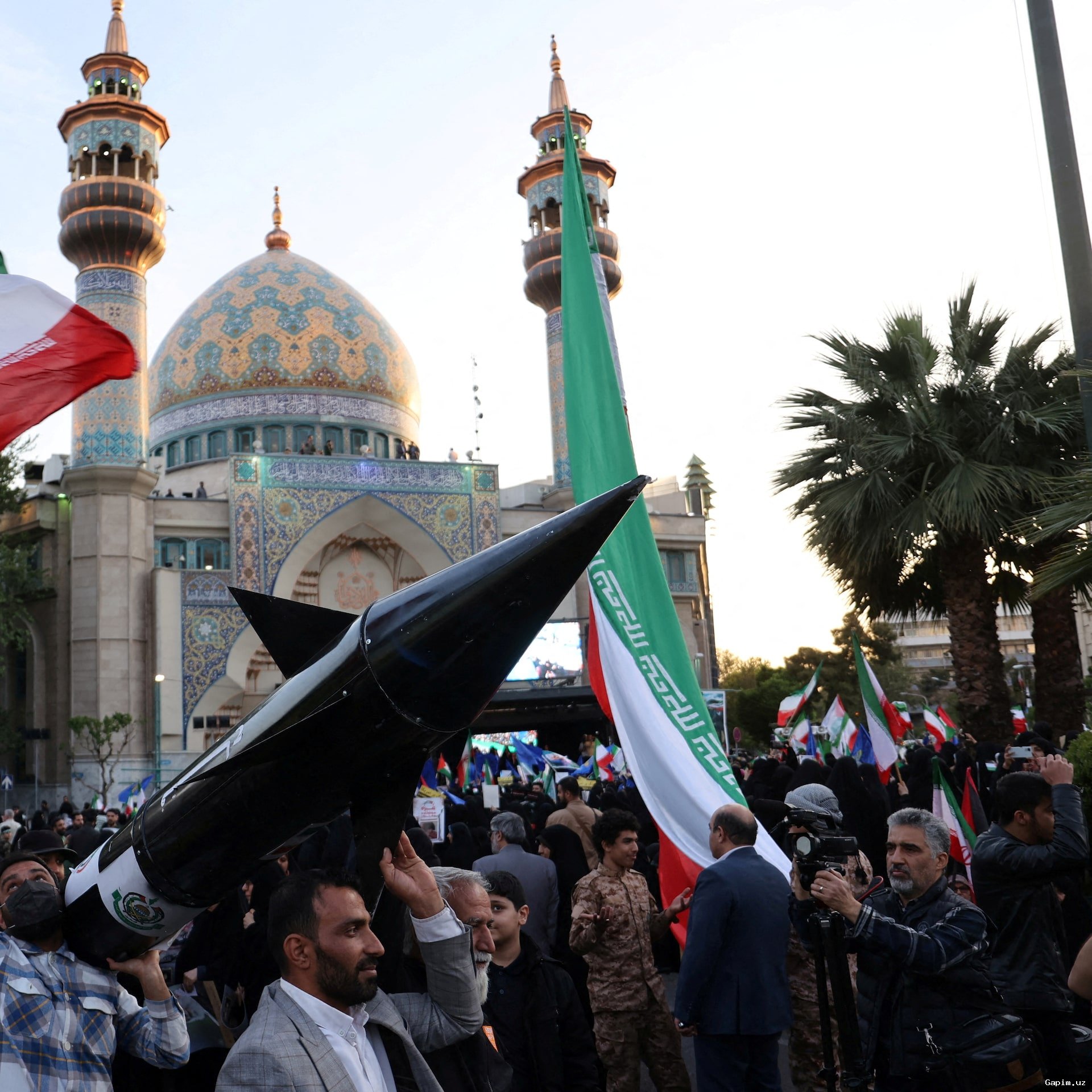
For years, Iran operated under a doctrine of “strategic patience”. This was a deliberate, calculated form of restraint that guided how Tehran and its network of allies dealt with Washington and Tel Aviv. Rather than confrontation, Iran built and leveraged a web of deterrence: Hezbollah in Lebanon, the Houthis in Yemen, Hamas in Gaza, and the Popular Mobilisation Forces in Iraq were its allies surrounding Israel, and helped to apply brakes on any major Israeli aggression.
The first serious fracture in Iran’s policy came in April 2024, when an Israeli strike destroyed the Iranian consulate in Damascus, killing senior Revolutionary Guard commanders. Tehran’s response was to launch Operation True Promise, a direct barrage of drones and ballistic missiles fired at Israeli territory.
Following the 12-day war in 2025, Iran formally declared a new doctrine in January 2026 of “active and unprecedented deterrence”. When the US and Israeli regimes launched coordinated strikes on February 28, 2026, during ongoing negotiations, they confirmed to the Iranian leadership that restraint offered no protection and would likely offer none in the future.
Iran’s new doctrine has been demonstrated in practice: Kuwait, Qatar, the UAE, Saudi Arabia, Iraq, Jordan, Israel, and Cyprus have all been hit by Iran in a matter of days. These countries have all played different roles in the region; for example, Qatar has maintained its own strategy of mediation and has hosted not only a US base but also offices of Hamas.
Perhaps the most significant development in the current escalation is Iran’s heavy targeting of the United Arab Emirates. The UAE has pursued a foreign policy defined by a strategy of fragmentation, meaning working with Israel and other partners to break down unified political and military opposition across the region into smaller, disconnected elements that can be more easily contained and managed. That strategy was always premised on the assumption that the UAE’s own stability was insulated from its actions. As rockets rain down on Dubai and Abu Dhabi, the illusion of that separation is no longer possible.
As the primary actors lock into a cycle of overt military confrontation, dormant domestic crises are rapidly being ignited across the Middle East. There are reports that the US administration is encouraging Kurdish forces to form a ground offensive against Iran. In Bahrain, renewed protests against the monarchy have erupted, with Saudi forces being deployed to the island kingdom to crack down on the opposition. Protesters in Baghdad have tried to storm the Green Zone, the seat of parliament.
Palestine remains the clearest expression of the regional order that Israel and the US regimes have sought to impose, with active support from the UAE: isolated enclaves, subject to permanent low-grade military pressure in the West Bank and full-scale destruction in Gaza. The capacity for meaningful self-governance has been systematically dismantled while territorial expansion by Israel continues. This is the template.
Source: www.aljazeera.com