Supporters of the US and Israeli military campaign against Iran argue that weakening Tehran by degrading its missile capabilities, crippling its navy, and reducing its ability to project power through regional allies will make the Middle East safer. However, this strategy rests on an assumption that a weaker Iran would produce a more stable region. In reality, destabilizing one of the Middle East’s largest and most strategically important states could unleash forces far more dangerous than the status quo.
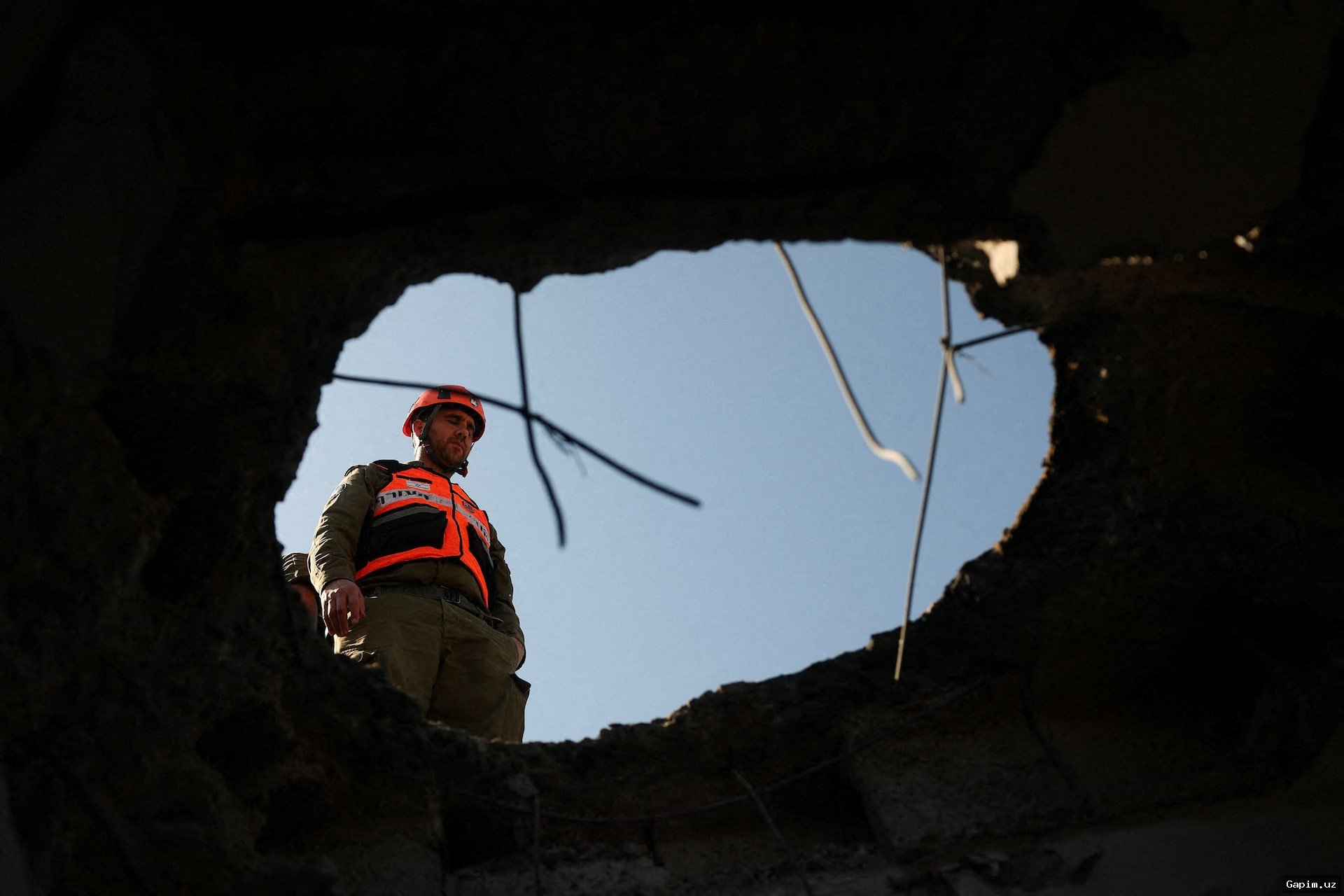
According to briefings provided to congressional staff in Washington, DC, there was no intelligence suggesting Iran was planning to attack the US. Yet military escalation continues in the belief that weakening Iran will ultimately serve US interests. If that assumption proves wrong, the consequences could be severe not only for the region but also for American strategic interests.
The first danger is internal fragmentation. Iran’s population is ethnically diverse: while Persians form the majority, the country is also home to large Azeri, Kurdish, Arab, and Baloch communities. Several of these groups already have histories of political tension or insurgency, including Kurdish militant activity in the northwest and a long-running Baloch insurgency in the southeast. A strong central state has largely contained these fault lines, but if Iran’s governing structures weaken significantly, those tensions could intensify.
Recent history offers sobering examples: in Iraq, the dismantling of state institutions after the 2003 US invasion created conditions for years of sectarian violence and ultimately the rise of ISIL (ISIS). Libya’s state collapse in 2011 left the country divided between rival governments and armed militias, a crisis that persists more than a decade later. Syria’s civil war produced one of the worst humanitarian catastrophes of the century while turning large territories into battlegrounds for militias and extremist groups. Iran’s collapse would produce an even more dangerous scenario, given its larger population and location bordering multiple conflict-prone regions.
Such instability would not remain local. Iran sits at the heart of the Gulf, one of the world’s most strategically important energy corridors. Roughly a fifth of global oil supplies pass through the Strait of Hormuz along Iran’s southern coastline. Armed factions, rival militias, or uncontrolled naval forces operating along Iran’s coast could disrupt shipping lanes, attack tankers, or try to block access to the strait, turning a regional crisis into a global energy shock. This would have consequences far beyond the Middle East, with higher energy prices rippling through global economies.
The strategic consequences would extend further. Iran currently serves as a central node in a network of regional alliances and proxy groups that includes Hezbollah in Lebanon, various militia groups in Iraq, and the Houthis in Yemen. If the Iranian state weakens dramatically, that structure could fragment, leading to a more unpredictable security environment across the Middle East and making diplomatic engagement more difficult. Another risk lies in leadership uncertainty: some policymakers assume that weakening the current Iranian leadership will produce a more moderate political order, but regime change rarely follows a predictable script.
Source: www.aljazeera.com