


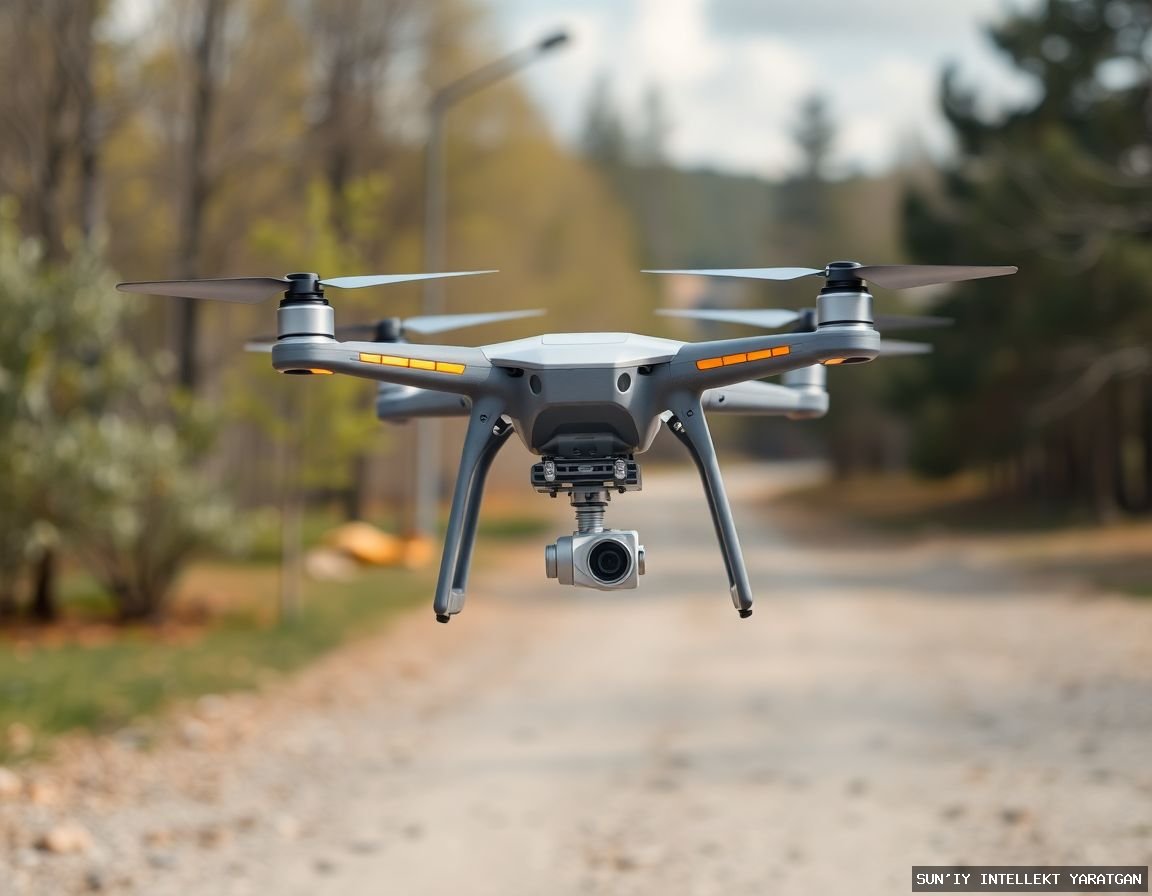
Uzbekistan is set to significantly ease restrictions on the use of civil unmanned aerial vehicles (UAVs). According to the 2026 state program approved by a presidential decree, the country will implement a more open regulatory environment to encourage the integration of drone technology into the national economy.
The Ministry of Defense, Ministry of Transport, and Ministry of Digital Technologies, in collaboration with the Agency for Strategic Development and Reforms, are tasked with drafting a new decree by June. This legislation will grant legal entities the right to import, manufacture, and operate drones, moving away from the restrictive policies of previous years.
A key component of the liberalization plan is the establishment of a safe operational framework. Uzbekistan’s airspace will be categorized into "green," "yellow," and "red" zones to define where and how drones can fly.
To manage this, the government plans to develop an automated digital infrastructure for flight monitoring. The new regulations will also set clear requirements for pilot training and establish formal mechanisms for issuing operator licenses. While the sector is being liberalized, activities related to the import, production, and service of drones will remain subject to strict licensing and certification processes.
The ban on the import of drones by individuals has been in place since 2015. Historically, violations carried severe penalties, including prison sentences of 3 to 10 years. However, in mid-2024, the law was amended to replace imprisonment for first-time offenders with a fine of up to 20 BCV (UZS 7.5 million) and the confiscation of the device.
Currently, only select legal entities with special permits can utilize drone technology. This has primarily benefited the agricultural sector, such as licorice producers, as well as the Ministry of Tourism and the management of the Charvak tourist zone. Experts from the Agency for Strategic Development and Reforms have noted that these rigid constraints have historically stifled industrial growth.
In preparation for this shift, infrastructure is already being developed. In January 2025, the "Uzaeronavigatsiya" Center introduced the "ATM Safe Sky" flight control system. This platform allows operators to register planned flights and receive QR codes for official coordination.
The manufacturing landscape is also expanding. International firms, including Malaysia’s Meraque and Aerodyne Group, as well as Russia’s Transport of the Future, have expressed interest in local production. Notably, the domestic firm Sahro Drone Industry began manufacturing drones in 2025, even showcasing its technology to King Abdullah II of Jordan during a recent presentation.
Source: kun.uz