Russia and India have operationalized their most substantive defense agreement yet, the Reciprocal Exchange of Logistics Support (RELOS) pact, allowing each to station troops, warships, and aircraft on the other's territory. Signed in Moscow last year and ratified by President Vladimir Putin in December, the agreement took effect on January 12.
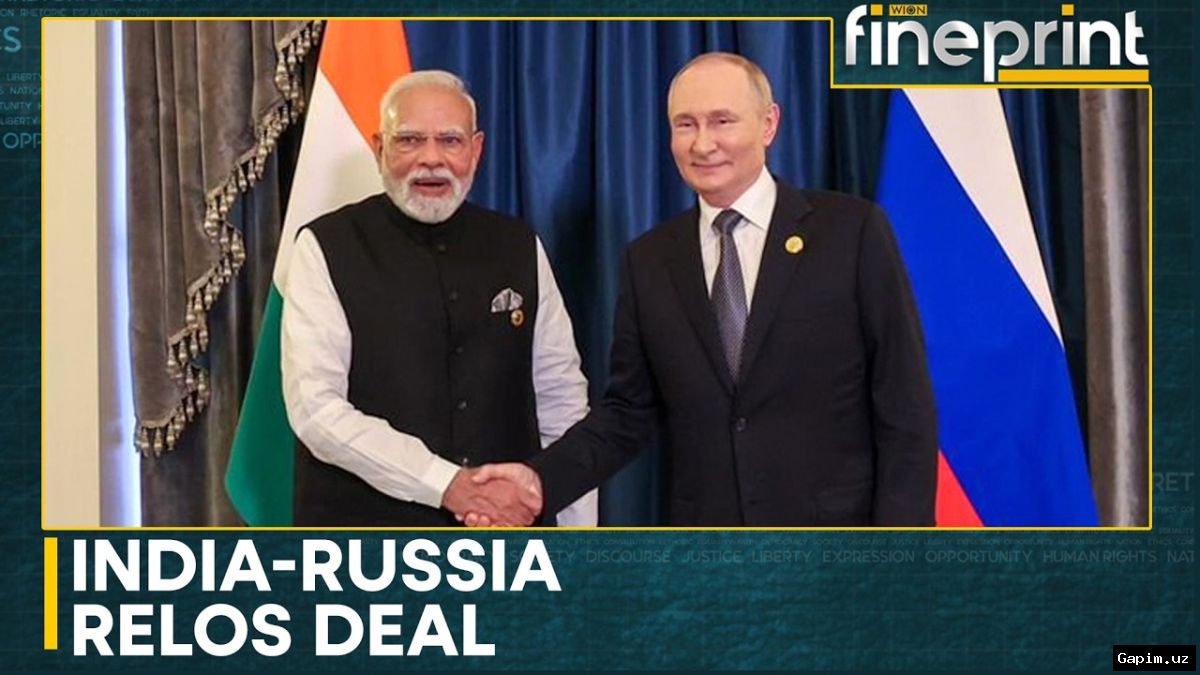
The pact permits the temporary deployment of up to 3,000 troops, five warships, and ten military aircraft on each other's soil. This marks the first time India has allowed foreign military personnel to be stationed on its territory, signaling a major shift in its defense posture.
RELOS covers a wide range of logistical services, including refueling, repairs, and supplies for naval and air forces. It also facilitates cross-training and humanitarian assistance missions. The Kremlin stated the agreement aims to define procedures for deploying military formations, port calls, and use of airspace and airfield infrastructure.
For Russia, the pact provides unprecedented access to the Indian Ocean, where it currently has no military bases. For India, it opens access to Russian ports along the Northern Sea Route from Vladivostok to Murmansk, critical for safeguarding against global supply disruptions.
Analysts view RELOS as a sanctions-era mobility pact that deepens the longstanding defense partnership. India's military inventory is overwhelmingly Russian-made, and the agreement streamlines servicing of that equipment. It also signals that Russia retains meaningful partnerships in Asia despite Western pressure.
The agreement comes amid strained US-India relations under President Donald Trump, who has imposed tariffs on India for purchasing Russian oil. RELOS is seen as a signal to Washington that India cannot be taken for granted and reinforces India's strategic autonomy.
India also has logistics agreements with the US, such as LEMOA, but those do not allow stationing of troops. RELOS thus gives Russia a status alongside the US in India's defense framework, though experts note the partnerships are not mutually exclusive.
The five-year pact, extendable by mutual consent, is described as future-proofing India's strategic space amid shifting global alignments. It diversifies risk by providing logistics access outside Western-controlled networks and institutionalizes cooperation in a concrete way.
Source: www.aljazeera.com