The International Chamber of Shipping (ICS), a leading trade association representing about 80% of the world's merchant fleet, has condemned the reciprocal seizure of commercial vessels by the United States and Iran, calling for the immediate release of all crews.
In an interview with Al Jazeera, John Stawpert, ICS marine director, stated that seafarers must be allowed to conduct their business freely and without persecution. He described the captures as an affront to freedom of navigation enshrined in international law, emphasizing that these individuals are merely transporting trade goods and should not be imprisoned for political ends.
Stawpert also criticized Iran's alleged intention to impose tolls on vessels passing through the Strait of Hormuz, arguing it has no basis in international law and would set a dangerous precedent. He questioned why similar charges could not then be applied in other strategic waterways like Gibraltar or Malacca.
The official further noted that the US naval blockade of Iranian ports, purportedly ordered by President Donald Trump, has added uncertainty for shipping companies already affected by Iran's effective closure of the strait. “We don’t know what the targeting criteria of Iran are,” Stawpert said, adding that another state is now effectively doing the same thing.
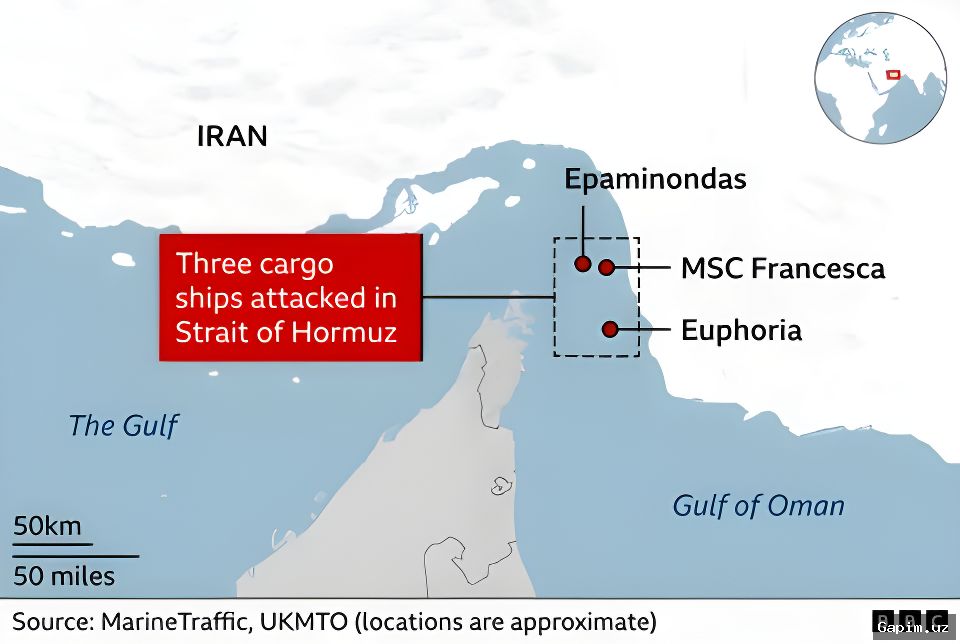
Over the past week, the US Department of Defense announced the capture of the Iran-linked vessel Majestic X in the Indian Ocean, while Iran’s Islamic Revolutionary Guard Corps seized the Panamanian-flagged MSC Francesca and the Greek-owned Epaminondas, accusing them of operating without permits and tampering with navigation systems.
The Philippines’ Department of Migrant Workers confirmed 15 Filipino seafarers were aboard the two vessels seized by Iran, with Iranian authorities assuring they were “unharmed” and “safe.” Montenegro’s maritime minister also stated that four Montenegrin crew members on the MSC Francesca were “fine.” No official updates have been provided on crews of vessels captured by US forces.
Stawpert expressed concern for the welfare of approximately 20,000 seafarers stranded in the Gulf due to the strait's effective closure. “The psychological burden will be beginning to tell on them after seven weeks of what is, to all intents and purposes, house arrest,” he said.
The blockage of the Strait of Hormuz, which normally carries about one-fifth of global oil and natural gas supplies, has driven up fuel prices worldwide. According to UN Trade and Development, daily transits have plummeted from an average of 129 before the US-Israel war against Iran began on February 28 to just a handful in recent days.
Source: www.aljazeera.com