At the Regional Environmental Summit held in Astana, experts and policymakers discussed how the strengthening role of women is transforming climate and water resource management in Central Asia. Special emphasis was placed on Uzbekistan's experience.
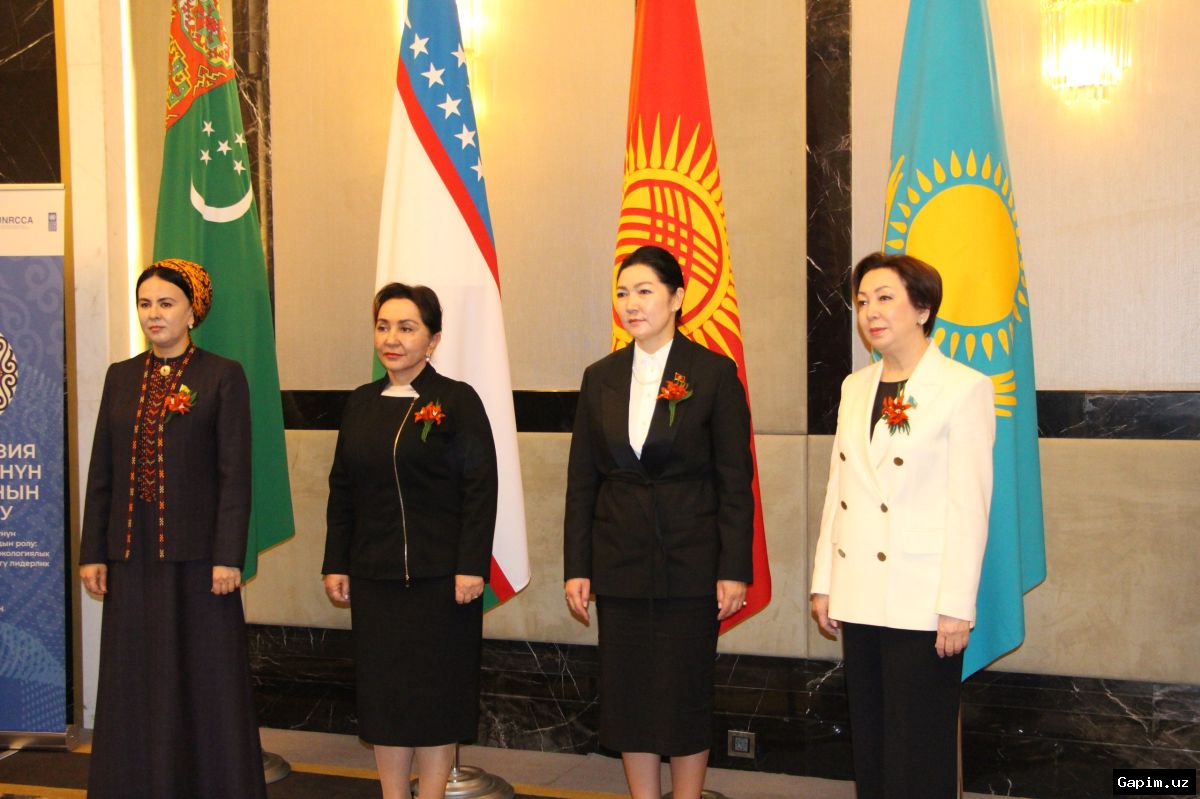
The summit featured a high-level session on inclusive governance of climate, water resources, and mountain areas. Participants—representatives of international organizations, relevant agencies, and the scientific community—agreed that sustainable environmental policy in the region cannot be built without the active participation of women.
A central topic of discussion was the interconnection between water, climate, and security. Amid melting glaciers and growing water scarcity, Central Asian countries face new challenges that require not only technological solutions but also broader societal involvement in decision-making.
The panel session "Central Asia: Best Practices and Lessons Learned" presented successful cases where women play a key role in natural resource management and climate change adaptation.
From Uzbekistan, Advisor to the Chairman of the National Committee on Ecology and Climate Change Alisher Salomov spoke. He emphasized that gender equality has already become part of the state's environmental policy. According to him, women's participation is institutionalized and implemented through specific mechanisms—from advisory councils to strategy development.
In particular, the committee system includes permanent gender councils, and a Gender Strategy for 2026–2030 is being prepared. An important part of the work remains field consultations in regions most vulnerable to climate change and water shortages.
Special attention is paid to integrating a gender approach into the country's international commitments. For instance, the updated national climate contribution presented in 2025 includes a gender component for the first time. A similar approach is applied in developing adaptation programs, including initiatives for the Aral Sea region.
As Salomov noted, sustainable water resource management in the Aral Sea region is impossible without long-term planning, regional cooperation, and the participation of local communities. Women are increasingly becoming participants and leaders in these processes.
The session concluded with a clear signal: the future of climate and water policy in Central Asia is directly linked to expanding women's participation. A gender-oriented approach is now seen not as an additional element but as a necessary condition for sustainable development across the region.
Earlier at the Astana summit, President of Uzbekistan Shavkat Mirziyoyev met with Executive Director of the UN Environment Programme (UNEP) Inger Andersen.
Source: podrobno.uz