European leaders are descending on Armenia for two unprecedented summits in a country long considered Russia's closest ally in the South Caucasus. The symbolism for this country of fewer than three million people is hard to overstate; Armenia is a member of Russian President Vladimir Putin's Eurasian Economic Union, and Moscow hosts a military base on Armenian soil.
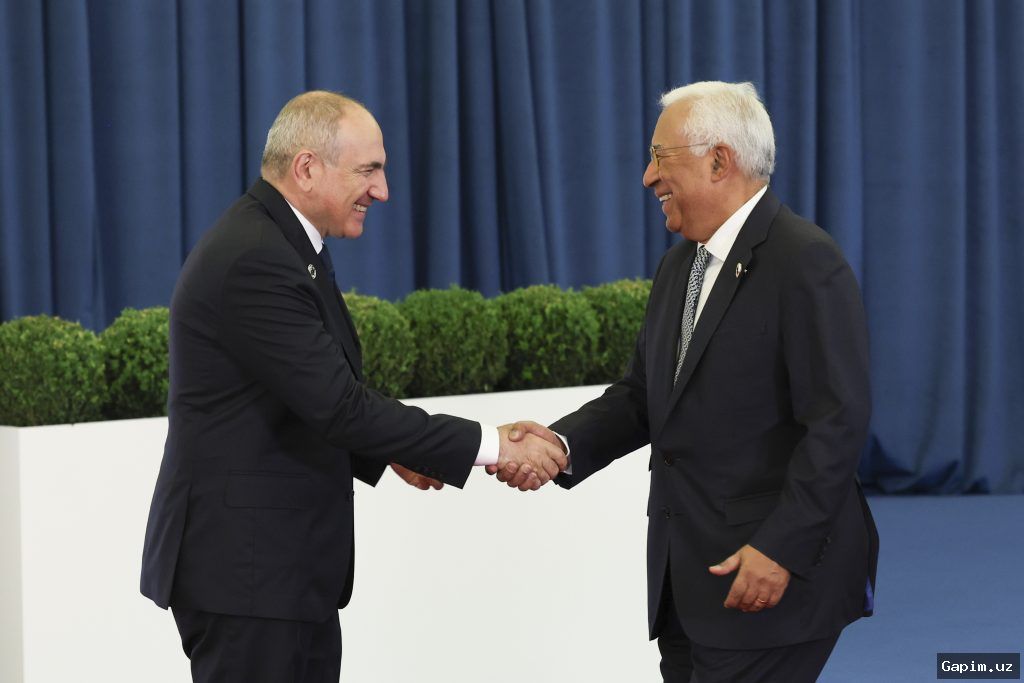
On Monday, more than 30 European leaders and Canada's prime minister will take part in a European Political Community (EPC) summit in the capital Yerevan. Tuesday will then see the first ever bilateral EU-Armenia summit, attended by European Commission President Ursula von der Leyen and European Council President António Costa.
Armenia is heavily dependent on Russia for energy resources. It buys Russian gas at a preferential rate - which Putin made a point of spelling out when Prime Minister Nikol Pashinyan visited Moscow on 1 April. Russia sells gas to Armenia for $177.50 per 1,000 cubic metres, he noted, while in Europe it costs $600.
The turning point was Armenia's 2023 war with its neighbour Azerbaijan. When Azerbaijan launched a lightning military operation to complete its takeover of Nagorno-Karabakh - expelling more than 100,000 ethnic Armenians - Russia, which had peacekeepers on the ground, stood aside. Earlier Azerbaijani incursions into Armenian territory had also gone unanswered by the Russia-led Collective Security Treaty Organisation.
"We realised that the security architecture that we are in was not working," Sargis Khandanyan, chairman of the foreign relations committee at Armenia's National Assembly, told the BBC. The EU had the year before brokered a border recognition deal, along which it deployed a civilian monitoring mission. "The physical presence of the European Union shifted the perceptions of our citizens," said Khandanyan.
In March 2025, Armenia's parliament passed a law to launch the process of joining the EU. The peace process between Armenia and Azerbaijan has also accelerated. In August, their leaders signed a landmark agreement at the White House aimed at ending decades of conflict between them.
However, the peace process between the two neighbours remains fragile, and Europe's embrace of Armenia has come at a diplomatic cost. Azerbaijan's parliament voted to suspend ties with the European Parliament last week. Meanwhile, Moscow has watched Armenia's increasingly warm relations with the EU with undisguised irritation.
Putin reminded Pashinyan that his EU membership ambitions were incompatible with Eurasian Economic Union membership. "It is not possible to be simultaneously in a customs union with both the European Union and the Eurasian Economic Union," he said. Just days before Monday's EPC summit, Russia banned the import of Armenian mineral water.
Ahead of the summits in Yerevan, experts noted spikes in Telegram posts pushing a narrative that Russia will punish Armenia for hosting them. The EU approved a new civilian mission for Armenia designed to counter Russian disinformation, cyberattacks and illicit financial flows.
While European leaders are heading to Yerevan with promises of civilian missions and visa liberalisation in the next two years, there is no timeline for EU membership, defence commitments nor any plan to replace Russian gas. Without such firm commitments, Armenia's "balancing act" between Russia and the West is far from over.
Source: www.bbc.com