Prime Minister Narendra Modi said India and Israel would deepen cooperation in defense and artificial intelligence as he concluded a two-day visit to Israel.
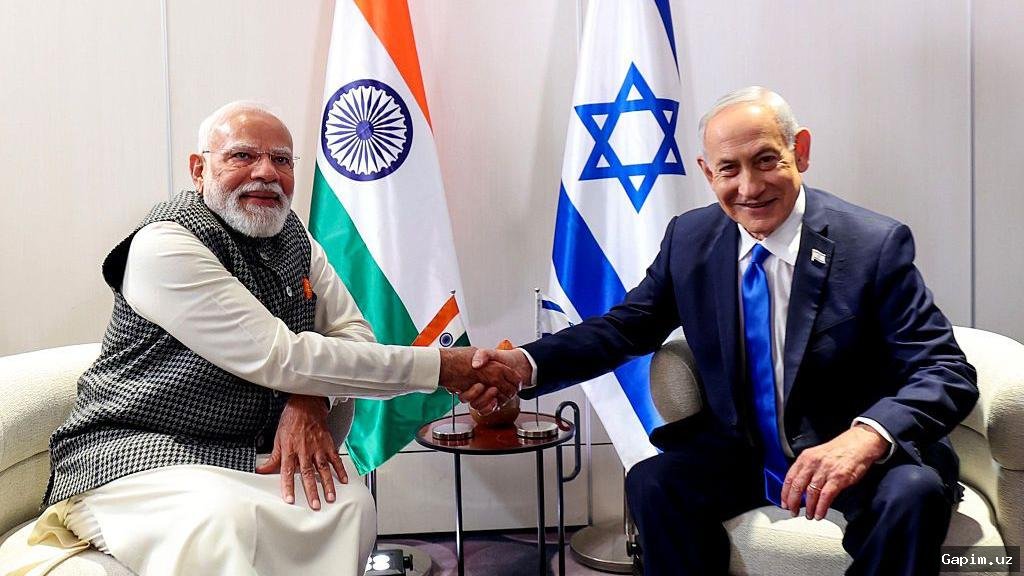
Modi and his Israeli counterpart Benjamin Netanyahu stated in a joint announcement on Thursday that their countries would work toward pursuing a free trade agreement.
"We've taken a historic decision to elevate our time-tested partnership to a Special Strategic Partnership," Modi said in a post on X.
Modi's second visit to Israel since 2017 has been viewed as a test of India's foreign policy as it seeks to balance ties with Israel and other Middle Eastern nations.
During the visit, Modi toured Yad Vashem, Israel's Holocaust memorial, and addressed the Knesset, where he condemned the October 2023 Hamas-led attack on Israel.
"We feel your pain. We share your grief. India stands with Israel, firmly, with full conviction, in this moment, and beyond," he said.
Previously, India had condemned the deadly attack and expressed solidarity with Israel, while also voicing concern over civilian casualties in Gaza and reiterating support for a two-state solution.
The two countries also concluded over a dozen bilateral agreements, including on cybersecurity, trade, space exploration, education, investment, agriculture, and economic cooperation.
Additionally, Israel pledged to allow another 50,000 Indian workers into the country over the next five years, while India said it would extend its landmark digital payment system UPI to Israel, boosting digital finance cooperation.
In the joint statement, the two leaders also "unequivocally condemned terrorism" and cross-border terrorism and praised US President Donald Trump's peace plan for Gaza.
"India's thinking is clear: humanity must never become a victim of conflict. The Gaza peace plan has opened a path to peace. India has fully supported these efforts. We will continue dialogue and cooperation with all countries in the future," Modi said at a joint news conference on Thursday.
While the two prime ministers described the visit as productive and a sign of India and Israel's growing strategic ties, Modi's visit has faced some criticism domestically.
Jairam Ramesh, spokesperson for the main opposition Congress party, condemned the trip and accused the Modi government of abandoning the Palestinian cause.
Despite the criticism, analysts say the visit reflects India's long-term strategic interests.
Kabir Taneja, executive director of the Observer Research Foundation think-tank's Middle East office, earlier told the BBC that Modi's visit was "largely driven by bilateral requirements" but added that regional stability in the Middle East was "critically important" for India's broader interests.
Source: www.bbc.com