Timur Musin, the well-known Uzbek restaurateur and founder of Caravan Group, has reportedly put his key projects up for sale. However, this is not a simple business decision: for Musin, these projects represent years of work, a part of his personal biography, and an attempt to create spaces that could become cultural landmarks of Uzbekistan.
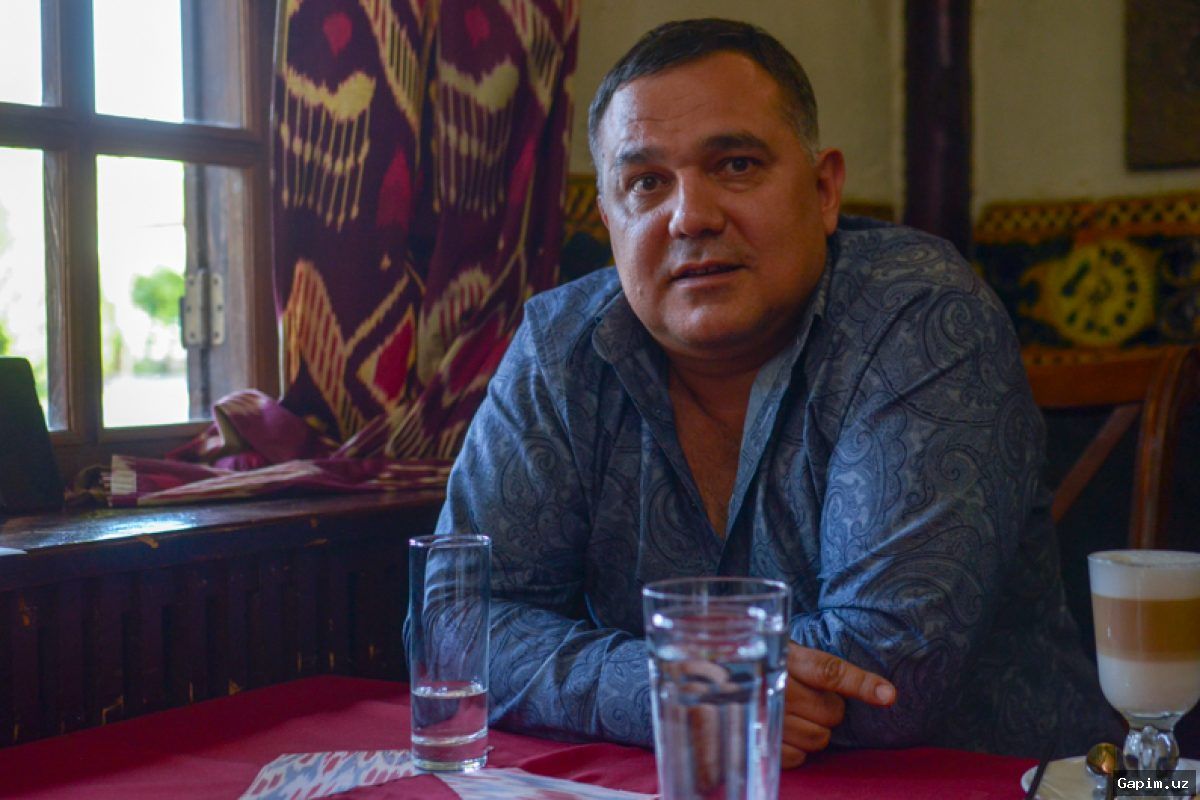
Musin does not hide the reasons: it is not fatigue from the restaurant business, but years of pressure, legal battles, high credit costs, and the feeling that instead of developing, he is forced to constantly defend himself. “I am a restaurateur, not a lawyer. Let the lawyers fight. I should not spend 80% of my time in court corridors,” he says.
He expresses gratitude to President Shavkat Mirziyoyev for setting the trend that an entrepreneur is not a thief or fraudster, but a job creator and producer of national products. However, according to him, there is still a large gap between political will at the top and practice on the ground.
Musin claims to have participated in about 200 court hearings and meetings over the past seven years. His main conclusion is that business problems in Uzbekistan largely depend on the quality of the judicial system. “The court should be the final resort for an entrepreneur. Courts must be independent,” he emphasizes.
A central episode is his conflict with a bank. Musin alleges that the bank, instead of helping to complete an almost finished building, created conditions for a fictitious bankruptcy. “The bank invented a fake bankruptcy to seize my property. I had a building almost ready, only three to four billion soums were missing. Just give me that money, and I would have launched it,” he recalls. Instead, the bank sued for the entire loan package, drastically increasing the state fee.
He emotionally describes the “Chinaras” project, envisioned as a large cultural and tourist complex with an aqua park, ethnographic village, and hotel. “I have been fighting for 13 years, 13 years I have been banging away,” he says. In 2019, parts of his land were cut off under the pretext of road construction, but he believes it was actually intended for other interested parties.
In an alternative scenario, if not hindered, by 2020 an aqua park would have been built, followed by a hotel complex, ethnographic village, and large tourist zone. He speaks of 150,000 square meters of hotel space, international operators, and thousands of jobs.
Musin dreams of a global expansion of Uzbek cuisine: “Plov Museum New York, Plov Museum Sydney, Plov Museum London. Can you imagine?” He considers plov a “soft power” of the country.
Addressing the shortage of five-star hotels, Musin blames the tax system: “Because taxes are such that investors do not invest in five-star hotels. If a hotel takes 100 years to pay off, investors will not go.” He proposes exempting hotels from property and land taxes.
Despite the sale, Musin insists he has no intention of leaving Uzbekistan: “I live here with pleasure. But I could live with even more pleasure if my dreams come true.”
Timur Musin’s story is not just about one restaurateur and his assets, but a question about the role of business in the country’s development. According to him, a real breakthrough requires independent courts, professional officials, reasonable loans, and clear taxes. “I can work much more effectively, presenting my restaurants to the world not only here in Uzbekistan, but also beyond,” he concludes.
Source: kun.uz