Uzbekistan is planning to increase liability for environmental damage and revise financial sanctions, as announced during a presentation to the president on April 30.
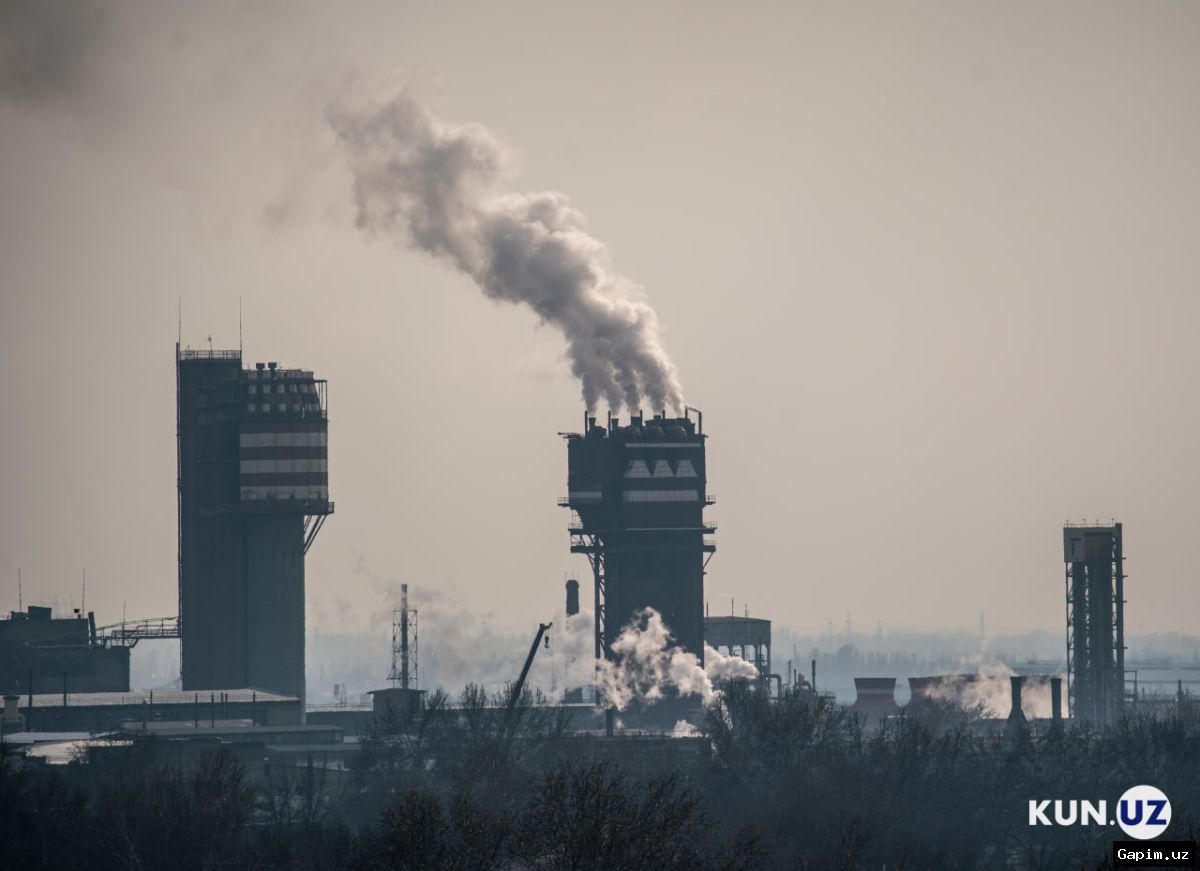
The meeting focused on enhancing responsibility for illegal extraction of non-metallic materials from riverbeds, water pollution, illegal logging, exceeding emission standards, dust and sand dispersion from construction sites, and burning waste in unauthorized areas.
A proposal was made to merge administrative fines and compensation payments for environmental damage into a single financial sanction. If a company admits guilt, the National Committee for Ecology and Climate Change may apply the sanction independently. Disputed cases will be handled in court.
Presidential advisor on ecology and chairman of the National Committee for Ecology and Climate Change, Aziz Abdukhakimov, told Uzbekistan 24 TV channel that the president had signed “important documents,” including a law increasing liability for environmental offenses (referring to a law passed by the Senate in early April).
According to him, the public and media had criticized the insufficient effectiveness of previous measures and moratoriums. Illegal logging and gravel extraction continued to recur. Abdukhakimov noted that low fine amounts were a key reason.
“Frankly, most of those engaged in illegal activities—illegal logging or gravel extraction—paid insignificant fines ranging from 300,000 to 1.5-2 million soms. The highest fines reached 15-20 million soms, which is very little compared to the economic and financial benefits obtained,” he said.
Consequently, fine amounts will be increased several times. “The adopted document means that in three months, Uzbekistan will introduce a mechanism of financial sanctions for environmental offenses,” Abdukhakimov stated.
Khurshid Pirov, head of the State Environmental Control Inspectorate, explained that the new document introduces a mechanism for applying financial sanctions to legal entities for environmental violations. The actual damage to nature will be considered when determining the fine.
“For example, if the damage amounts to about 200 million soms, the fine may be increased up to ten times, reaching 2 billion soms,” he explained.
Different coefficients are provided for various types of violations. For illegal extraction of non-metallic materials from riverbeds, the sanction is set at three times the damage. For discharging wastewater in violation of requirements, the compensation is multiplied by ten; for cutting low-value tree species, five times; and for cutting valuable species, ten times.
For exceeding emission standards of pollutants into the atmosphere, compensation payments increase fivefold. The degree of responsibility is differentiated for enterprises: the higher the facility category, the higher the fine coefficient.
Liability for violations at construction sites is also strengthened—payments triple. For burning waste, rubber, tires, and prohibited materials, payments increase fivefold. Similar measures apply to violations in waste disposal, transportation, and utilization.
The right to impose sanctions is granted to environmental control inspectors and eco-police. If the fine is not paid within a month, documents are sent to court for compulsory collection.
“The main goal is not to punish businesses, but to prevent environmental offenses, reduce damage to the environment, and preserve nature for future generations. The document is preventive in nature. However, if violations recur after warnings, stricter liability measures will be applied,” Khurshid Pirov emphasized.
Recall that on April 7, senators approved a law increasing penalties for environmental offenses. It provides for a several-fold increase in fines, a transition to a sanction system for legal entities, and liability for burning rubber and films. The new measures are expected to end the practice of “it’s easier to pay the fine.”
Source: www.gazeta.uz