On May 5, President Shavkat Mirziyoyev was presented with proposals that could abolish the practice of classifying information about a business entity's name and type of activity displayed on buildings as advertising, as well as the requirement to formalize corresponding passports. This aims to reduce the administrative burden on entrepreneurs.
The meeting discussed issues negatively affecting the business environment and causing complaints from the population and businesses. Topics included the placement of signs and brand logos, administrative requirements for catering and trade facilities, labor relations, non-cash payments, tax incentives, and financial penalties.
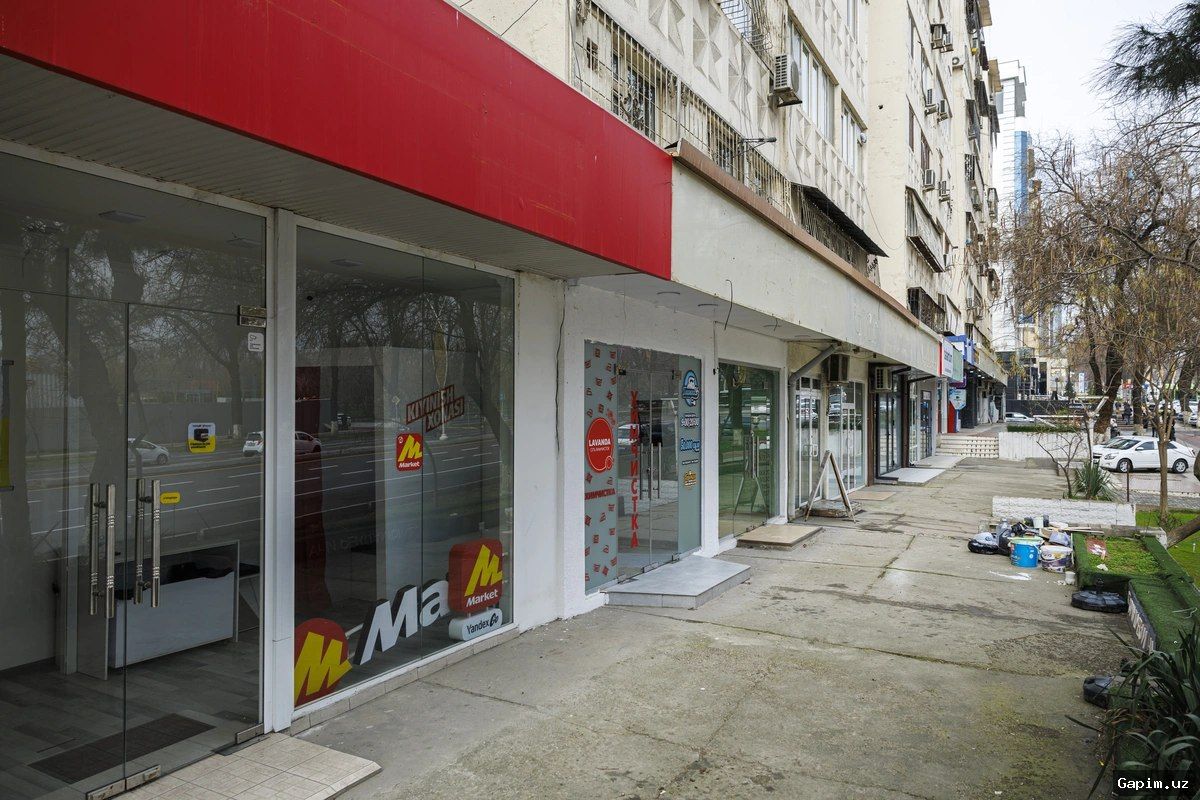
Under current regulations, in some cases, signs displaying a company's name, type of activity, or trademark are considered advertising, requiring separate passport registration and fee payments. This creates additional administrative burdens for entrepreneurs and negatively impacts the recognition of trade and service facilities, customer flow, and revenue.
Consequently, it was proposed not to classify information about a business entity's name and type of activity placed on buildings as advertising and to abolish the corresponding passport formalities. Additionally, it was suggested to gradually introduce design requirements for placing advertisements and other information signs, taking into account entrepreneurs' proposals, and to simplify the procedure for placing trademarks on vehicles owned by legal entities.
Proposals were also made to simplify the procedure for refunding part of the VAT for catering enterprises and to ease environmental expertise and compensation payment procedures for certain trade, catering, and service facilities. Clarifications of certain procedures in labor relations between employers and employees were also proposed.
In the area of digitalization and non-cash payments, proposals were made to improve convenience for the population and businesses. Specifically, the need to improve banking infrastructure, commissions, and the cashback system for consumers was noted.
Since March, district administrations in Tashkent have been conducting large-scale raids to remove outdoor advertising, citing the need to bring the capital's appearance to a unified architectural style. The administrations include company signs in the category of outdoor advertising. However, business representatives argue that signs are not advertising but a means of orientation in the city, without which customers cannot find the necessary addresses.
Entrepreneurs reported that the threatening and harsh actions of the authorities led to serious financial losses: some companies' losses reached $12,000 per location, and a number of owners were forced to close their businesses. The lack of clear information on how and under what rules new signs can be installed was also criticized.
According to authorities' plans, a new design code will be implemented on 36 streets with a total length of 432 km by the end of the year. Currently, dismantling work has begun on a 100 km section, i.e., 14 streets. 6,113 entrepreneurs have received warnings about the need to replace signs.
Chairman of the Chamber of Commerce and Industry Davron Vakhobov held negotiations with the mayor of Tashkent and promised to temporarily suspend dismantling on the remaining 332 km of roads until the first 100 km are put in order. The next day, the chamber announced that the parties had agreed to put in order 14 streets on the already dismantled 100 km section based on a single standard. On the remaining 472 km of streets, dismantling will not be carried out; they are planned to be gradually updated within 30 days.
Entrepreneurs also complained about the large volume and complexity of the 254-page document. Business representatives stated they are not against aesthetics but are suffering huge losses: the cost of replacing one sign can reach 20 million soums, and quarterly payments for 'advertising passports' for large networks amount to tens of millions of soums.
As of November 2025, about 2,000 signs have been dismantled in the city as part of the fight against 'illegal advertising' and preparation for the implementation of the design code. Earlier, entrepreneurs in the catering sector complained that Tashkent's new design code was 'illiterate' and that they were threatened with power cuts during the forced dismantling of signs.
The business ombudsman also stated that certain clauses of the decision on Tashkent's design code contradict current legislation and submitted a conclusion on the need for its revision. The representative noted that the decision was adopted without coordination with the business ombudsman.
Source: www.gazeta.uz