On April 9, the Namangan City Criminal Court sentenced 33-year-old citizen M.A., who fought on the Russian side in the Russia-Ukraine war. According to court documents, he went to Russia in November 2021 for work and was involved in cargo transportation in Moscow. He was later convicted by a Russian court for a drug-related crime and sentenced to 9 years in prison.
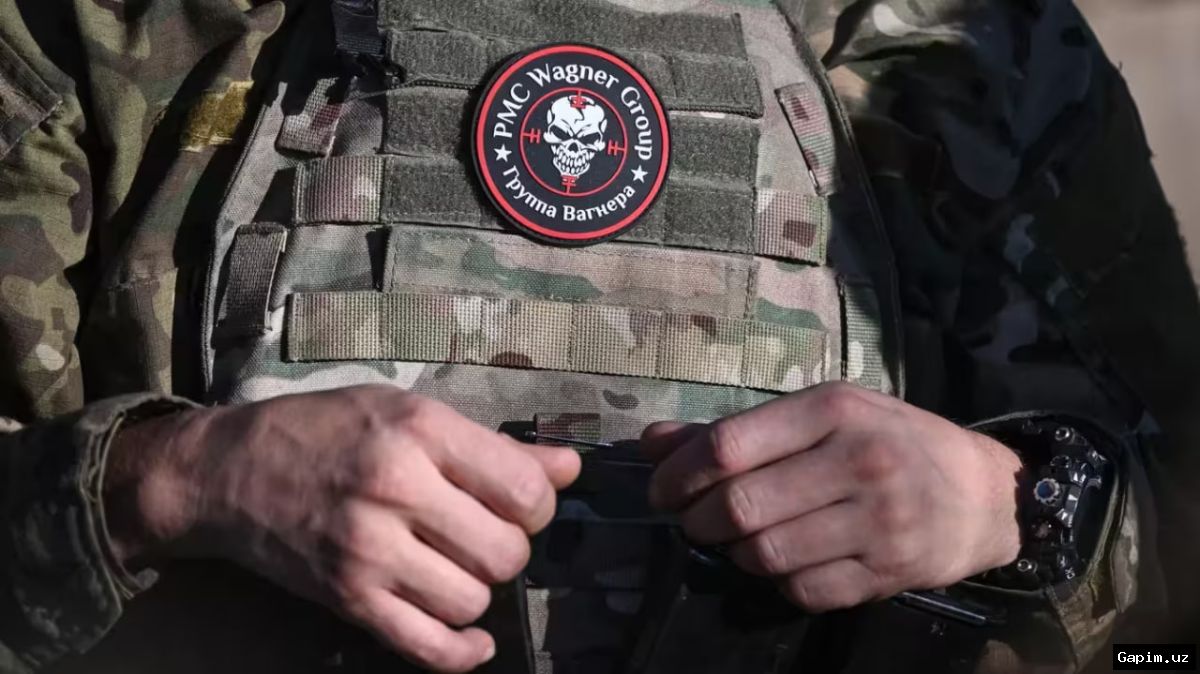
In court, the defendant testified about how he ended up in Russia and became involved in the criminal case. He stated that in November 2010, he went to his father in Russia for work, worked as a security guard at a dacha in Yekaterinburg for 6 years. In 2016, he was detained for lacking documents and deported for 5 years. From 2017, he lived in Kazakhstan, then from 2021 in Tashkent, working as a carpenter. At the suggestion of an acquaintance, he returned to Russia in November 2021. After a few months, the acquaintance left for Uzbekistan, leaving him a car and apartment. He later learned the car was used for drug trafficking. At someone's request, he picked up a package, but upon opening it, found a white substance, discarded it, and fled to Moscow. Police later searched the car and found heroin. He claimed ignorance of its origin. He was held in a pre-trial detention center in the Moscow region for about a year and was sentenced to 9 years.
According to court documents, while serving his sentence, he signed a contract with the Russian Armed Forces to escape punishment and entered military service in October 2024. He underwent training in Rostov and Luhansk, then participated in combat operations in Donetsk Oblast with an assigned AK-74 rifle.
The defendant also described how he was recruited into the war while serving his sentence. While in a detention center in Ufa, Russian officials repeatedly visited and proposed he go to war. Initially, he refused. After further pressure and offers to sign a contract, he again declined. Subsequently, he claimed he was subjected to pressure and torture for approximately 180 days, forcing him to agree. On October 1, 2024, he signed a one-year contract at a colony in Yekaterinburg. He was then taken to Rostov, then to a training camp in Luhansk, where he underwent 21 days of training. On December 28, 2024, he was taken to Horlivka, Donetsk Oblast, waited 12 days for orders, and then entered combat.
The documents note that M.A. was wounded several times: in January 2025, a gunshot wound to the head; later, shrapnel wounds to the shoulder, arm, and lower back. He was treated in military hospitals. The defendant detailed his combat participation and injuries. He fought for about 8 days. On January 10, 2025, he was shot in the head and evacuated by comrades. He was treated for about a month in a hospital in Yenakiieve, Donetsk Oblast. On February 6, he returned to his unit and participated in the defense of Toretsk. During an artillery explosion, he sustained shrapnel wounds to his left shoulder and fingers. After another month of treatment, he returned to service and was transferred to a mine clearance unit. In May 2025, he took part in operations to capture Selydove. On May 18, during battles for the village of Zhovte, he was hit by shrapnel in the lower back and seriously wounded. He was taken to a military hospital in Makiivka, placed in intensive care, and underwent surgery to remove fragments.
In July 2025, M.A. escaped from the hospital and contacted the Uzbek embassy in Rostov. He was issued a certificate for return to his homeland and returned to Uzbekistan in August. The defendant explained his escape: in the intensive care unit of a military hospital in Donetsk Oblast, he met a Kyrgyz citizen named Elyor, with whom he had previously trained in the same camp. They agreed to flee the war and prepared for about a month. They then met an Azerbaijani named Roma, who helped them escape from the hospital on July 25, 2025, and reach Rostov. There, he contacted the Uzbek embassy, claimed to have lost his passport, and received a return certificate. On August 6, 2025, he returned to Uzbekistan on a Sochi-Samarkand flight.
In court, M.A. fully confessed, stating he was forced to participate in the war, expressed sincere remorse, and requested leniency. The court considered his full confession, sincere remorse, difficult family and financial situation, five minor children, and lack of prior convictions as mitigating circumstances.
The court found M.A. guilty under Part 1 of Article 154 (Mercenarism) and Part 1 of Article 154-1 (Entering the military service, security, police, military justice or other similar bodies of a foreign state, mercenarism) of the Criminal Code. Under Article 154, with application of Article 57 (Imposition of a lighter sentence), he was sentenced to 3 years and 6 months of restriction of liberty. Under Article 154-1, he was sentenced to 2 years of correctional labor with 20% of wages deducted to the state. Combining the sentences, every three days of correctional labor was equated to one day of restriction of liberty, resulting in a final sentence of 4 years of restriction of liberty.
According to the court decision, he will serve the sentence at his residence in Namangan. During this period, he must not leave home outside working hours, cannot change his place of residence without permission from the supervising authority. He is also required to immediately notify the Namangan city internal affairs bodies of any change in residence or work due to treatment or other reasons. Execution of the restriction of liberty was assigned to the probation group of the Namangan City Department of Internal Affairs.
Previously, in Kashkadarya, a 38-year-old citizen who fought on the Russian side in the Ukraine war was sentenced to 3 years in prison. He claimed he signed a military contract after pressure and torture while serving a sentence in Russia. He participated in battles in Luhansk and was wounded in a drone attack. He escaped from the hospital and returned to Uzbekistan.
Source: www.gazeta.uz