An analysis conducted in Tashkent reveals that in the Fall/Winter 2026/27 season, global fashion trends are strikingly aligned with Uzbekistan's traditional aesthetics. Velvet, embroidery, intricate ornaments, voluminous headwear, and wide silhouettes have taken center stage on international fashion platforms. This has sparked lively discussions among local designers and shoppers.
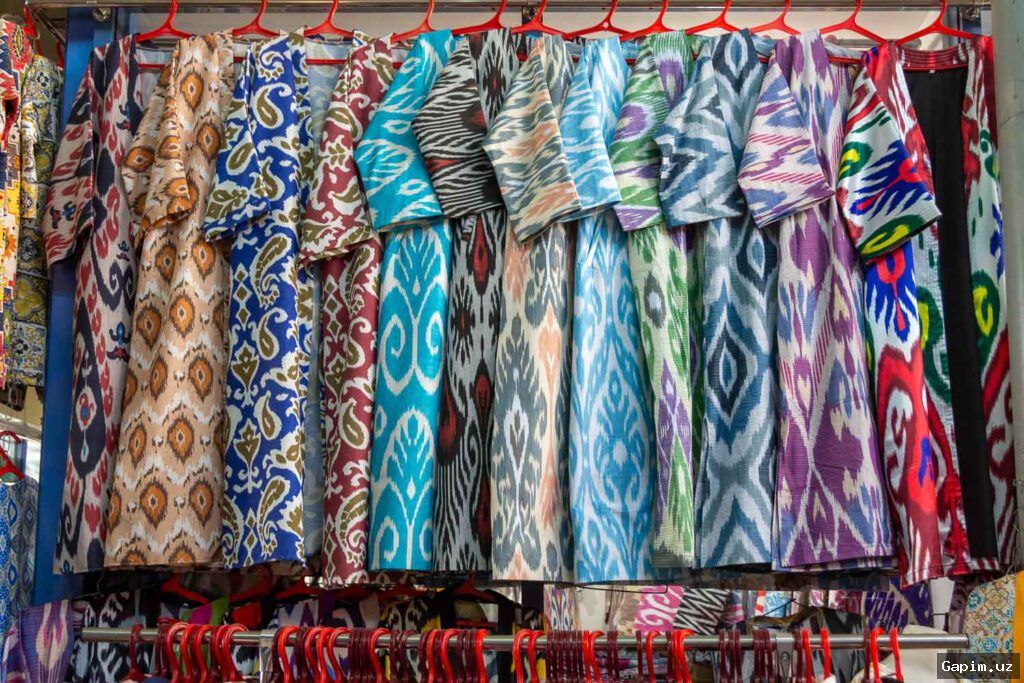
Observations in Tashkent shopping malls show that the boundary between "national" and "international" has nearly vanished. In one store, a blouse with a rhythm reminiscent of adras; in another, long robe-like silhouettes, dense embroidery, and large ornaments. The visual language that until recently could be considered "too national" or even old-fashioned now confidently stands alongside global trends.
Young designer Fatima Khakimova shared her views. According to her, if earlier a yoke dress was perceived as clothing from the past, now this cut is returning, especially in combination with national fabric — khan-atlas and adras. The same happened with the chapan: a few years ago it was either a traditional garment or a souvenir, but today it easily becomes the outer layer of an urban look.
"Now a fashion-interested girl will almost certainly have some kind of ethno-chapan. Especially valued are items with embroidery or old fabric — literally from grandmother's chests," the designer emphasizes. The main paradox of this season is that the global market has begun actively selling what in Uzbekistan until recently had to be defended from the label "old-fashioned."
The ikat technique has a long history. In Central Asia, especially in the Fergana Valley and cities of modern Uzbekistan, a powerful language of such fabrics has formed. Here they are called abr — "cloud," and the technique — abrbandi, meaning "tying clouds." In 2017, the work on preserving the traditional technologies of Margilan was included in the UNESCO Register of Good Practices for the Safeguarding of Intangible Cultural Heritage.
Western fashion has already embraced Central Asian ikat. The Smithsonian's National Museum of Asian Art notes that in 2005, Oscar de la Renta introduced ikat into his collections, after which the motif quickly spread far beyond couture. In Parisian high fashion for the Fall/Winter 2026/27 season, Frank Sorbier's long red velvet coat is directly linked to Uzbek ikat.
However, local designers note that Uzbekistan is already cramped in the role of a supplier of beautiful ornaments. "I would like Uzbekistan to be recognized not only by fabric. Many designers say: we take adras and use it in modern cuts. But perhaps the next step is to invent another modern language by which we will also be recognized," shares Fatima.
Ultimately, in the fall of 2026, global fashion is noticeably drawn to what in Uzbekistan has long been part of the visual experience: texture instead of smoothness, decoration instead of sterility, layering, loose outerwear, expressive headwear, complex color, and items where human labor is visible. Now it is far more interesting to achieve another goal — that when this language sounds on the global runway, its name does not disappear.
Source: podrobno.uz