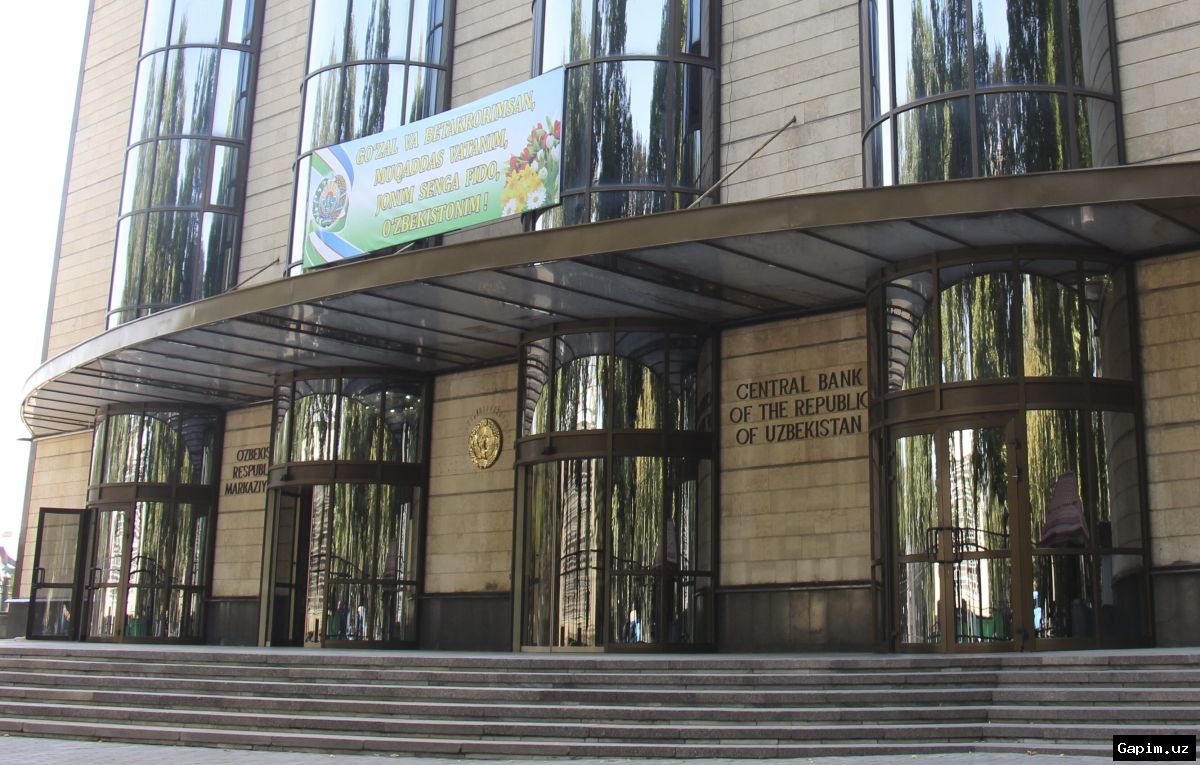
The Central Bank of Uzbekistan has developed a draft of amendments and additions to internal control rules aimed at combating money laundering from criminal activities. The discussion period for this draft will last until April 4, signaling an expansion of additional monitoring and inspections within the banking system.
Key innovations in the draft include that operations on accounts of individuals under 16 years of age may be deemed suspicious if the turnover of funds exceeds 40 times the base calculation amount (BCA), equivalent to 16.48 million Uzbek soums, within two business days. In an explanatory note, the Central Bank stated that minors do not have the right to independently make full financial decisions, and large inflows or outflows on their accounts could be linked to money laundering, involvement in fraud schemes, or illicit drug trafficking.
Furthermore, the deposit of cash funds into the accounts of individuals, totaling an amount equal to or exceeding 2,500 times the BCA (1.03 billion soums), within a period not exceeding 30 days, will be assessed as a "high level of risk." According to the regulator, such cash operations may be associated with concealing funds or criminal activity, thus subjecting them to additional monitoring.
The draft also introduces new criteria for the receipt or transfer of funds from countries under enhanced monitoring by the Financial Action Task Force (FATF). If the amount reaches or exceeds 1,000 times the BCA (412 million soums) within 30 days, it is recognized as a "suspicious operation" and must undergo mandatory comprehensive analysis by banks.
New rules for import contracts are being implemented, where cases of settling debtor liabilities by changing the contract subject to services fall under control. If the total amount under a single contract reaches 3,000 times the BCA (1.236 billion soums), such operations are evaluated as suspicious. These changes impose additional obligations on legal entities and individual entrepreneurs.
The draft modifies the determination of client risk levels. Previously, all non-resident individuals were automatically included in the high-risk category; now, non-residents with a tax identification number issued by authorized bodies of Uzbekistan are excluded from this category. It is also proposed to include legal entities with nominal shareholders in this category, as they may be used to conceal real beneficial owners.
Banks are required to conduct mandatory comprehensive analysis upon identifying suspicious operations and, if necessary, notify authorized bodies. If conducting an inspection could lead to the disclosure of information to the client, the bank may immediately report the suspicious operation without inspection. Additionally, requirements for money transfers are being tightened, obliging banks to collect full information about the sender and recipient.
Source: www.gazeta.uz